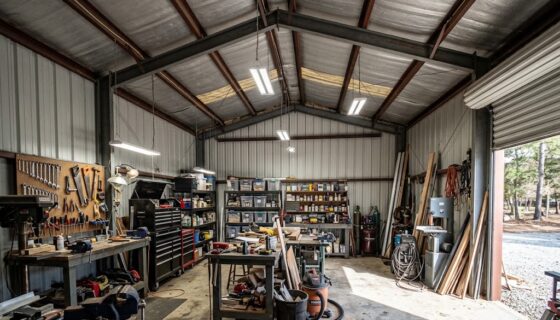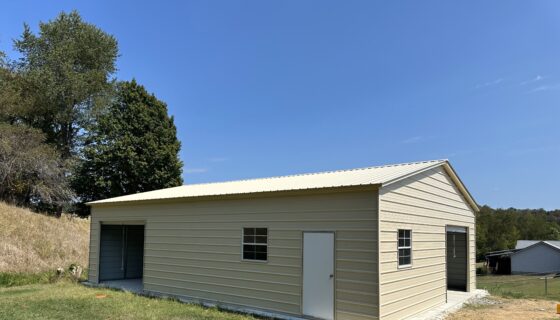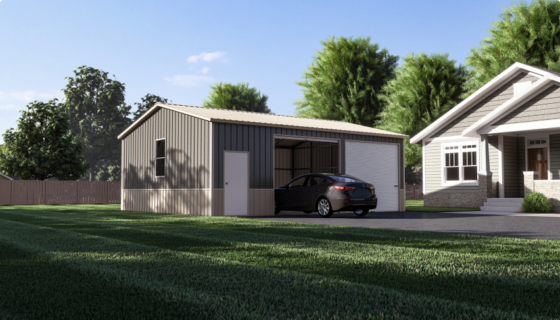

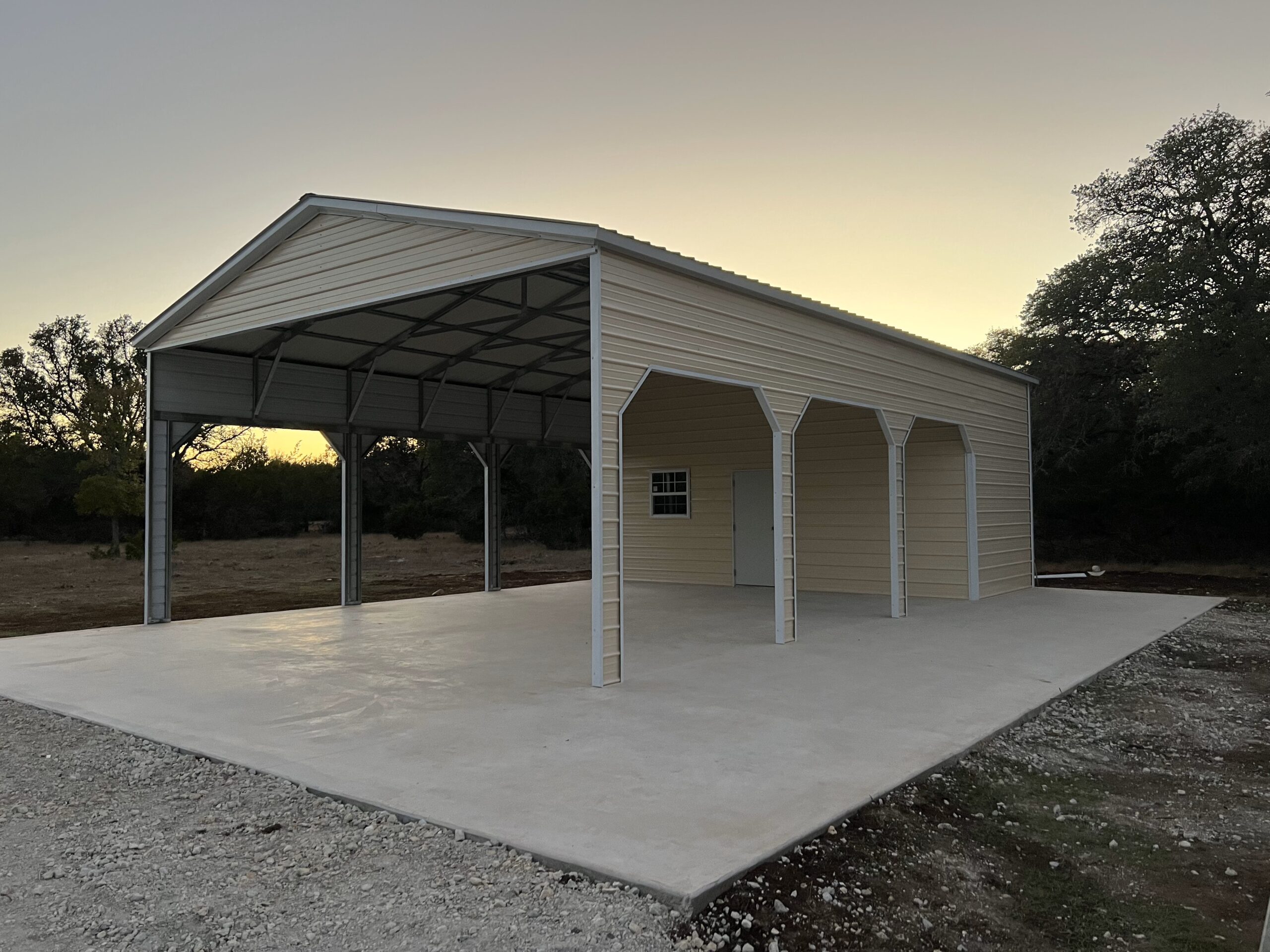
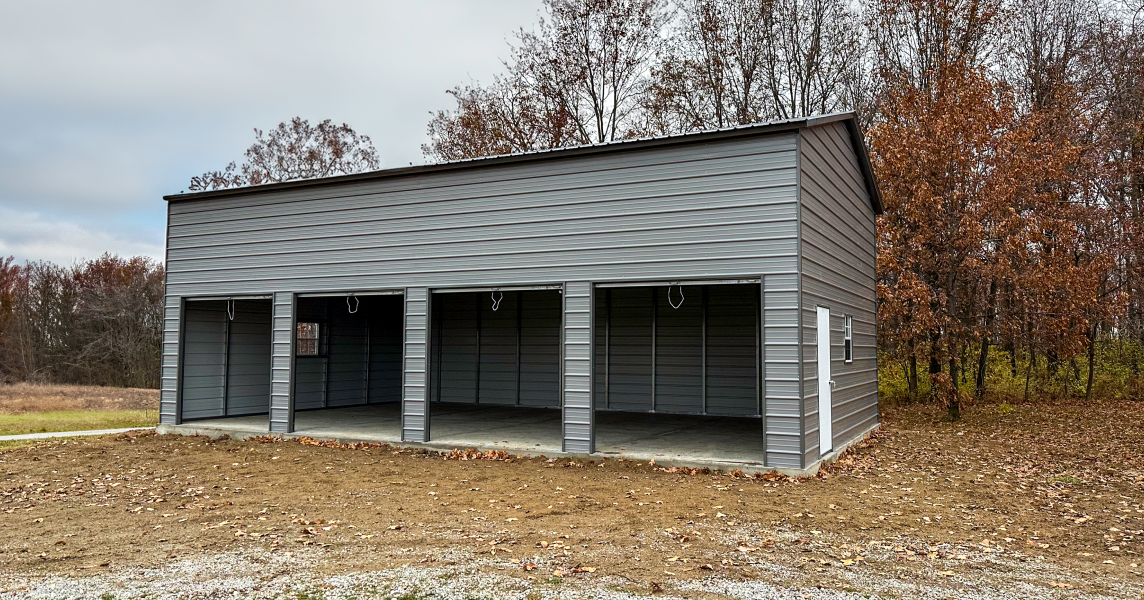
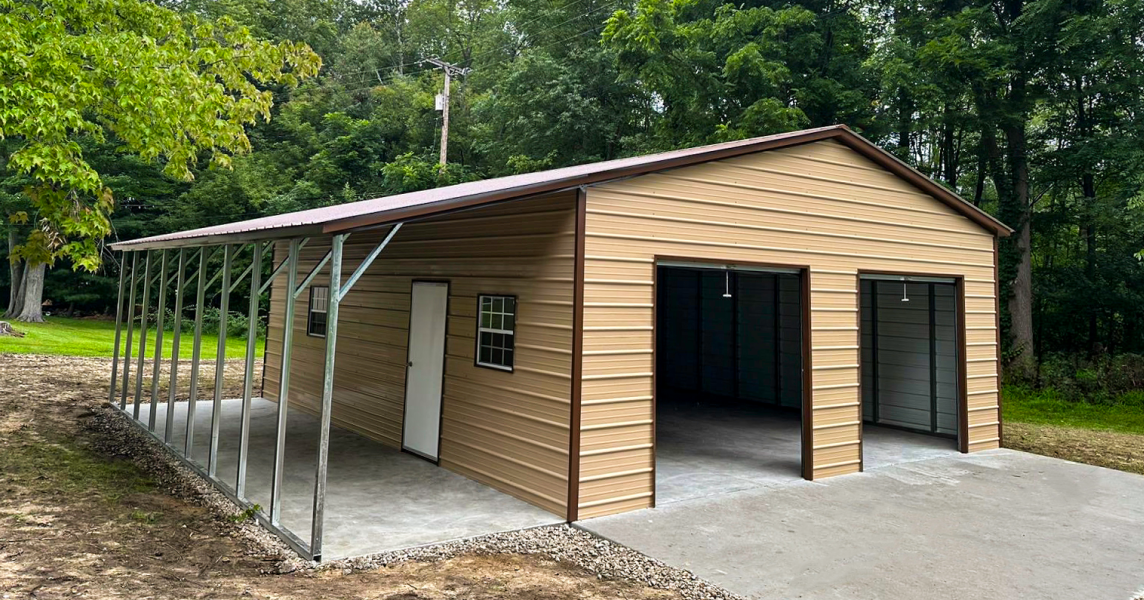
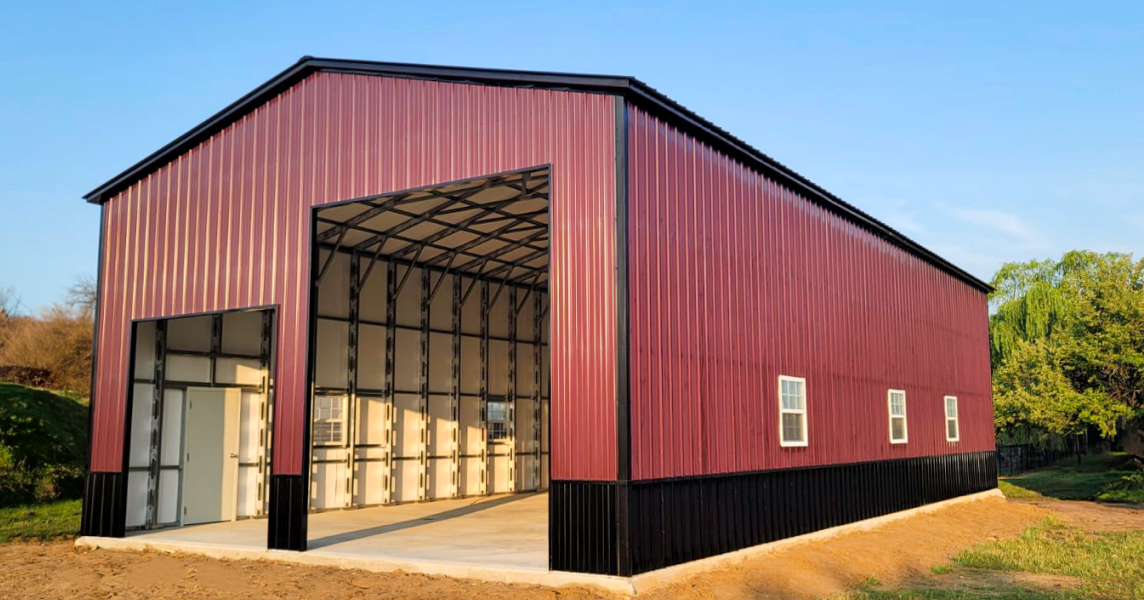
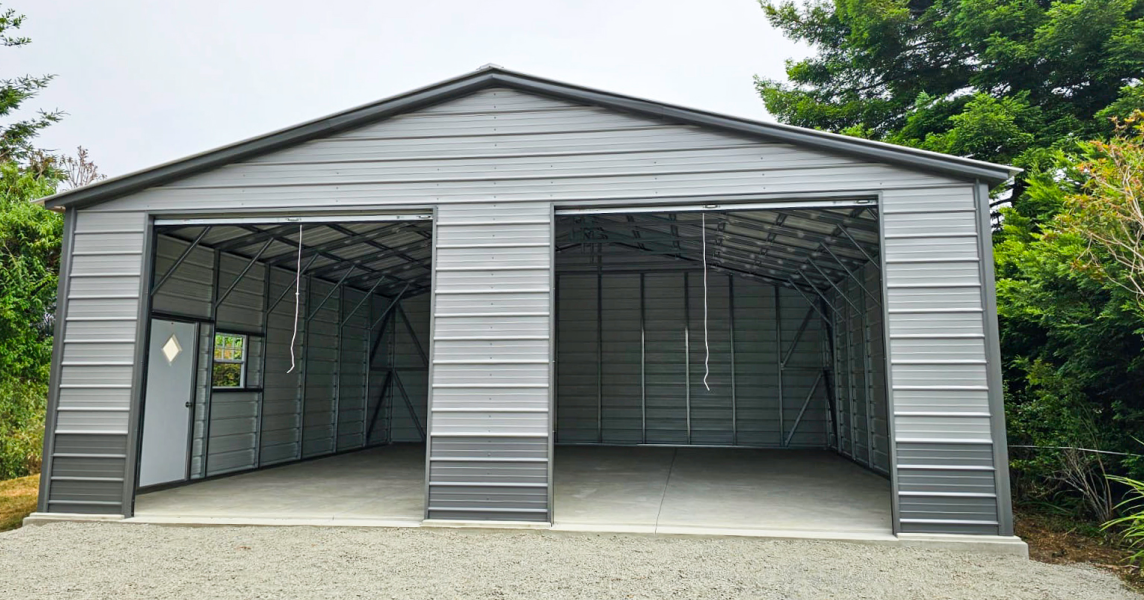
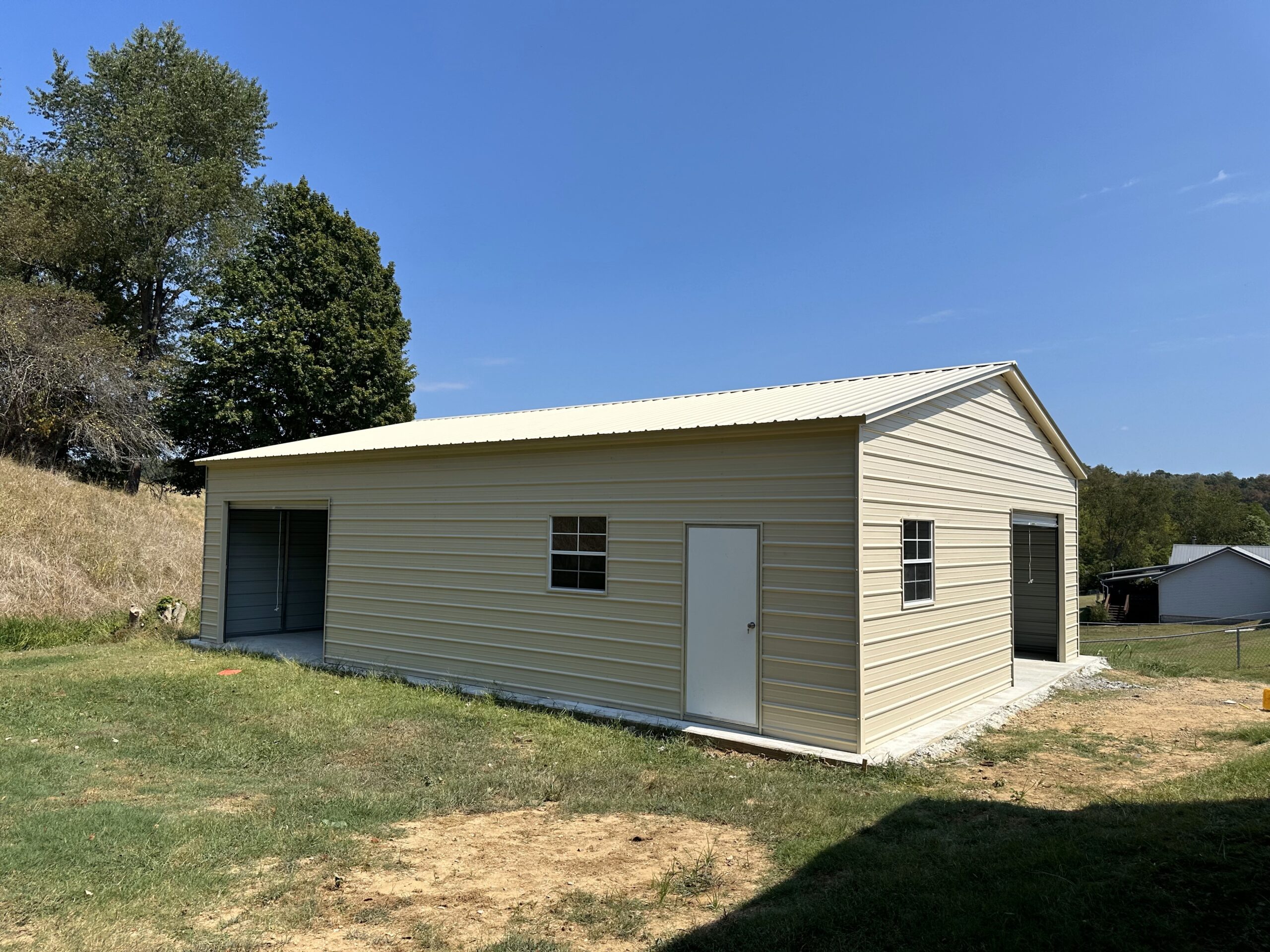
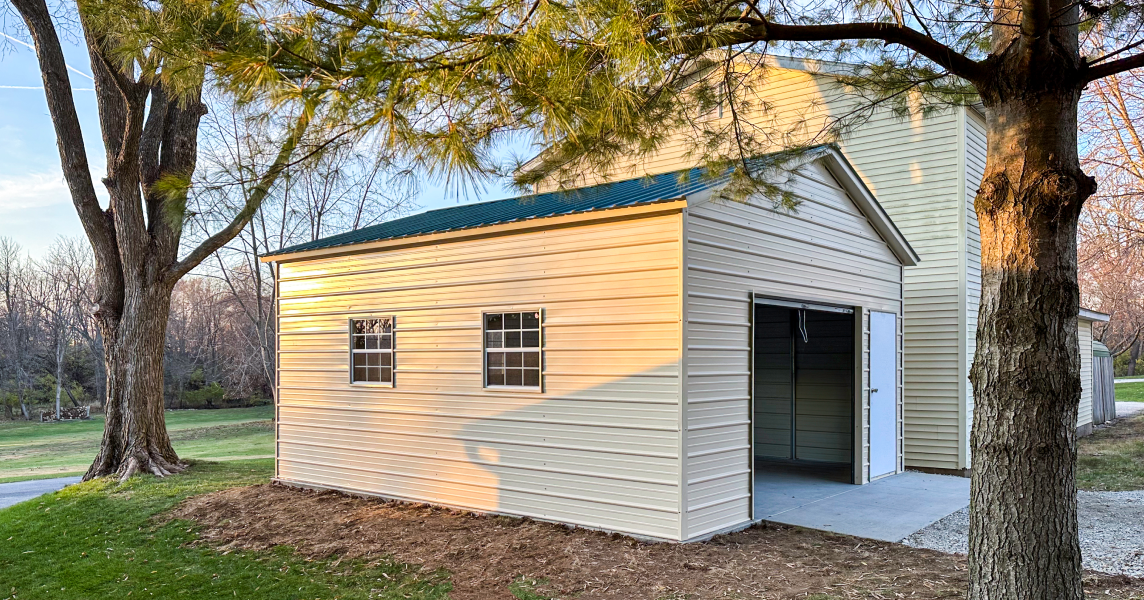
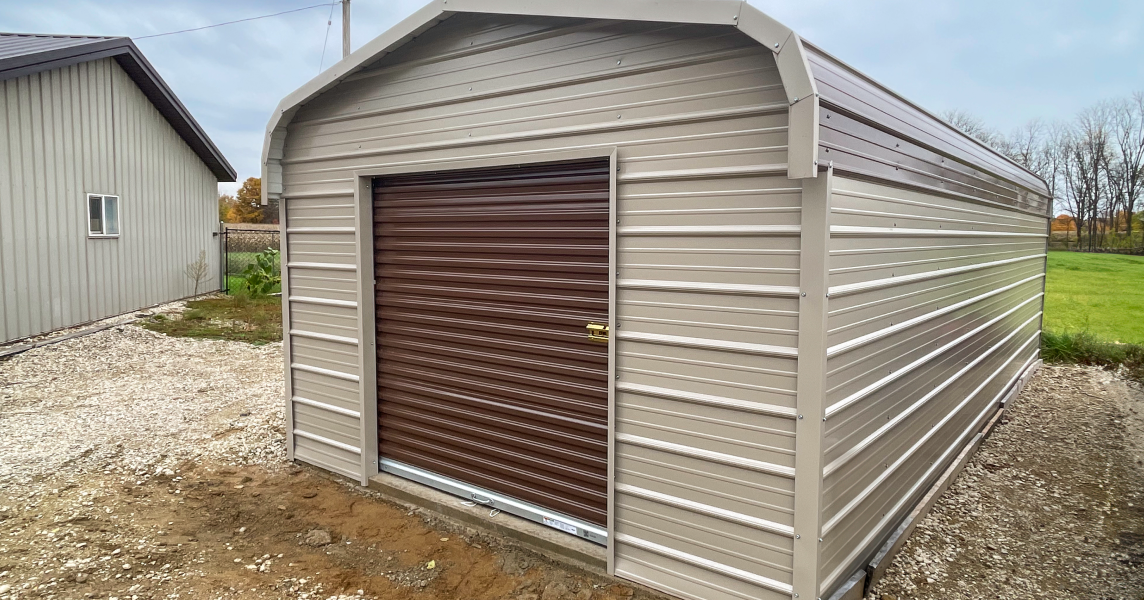
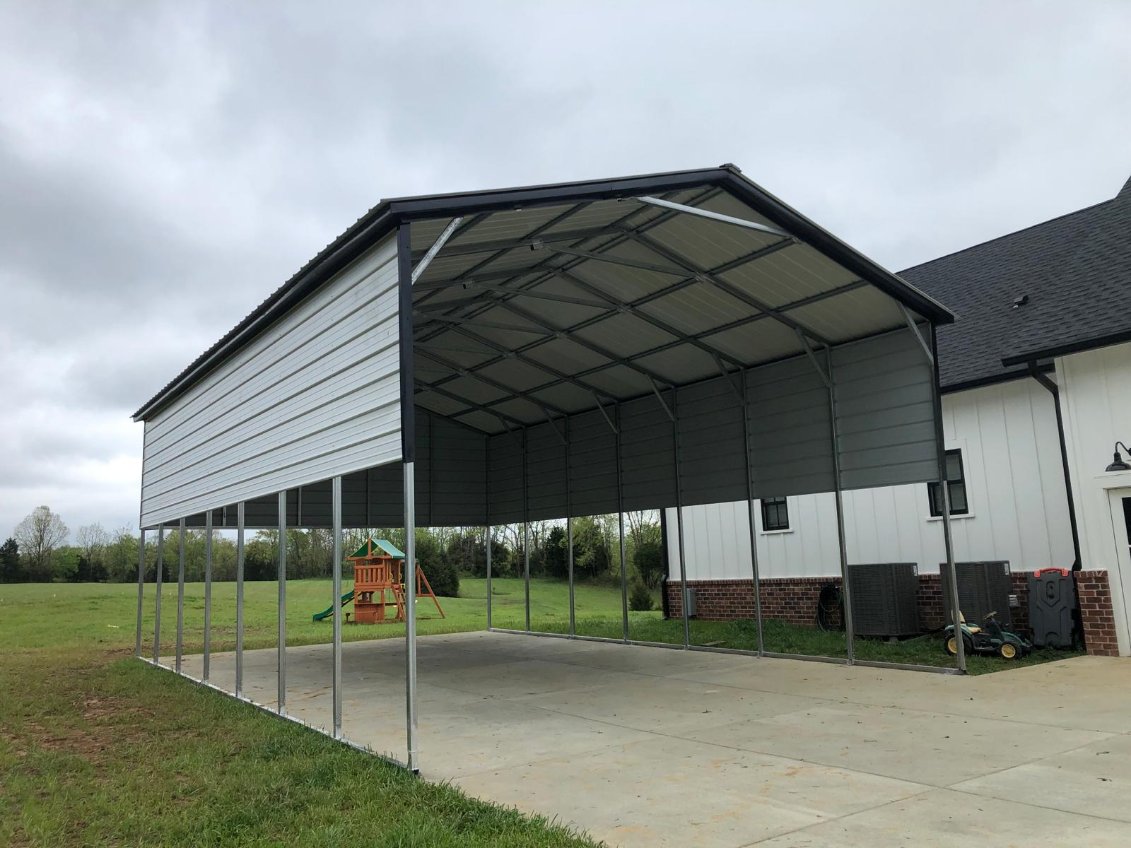
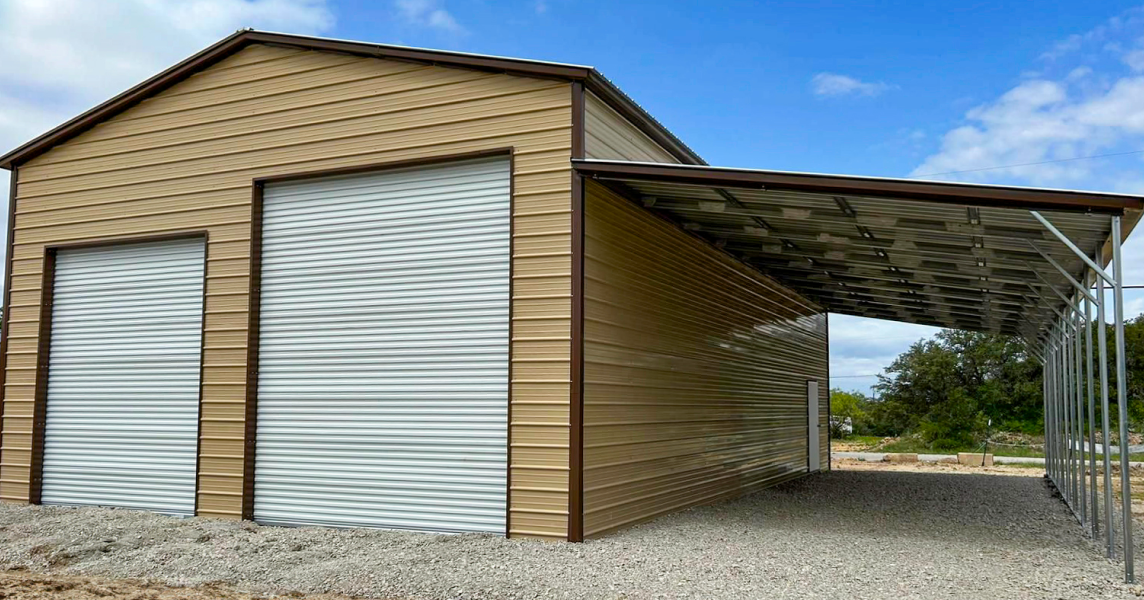
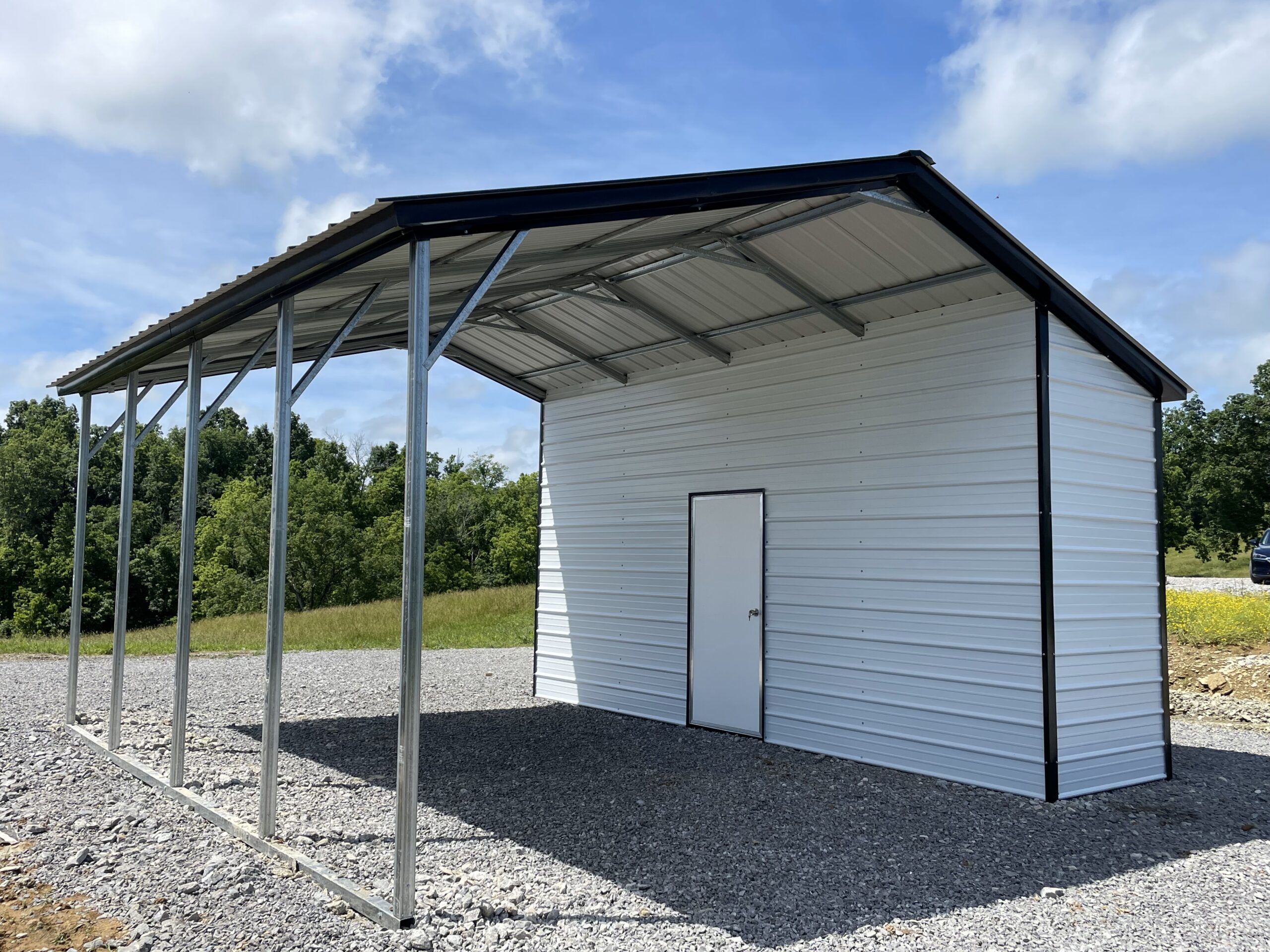
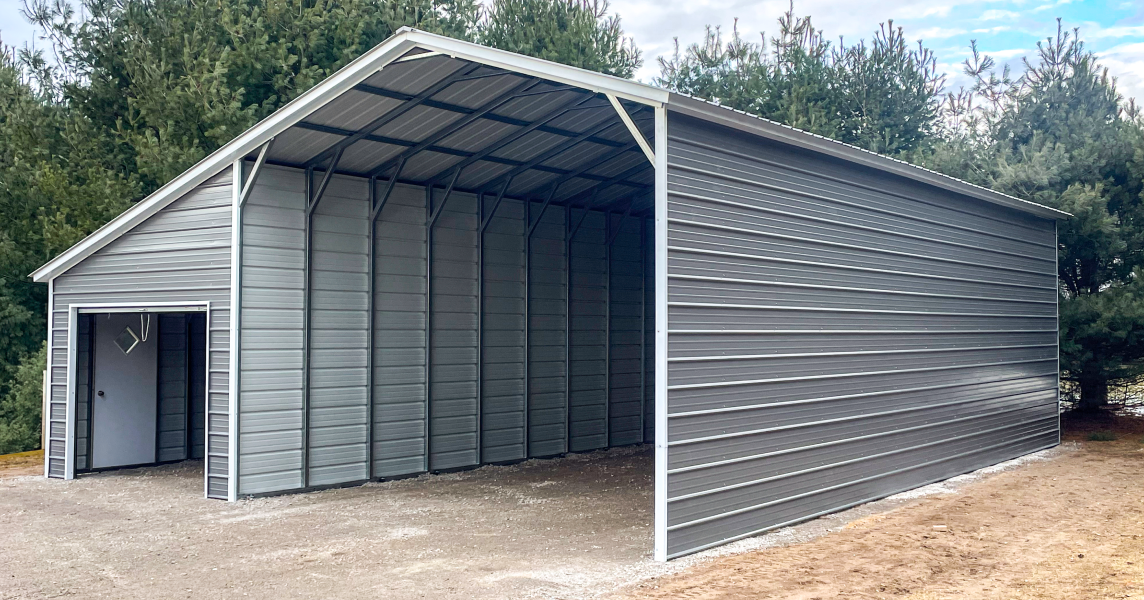
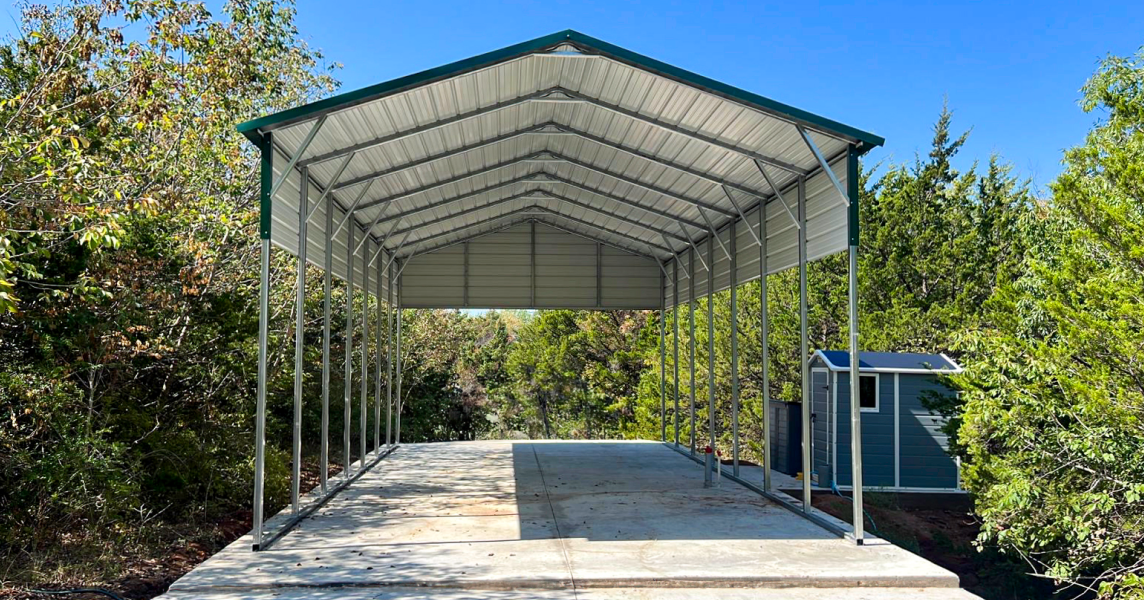
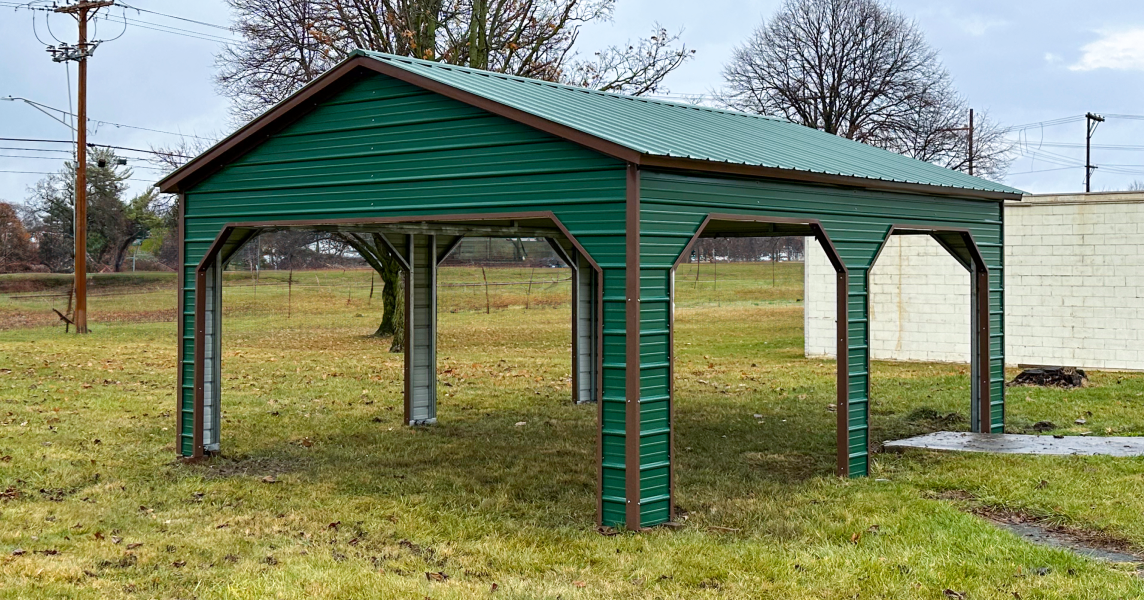
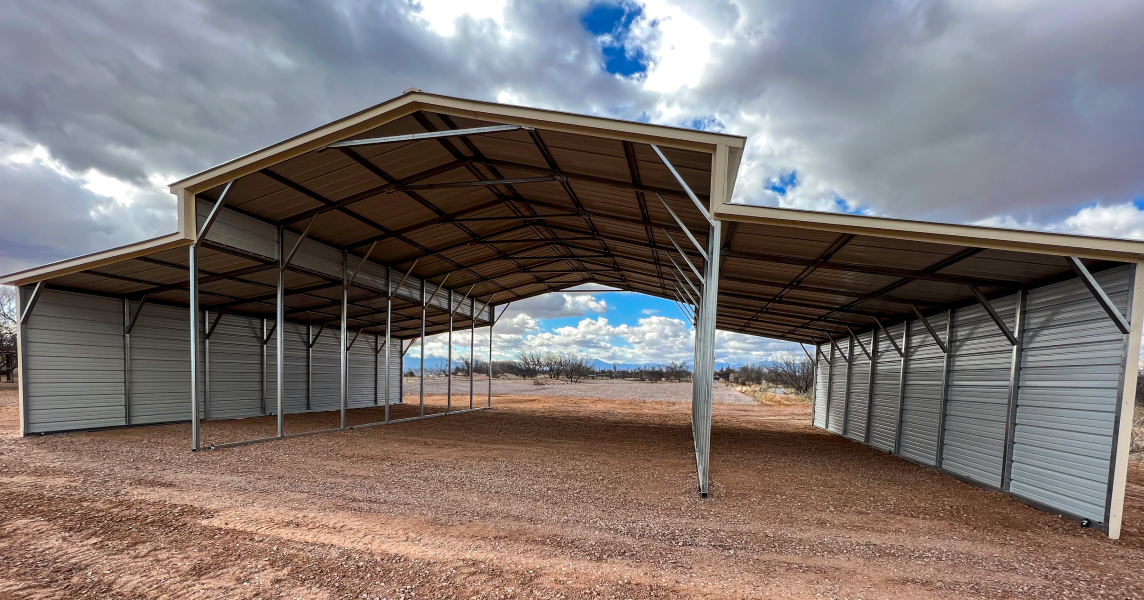
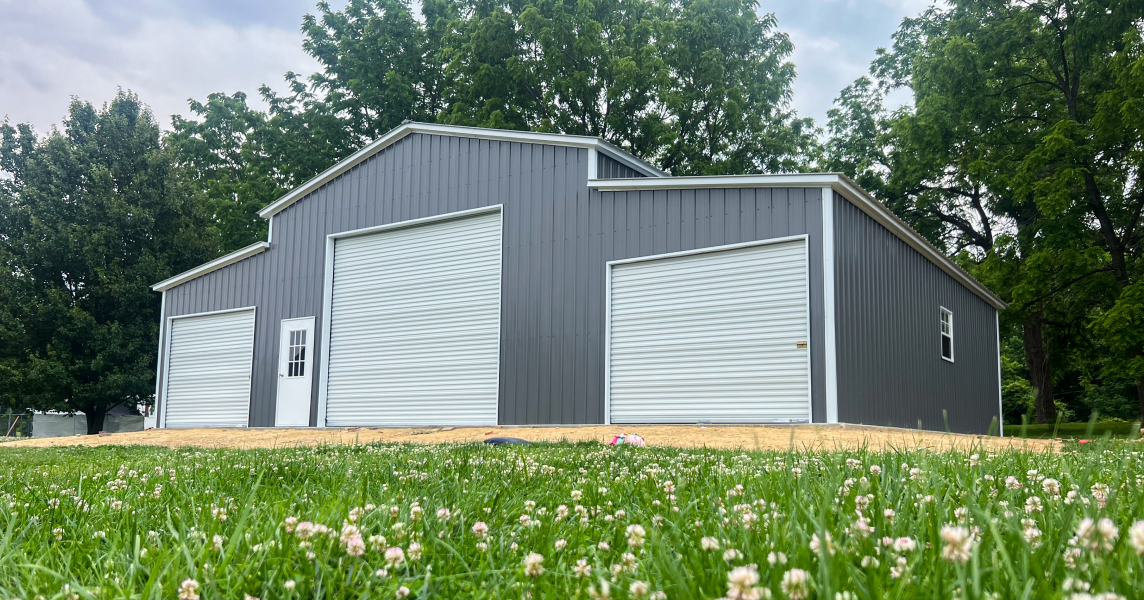
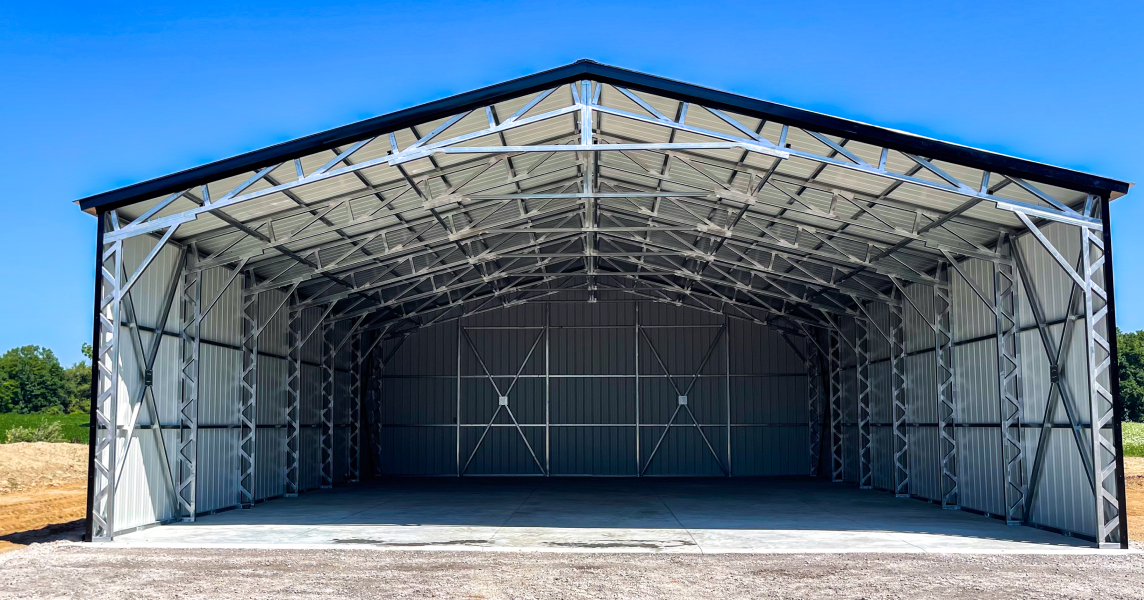
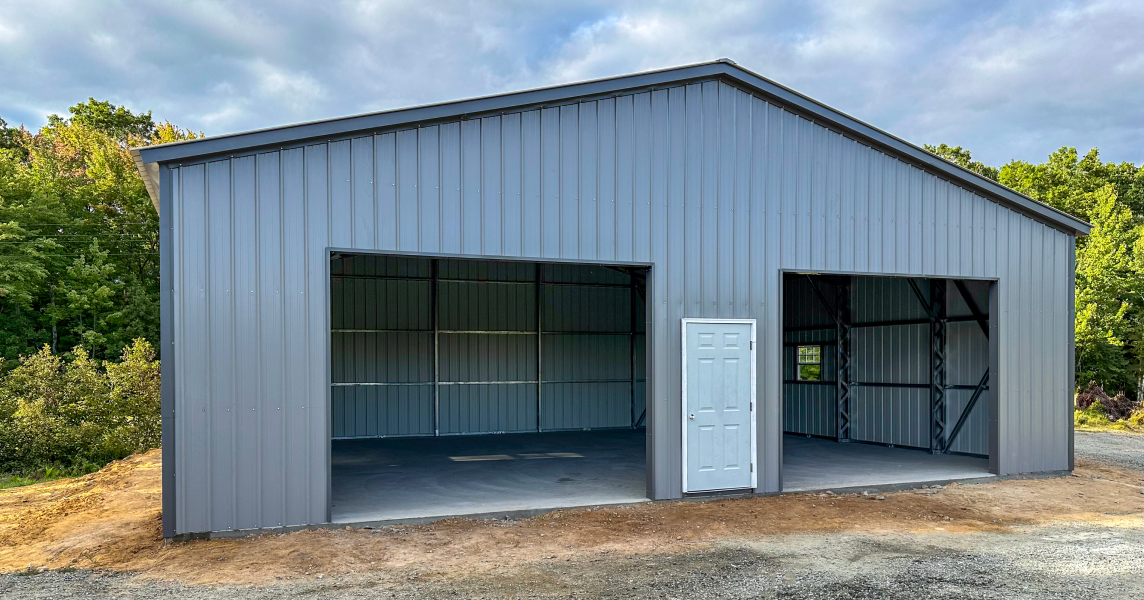
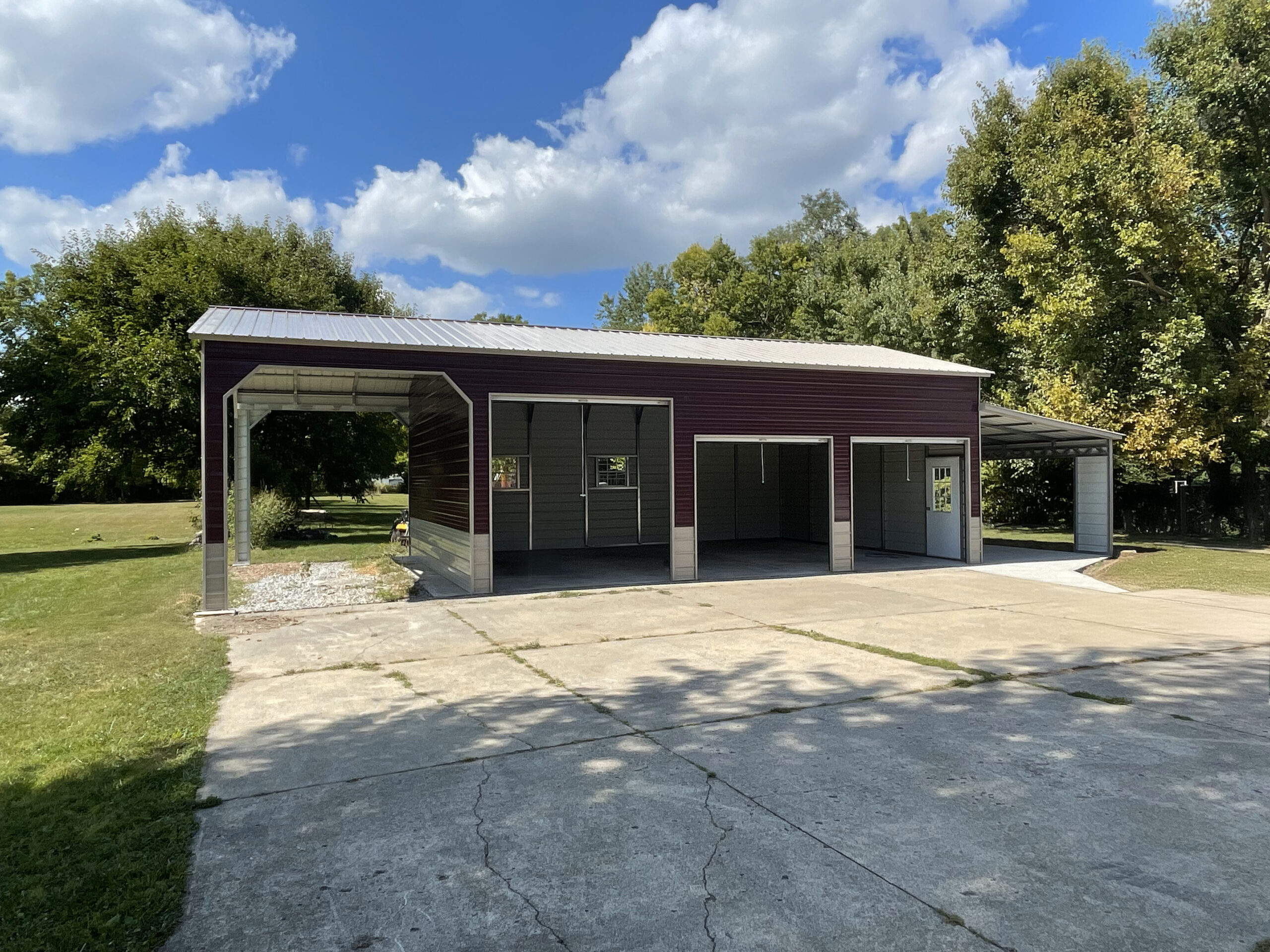
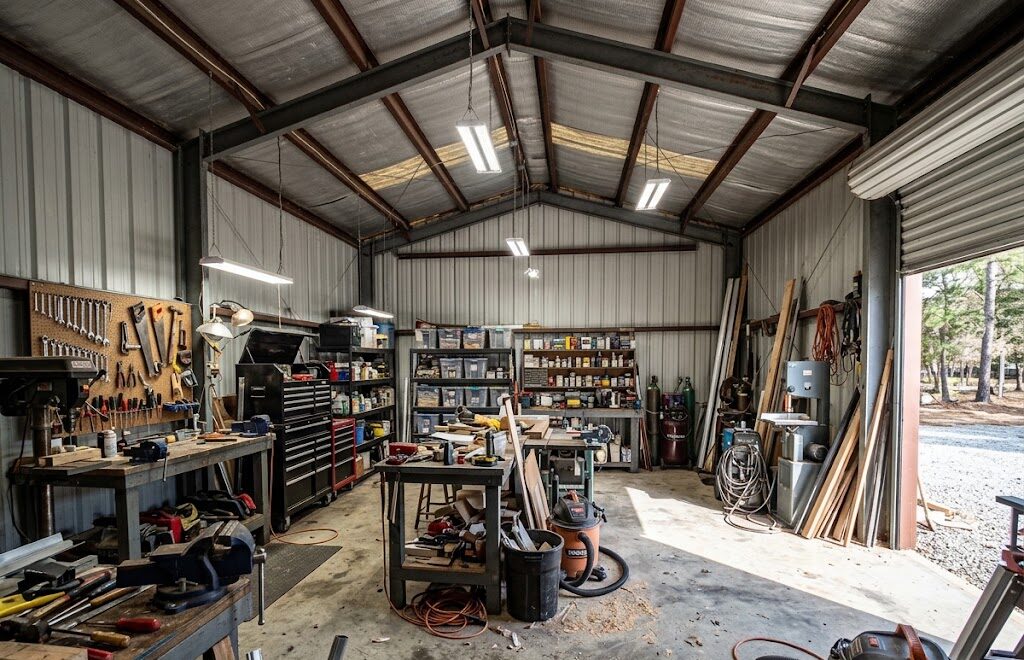
Yes, you can use a metal shed as a workshop when it is designed with enough space, a stable foundation, proper access, lighting, ventilation, and features that support the work you want to do. A custom metal workshop shed can give you a dedicated place for woodworking, repairs, crafts, small-engine projects, tools, and equipment without taking over your garage or home.
At American Carports, Inc., you can use our Build & Price Tool to customize a shed for storage, hobbies, repairs, or a full workshop. You can also contact our team for help choosing the size, doors, roof style, and options that fit your project.
What Makes a Metal Shed a Good Workshop?
A metal shed can be an excellent workshop because it can be customized around your workspace instead of forcing you to adapt your tools and projects to a cramped area. You can choose the width, length, height, door placement, windows, and layout based on how you expect to use the building.
The best workshop shed gives you room to work safely and keep materials organized. It should have clear floor space, a sturdy work surface, access for moving tools or equipment, and enough storage that supplies do not end up piled around the room.
A custom metal shed can serve as a woodworking area, mechanic’s workspace, garden headquarters, craft studio, repair shop, or home-based hobby building. The key is starting with your intended use rather than selecting the smallest available structure.
What Size Shed Do You Need for a Workshop?
Most workshop sheds should begin at 12 x 16 or larger. That size gives you enough space for a small workbench, basic tool storage, and room to move around a project. If you plan to use power tools, store lumber, work on vehicles, or set up multiple workstations, a 12 x 20, 16 x 24, or larger layout may be a better choice.
The ideal dimensions depend on the type of work you do:
| Workshop Use | Practical Starting Size |
| Crafts, hobbies, and light repairs | 12 x 16 |
| Workbench and tool storage | 12 x 20 |
| Woodworking or mechanical work | 16 x 24 |
| Large equipment or multi-station projects | 20 x 30 or larger |
Avoid choosing a workshop solely by square footage. Think about how you will move through the building. A narrow shed may have enough floor area on paper but still feel difficult to use once a workbench, tool chest, shelves, and equipment are in place.
Should You Add Extra Height?
Extra height can make a workshop feel more open and create useful storage opportunities. Taller walls may allow room for overhead shelves, wall-mounted storage, longer tools, larger machinery, or better placement for lighting and ventilation.
Height is especially helpful if you plan to install storage racks, use a vehicle lift, store ladders vertically, work with tall materials, or bring in equipment through a roll-up door. If your workshop needs are likely to grow, choosing additional height from the beginning can make the space more adaptable.
What Doors Should a Workshop Shed Have?
Door choice has a major effect on how usable your workshop will be. A walk-in door provides convenient daily access for you, your tools, and smaller materials. A roll-up door or larger double-door opening makes it easier to move in bulky equipment, lumber, lawn machinery, motorcycles, ATVs, or larger projects.
Many workshop owners benefit from having both. Use the walk-in door for everyday access and the larger opening when you need to bring in equipment or improve airflow.
When planning door placement, consider:
- Which direction you will approach from the driveway
- Whether you need to bring in long boards or large equipment
- Where your workbench and storage will sit
- The amount of clearance needed outside the door
- Whether the door should face away from prevailing wind and rain
- How the door will affect your property’s traffic flow
The right entry layout can make a compact workshop work far better than a larger building with poorly placed doors.
Do You Need Windows in a Workshop Shed?
Windows are not required, but they can make a workshop more comfortable and useful. Natural light can improve visibility for detailed work, reduce the need for daytime lighting, and make the building feel less enclosed.
Windows can also support ventilation when placed strategically. For workshops where you sand, paint, stain, use adhesives, run engines, or create dust, airflow is important. Consider locating windows and doors on multiple sides of the structure when your site allows it.
If privacy or security is a concern, choose window placement carefully. You may prefer windows higher on the wall, positioned away from public view, or limited to the side of the building facing your backyard.
Does a Metal Workshop Need Electricity?
Electricity is not always required, but it is a useful addition for most serious workshop spaces. Lighting, power tools, battery chargers, fans, compressors, heaters, and other equipment may require a properly installed electrical system.
Have a licensed electrician handle permanent wiring, outlets, panel upgrades, and any electrical work that must meet local code. Plan electrical locations before the interior is finished so outlets are available where you actually need them.
Even if you do not intend to add electricity immediately, it can be wise to plan for future service. Consider where you may want outlets, overhead lighting, exterior lights, a charging station, or dedicated circuits for larger tools.
How Do You Keep a Workshop Comfortable?
Comfort depends on your climate, the work you do, and how often you use the building. Across the United States, workshop owners may need to plan for high heat, humidity, freezing temperatures, rain, snow, wind, dust, or seasonal storms.
For hot climates, prioritize ventilation, shade, roof design, insulation, and airflow. For colder regions, consider insulation, weather sealing, a properly rated structure, and safe heating options. In humid regions, focus on airflow, moisture management, and keeping stored tools off the floor where they may be exposed to damp conditions.
A vertical roof can also be a smart upgrade for workshops in rainy, snowy, or debris-heavy regions. It helps direct water and debris toward the eaves and gives the building a more finished appearance.
Read our guide to metal workshop ventilation for more ways to plan a comfortable workspace.
What Kind of Foundation Does a Workshop Need?
A level foundation is essential for a safe and usable workshop. Your chosen base should support the building, work area, stored tools, and any heavy equipment you plan to bring inside.
A compacted gravel base may be appropriate for some storage-focused sheds, but a concrete slab is often preferred for workshops. Concrete provides a clean, durable, level surface for workbenches, rolling toolboxes, machinery, and vehicles. It can also make cleanup easier and provide a solid surface for anchoring when required.
Foundation needs can vary based on your building size, local soil conditions, wind and snow requirements, permit rules, and intended use. Confirm local requirements before starting site work.
Can You Insulate a Metal Workshop Shed?
Yes. Insulation can make a metal workshop more comfortable for year-round use by helping moderate indoor temperatures and manage condensation concerns. The right solution depends on your climate, ventilation plan, roof design, interior finish plans, and how you intend to heat or cool the space.
If you expect to spend a lot of time in the workshop, think about insulation during the design stage. It is generally easier to plan for it before the building is installed and organized.
You may also want to add windows, ventilation, weather sealing, and a foundation that keeps the floor dry. For more guidance, review our article on how to insulate a metal shed.
What Can You Use a Workshop Shed For?
A custom workshop shed can be tailored for almost any productive hobby or practical project. The building should be customized around your workflow, not just its appearance.
Popular uses include:
- Woodworking and furniture building
- Automotive or small-engine repairs
- Gardening and potting
- Welding and metalworking
- Crafting, sewing, or art projects
- Bicycle, motorcycle, or ATV maintenance
- Home improvement tool storage
- Equipment repair
- A home-based hobby workspace
- A combination storage shed and workshop
If you need separate room for tools and active projects, a larger custom building may give you the flexibility to create distinct work and storage zones.
FAQs
Can I put a workbench in a metal shed?
Yes. A metal shed can accommodate a workbench, shelving, tool storage, and project space when you select a layout that leaves enough open floor area to work safely.
What is the minimum size for a workshop shed?
A 12 x 16 shed is a practical starting point for light hobbies and small projects. For a workbench, tools, machinery, and more comfortable movement, a 12 x 20 or larger workshop is often better.
Do metal workshop sheds get hot?
They can get hot in direct sun, especially in warm climates. Ventilation, insulation, windows, roof design, and airflow can help make the workshop more comfortable.
Can I run electricity to a metal workshop shed?
Yes, but permanent wiring should be installed by a qualified, licensed electrician and meet applicable local electrical codes.
Do I need a permit for a workshop shed?
You may. Permit requirements depend on the size, location, height, foundation, and local building regulations. Check with your city or county before ordering.
Create a dedicated workspace with a custom metal shed. Use our Build & Price Tool to explore your options, or contact American Carports, Inc. for help designing a workshop that fits the way you work.