
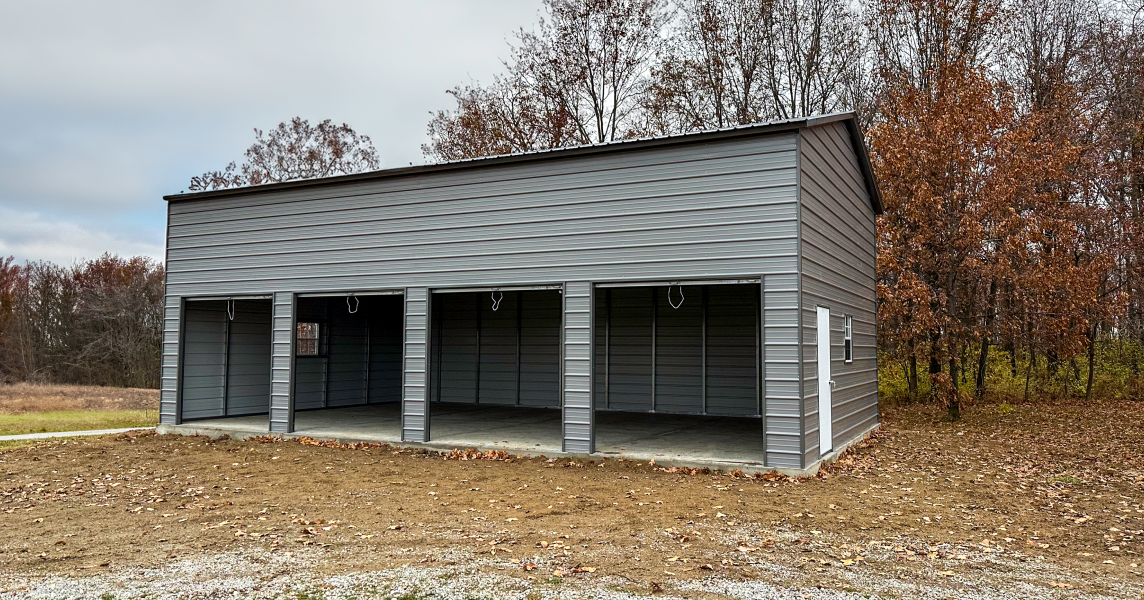
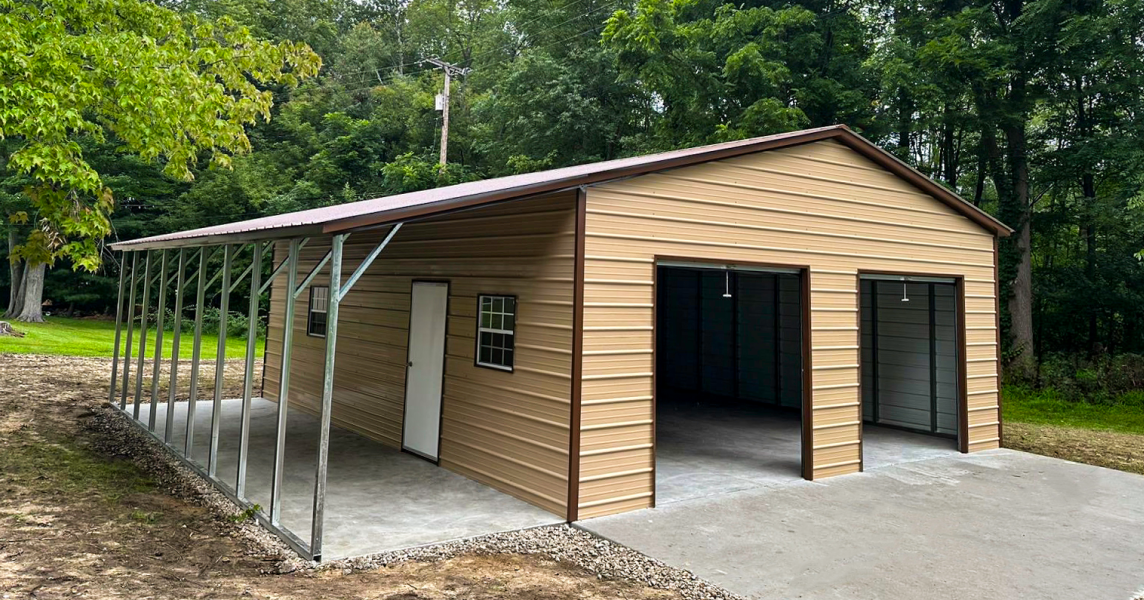
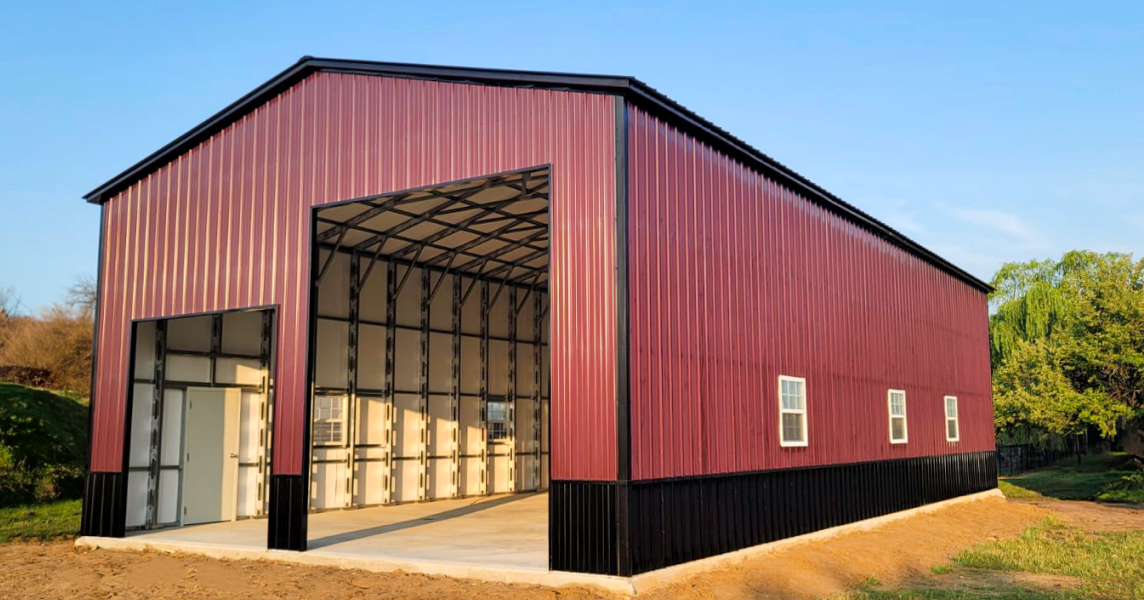
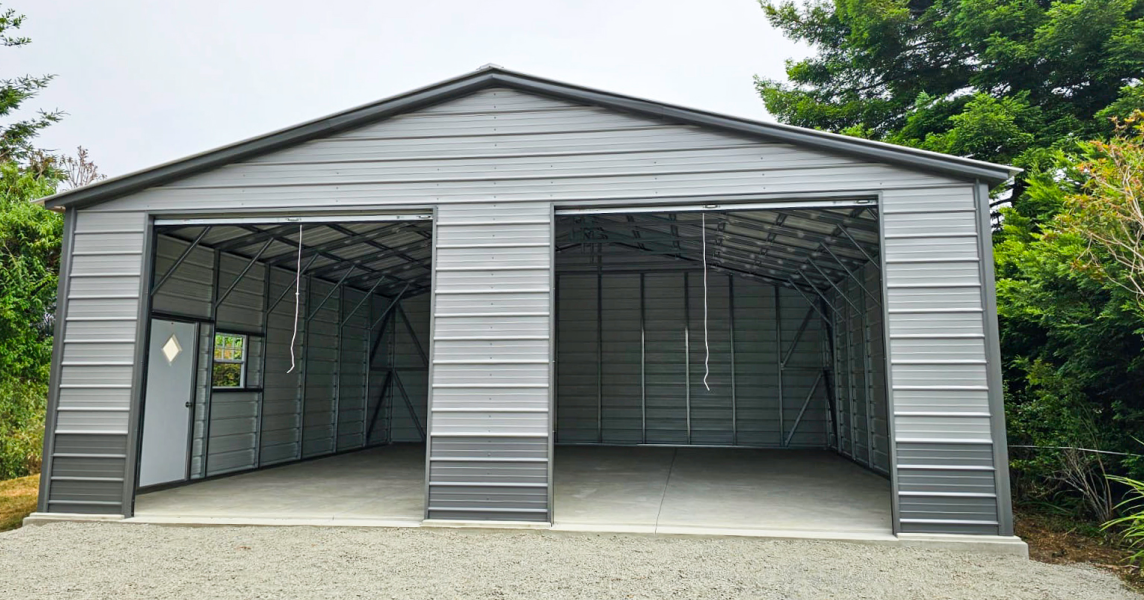
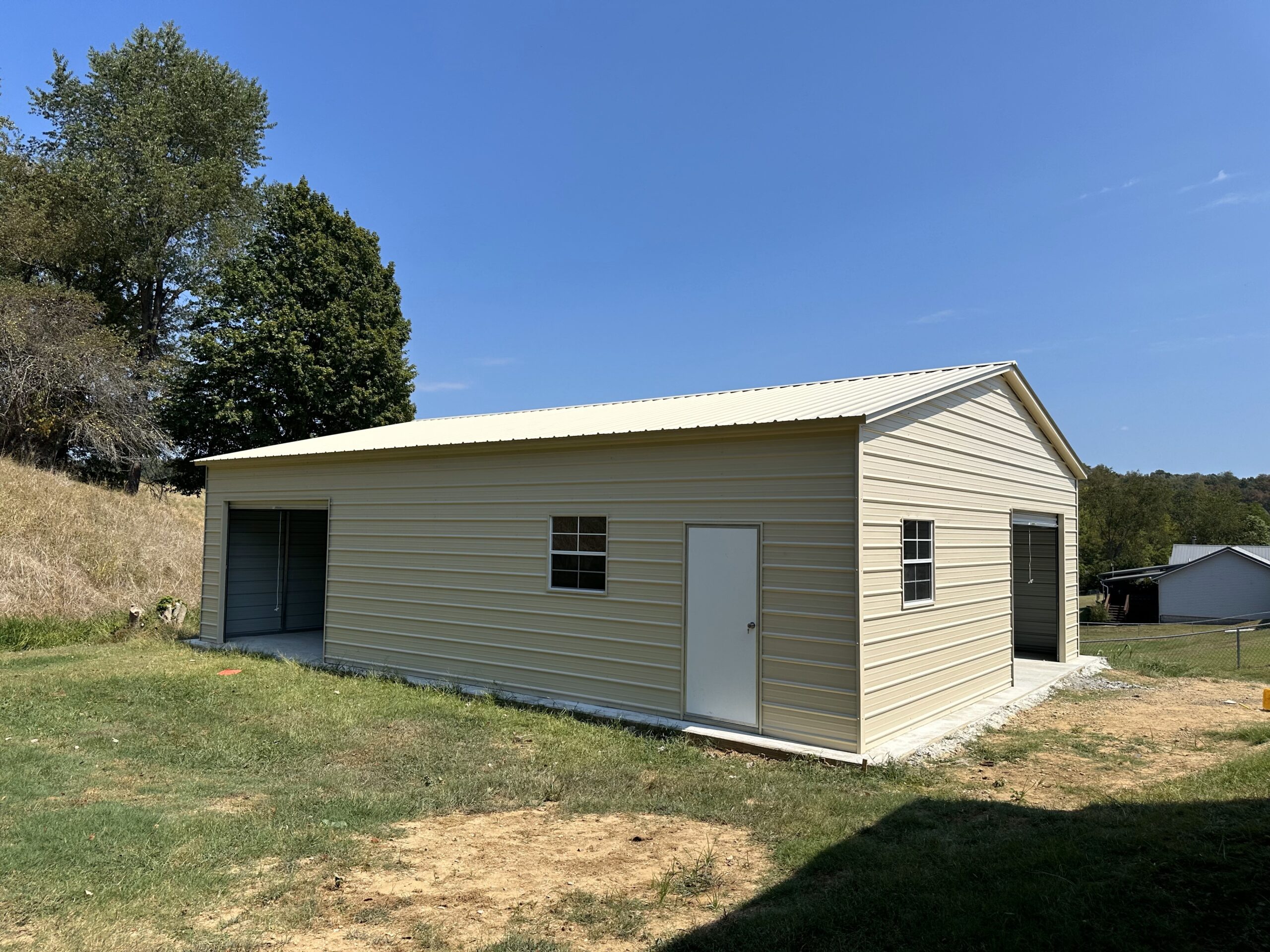
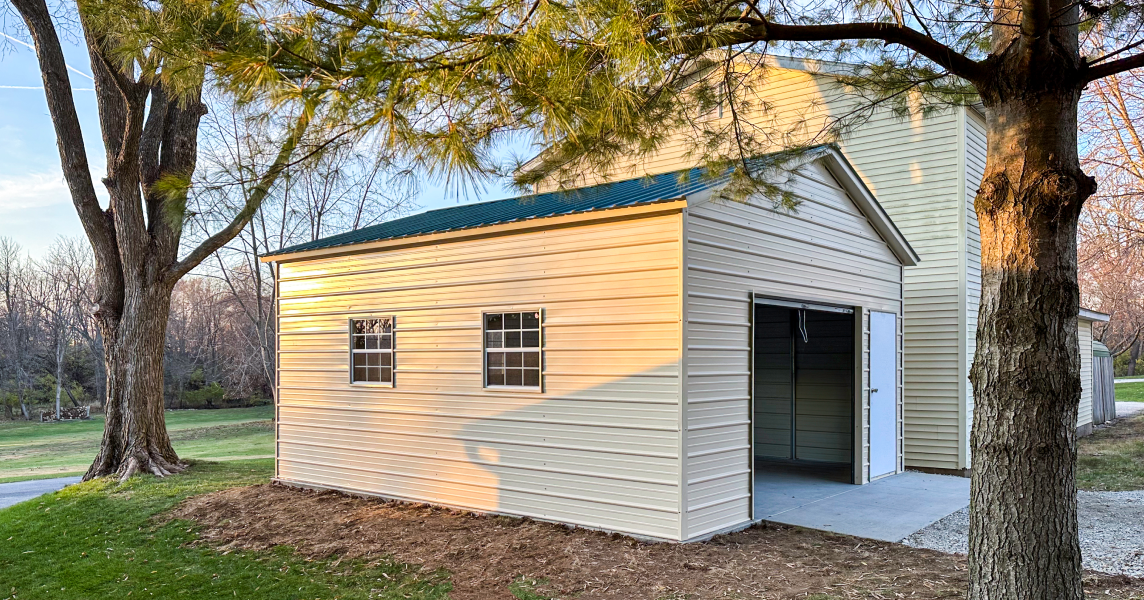
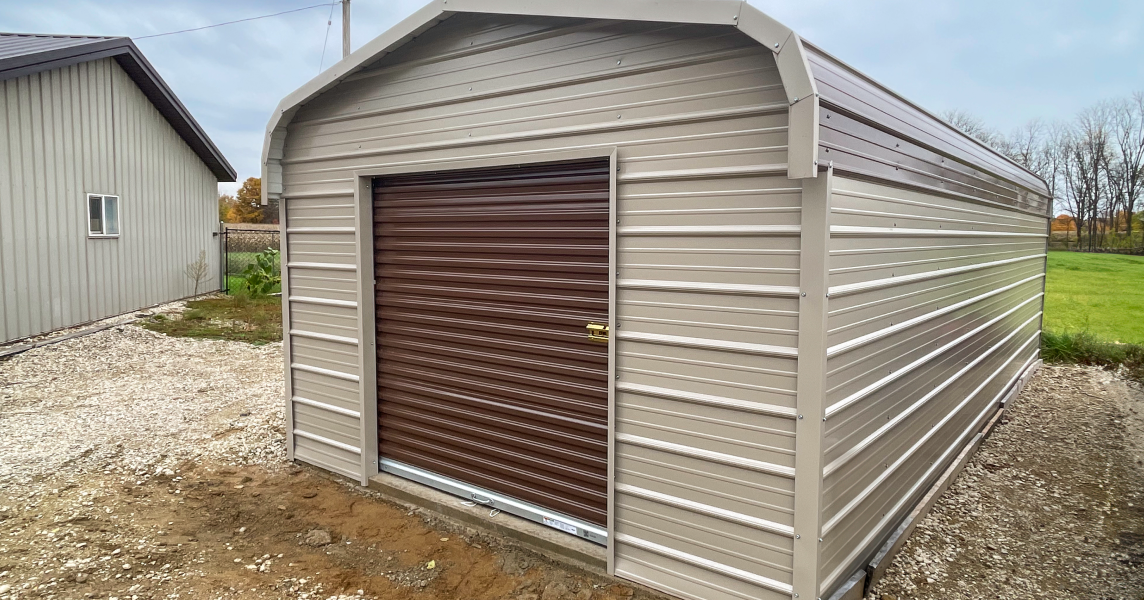
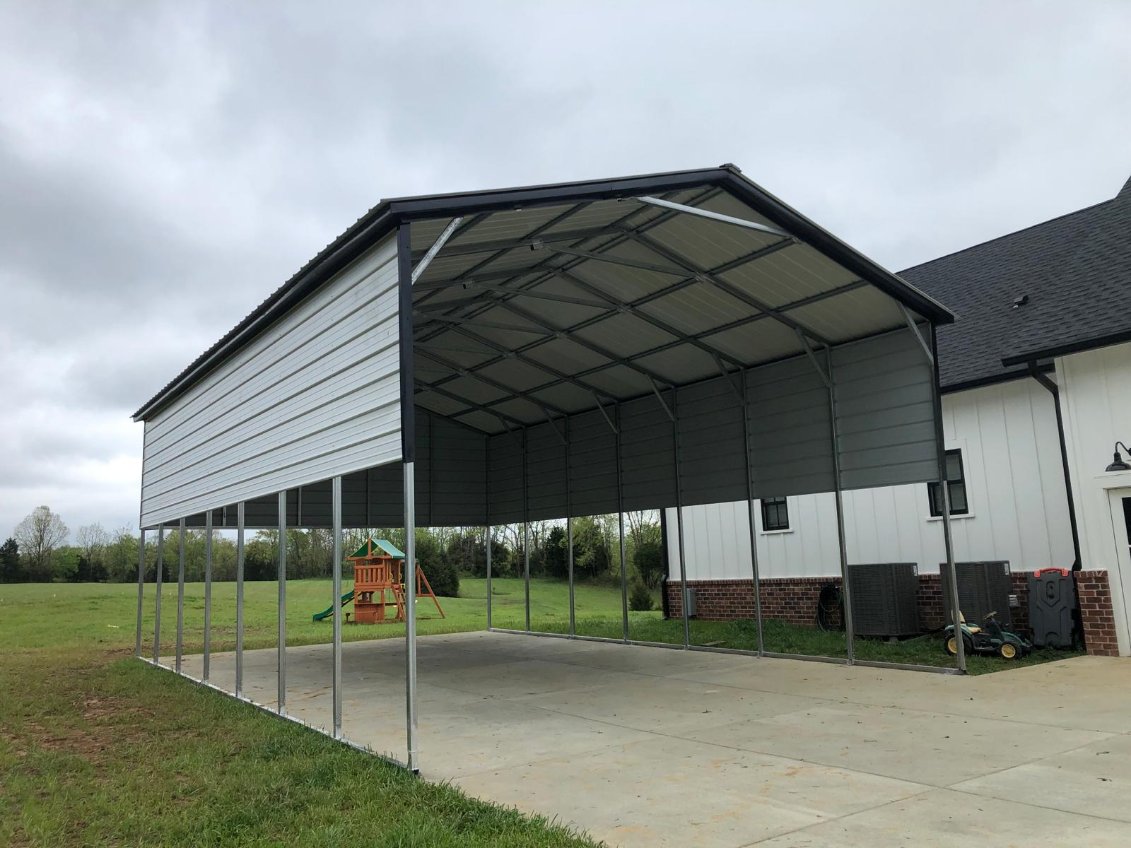
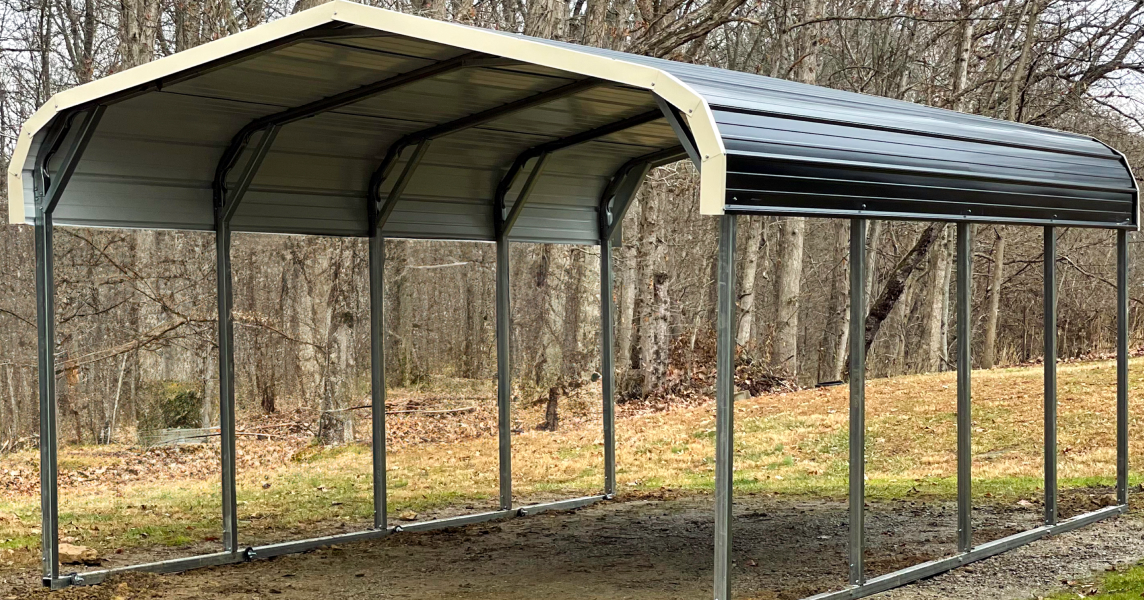
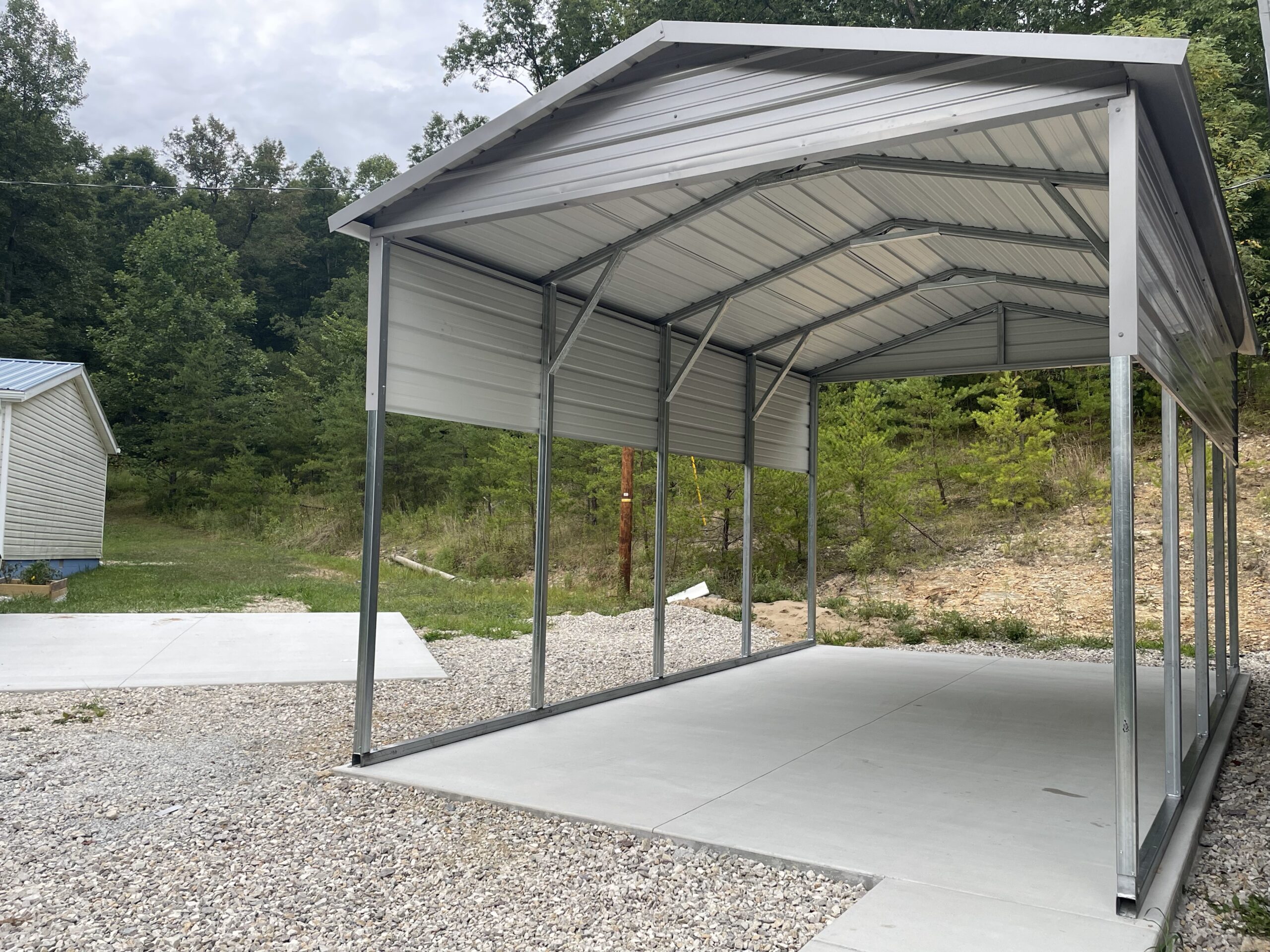
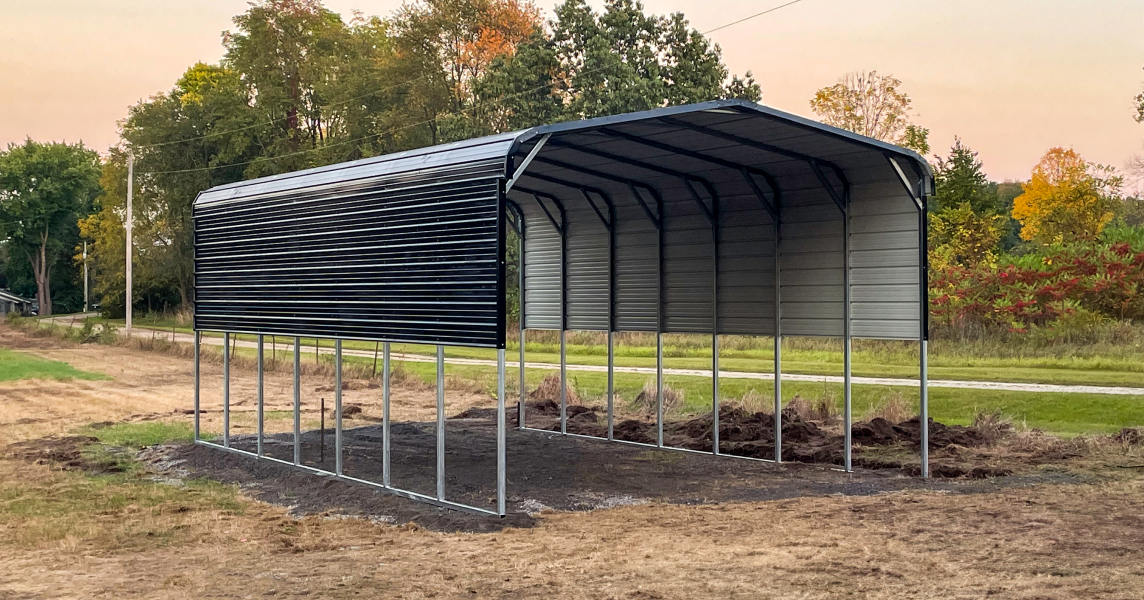
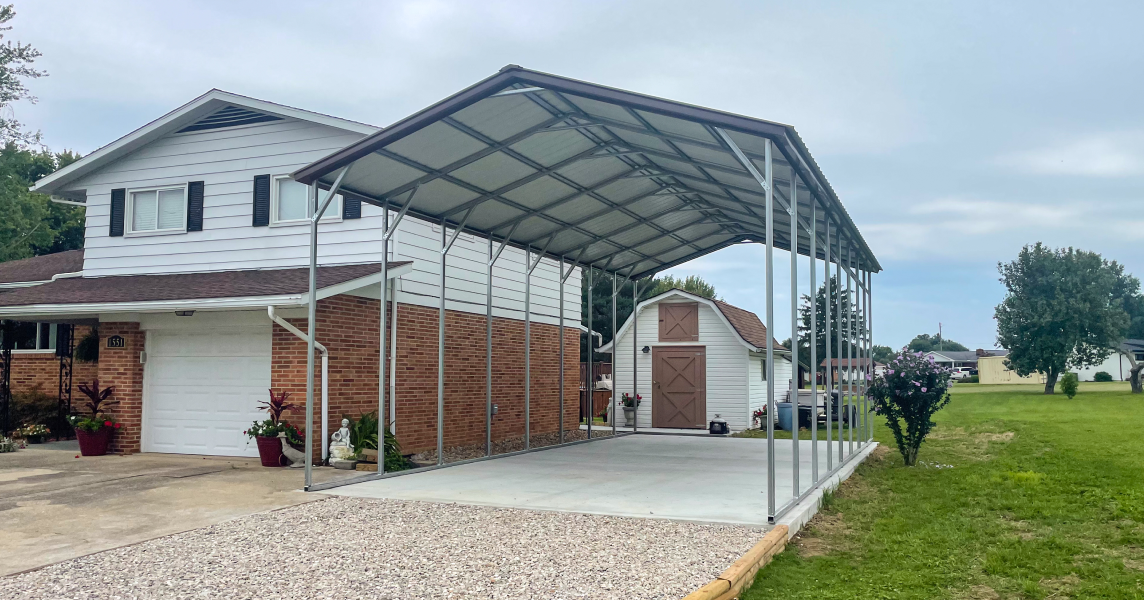
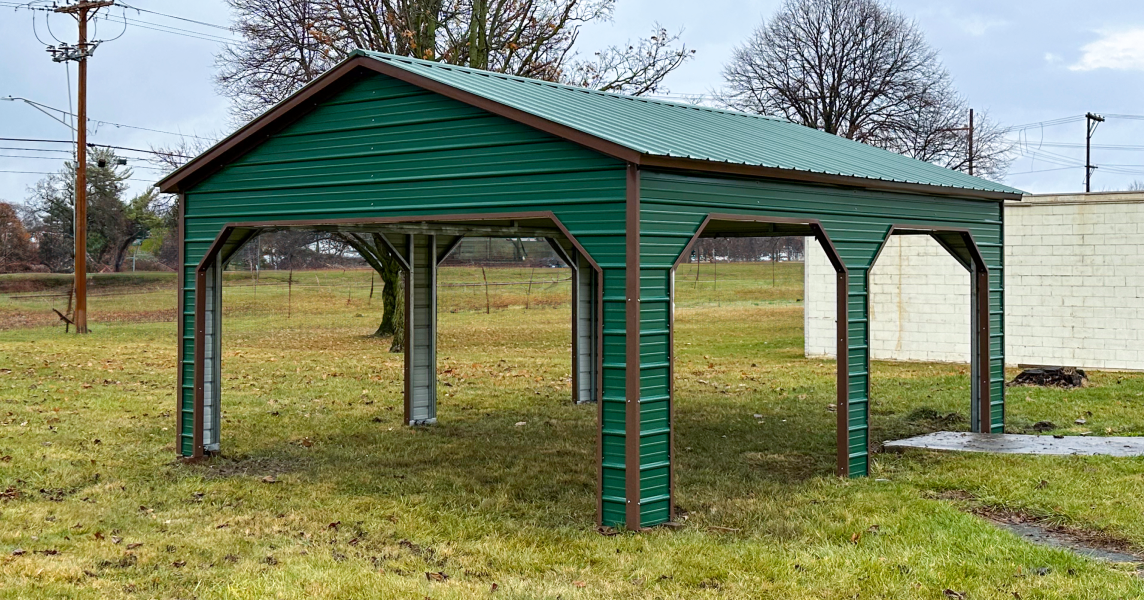
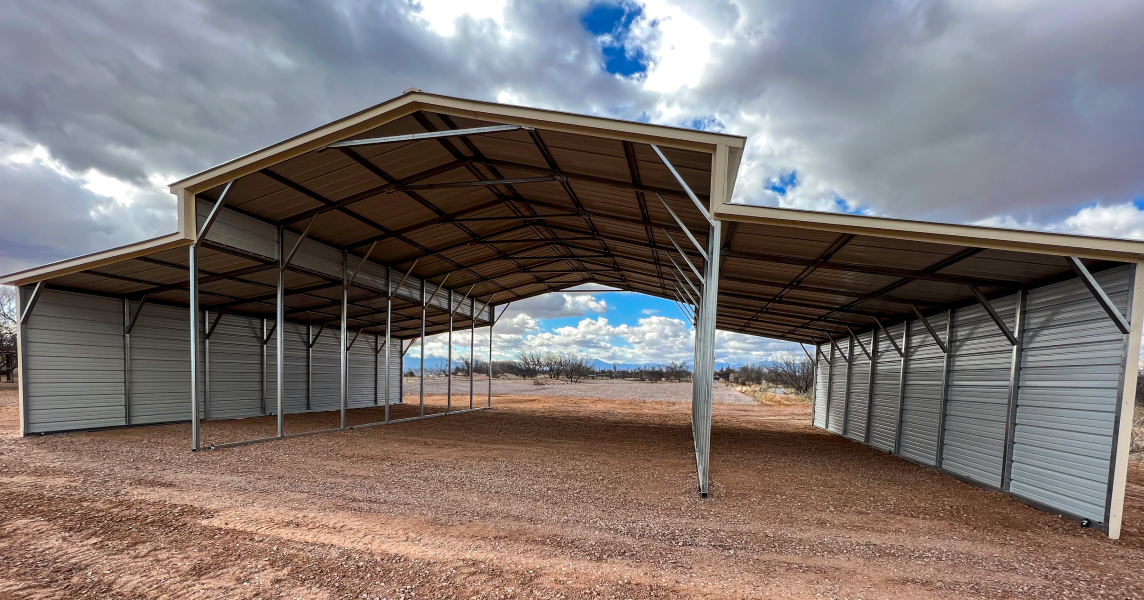
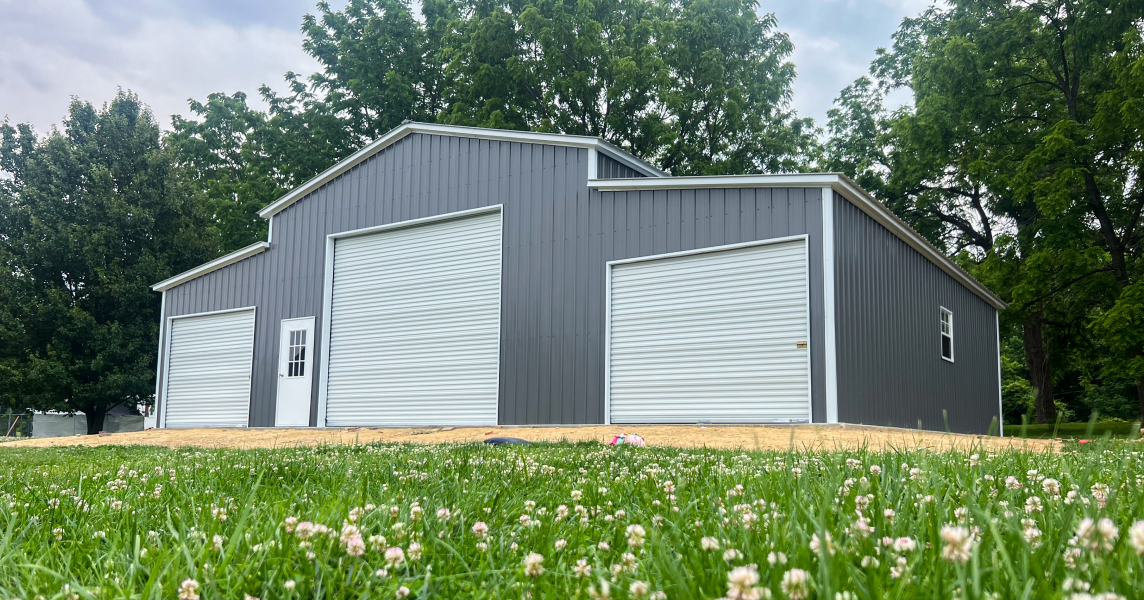
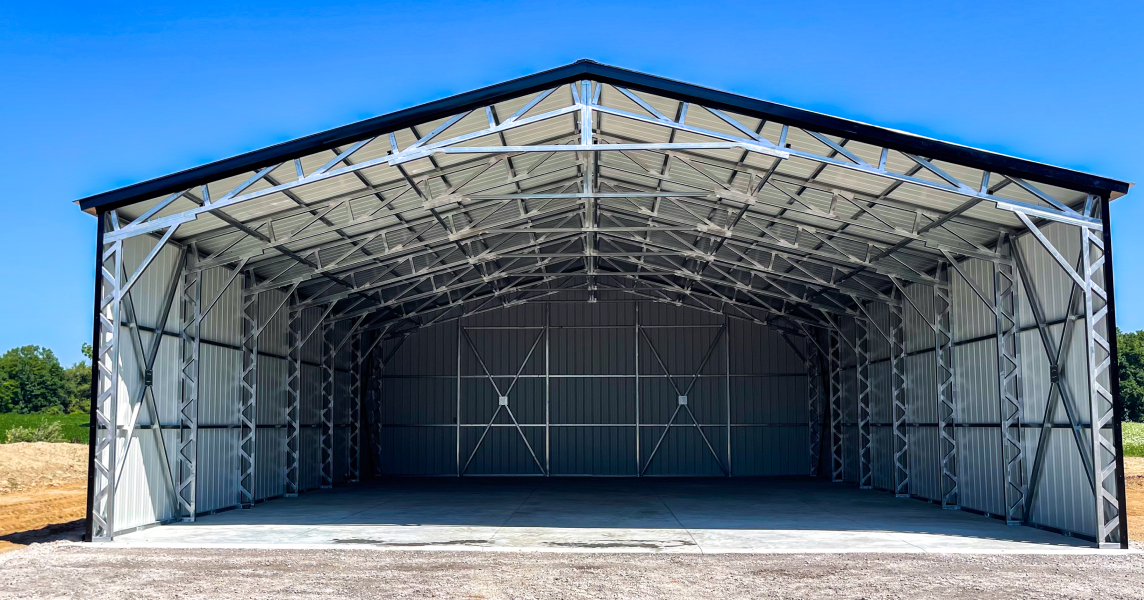
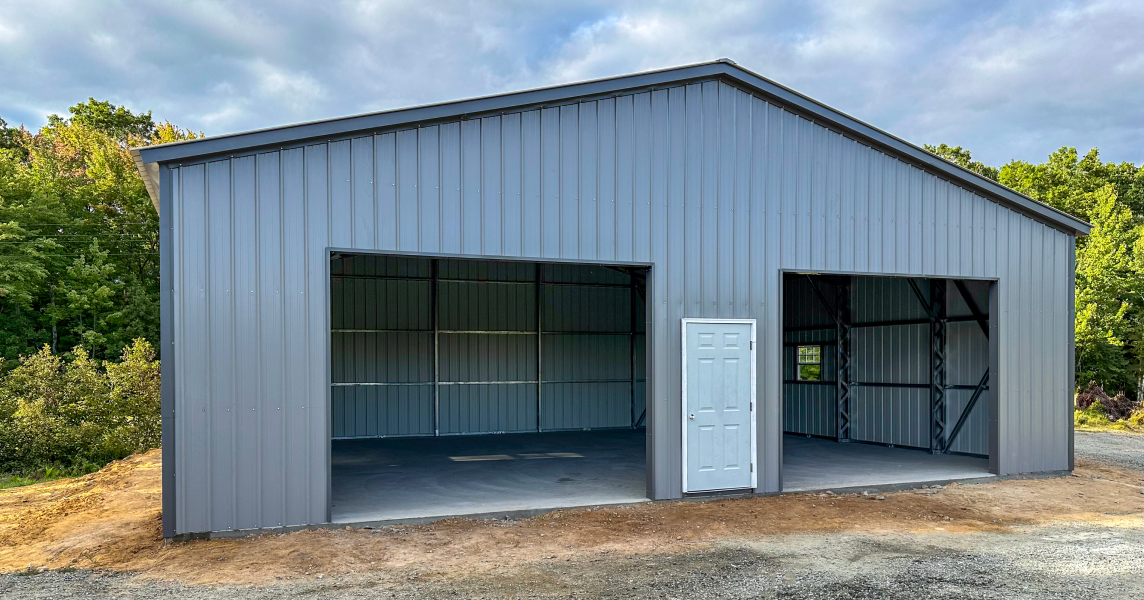
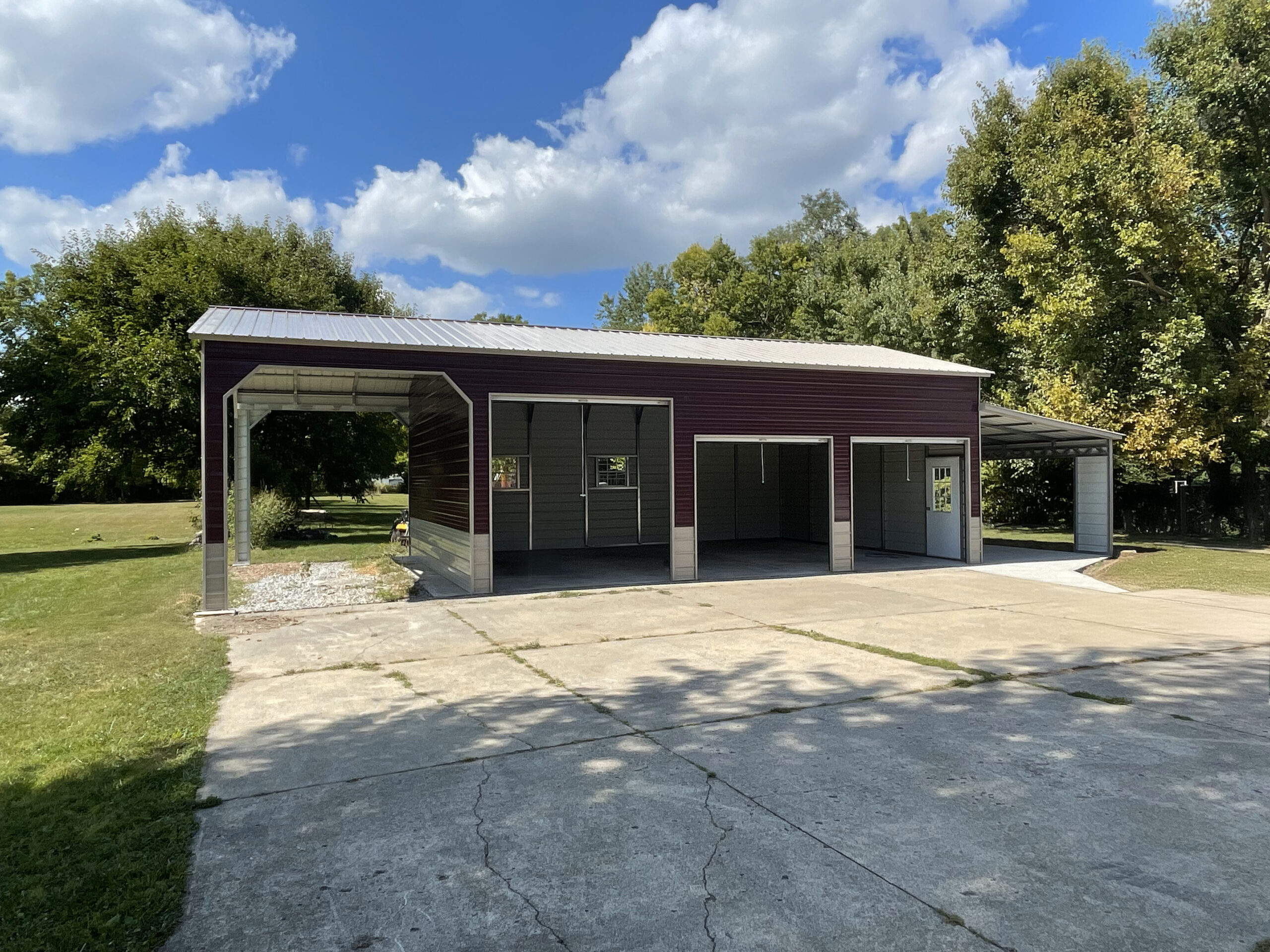
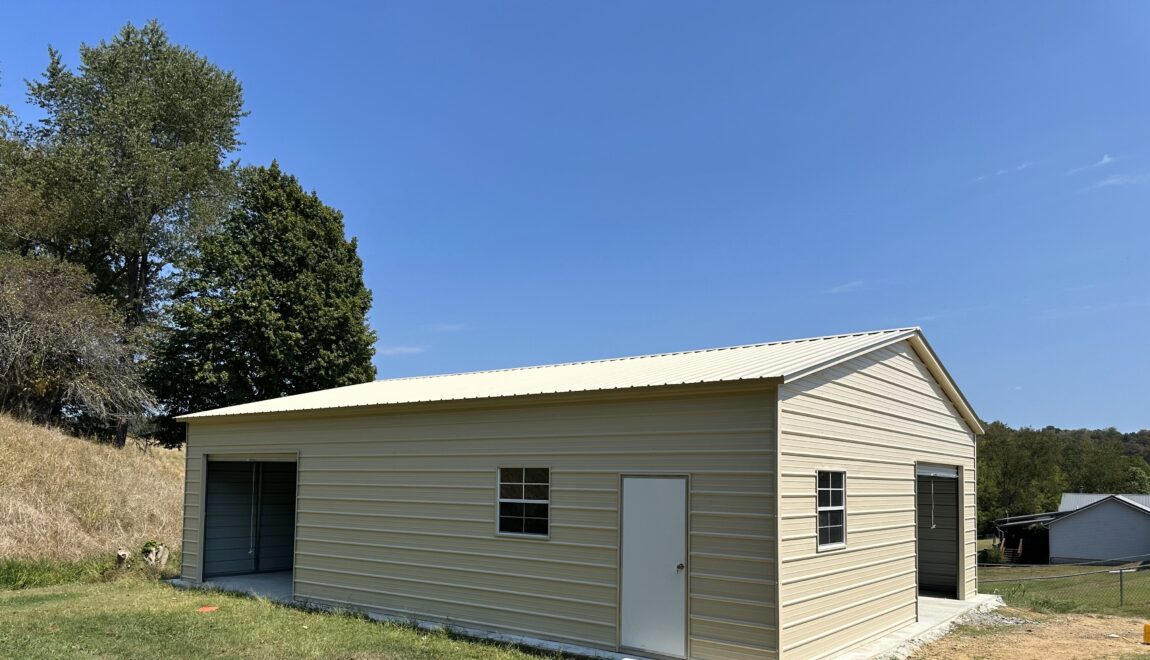
The right shed size depends on what you plan to store, how often you need to access it, and whether you want the building to do more than hold seasonal items. For simple yard-tool storage, a compact shed may be enough; for a mower, workbench, bicycles, equipment, or hobby space, choosing a larger custom layout will save you from outgrowing it too soon.
At American Carports, Inc., you can use our Build & Price Tool to explore custom shed sizes, roof styles, doors, colors, and upgrades. If you would rather talk through your options, contact our team and we will be happy to help.
What Is the Best Shed Size for Storage?
Start by listing everything that will live inside your shed. Include what you own today, along with items you are likely to add in the next few years. A shed that seems roomy when empty can fill up quickly after adding a mower, shelving, garden supplies, bicycles, holiday decorations, and hand tools.
As a general rule, choose a shed that gives you enough room to walk in, find what you need, and remove an item without moving half of the contents first. You should also consider where shelves, hooks, storage cabinets, and larger equipment will go before selecting the final dimensions.
These common shed sizes can help you narrow down your starting point:
| Shed Size | Best For |
| 6 x 8 | Hand tools, hoses, pots, soil, and basic garden supplies |
| 8 x 10 | A push mower, standard tools, yard supplies, and seasonal storage |
| 10 x 12 | A riding mower or larger equipment, plus shelving and garden storage |
| 12 x 16 | Lawn equipment, bicycles, storage bins, and a small work area |
| 12 x 20 | Larger storage needs, a workbench, hobby supplies, or a compact workshop |
| 16 x 20 or larger | Equipment storage, serious hobbies, a workshop, or combined storage and work space |
A slightly larger metal shed is often the smarter long-term investment. The extra space can give you room for future purchases and make the building more functional from day one.
How Do You Measure for a Shed?
Before deciding on a shed size, measure both your available site and the items you want to store. Measuring the property is just as important as measuring your equipment because setbacks, fences, landscaping, utility lines, drainage, driveways, and HOA rules can limit where the building can go.
Start with your largest items. Measure the width, length, and height of a mower, ATV, golf cart, bikes, shelving unit, or tool chest. Then allow room for door clearance, walkways, and access around the equipment.
For example, a shed that will hold only a push mower and a few garden tools may work well at 8 x 10. If you own a riding mower, want shelves along the wall, and need room to move comfortably, a 10 x 12 or 12 x 16 layout may be much more practical.
How Much Walking Space Do You Need?
Walking space is easy to overlook when comparing shed dimensions. If the shed will only be opened occasionally to retrieve a box or rake, a tighter layout may be acceptable. If you will use it every weekend, store frequently used equipment, or create a work area, leave enough open floor space to move safely.
Plan for:
- A clear path from the entry door to the back wall
- Enough space to turn and remove lawn equipment
- Room to open storage cabinets or roll-up doors
- Access to wall-mounted tools and shelves
- Space around a workbench, mower, or hobby table
- Clearance for any equipment that needs to be pushed, rolled, or driven inside
A shed should make your property easier to manage, not create another crowded storage problem.
What Size Shed Do You Need for Lawn Equipment?
The right shed size for lawn equipment depends on whether you use a push mower, riding mower, zero-turn mower, tractor, ATV, or multiple pieces of equipment. A compact mower and a few hand tools may fit in an 8 x 10 shed, but larger machines need wider doors and more maneuvering room.
A 10 x 12 shed can work well for many homeowners who need to store a mower, trimmer, blower, gas cans, garden tools, and a few shelves. If you have a riding mower or want to store equipment without packing it tightly against the walls, consider moving up to a 12 x 16 or 12 x 20 layout.
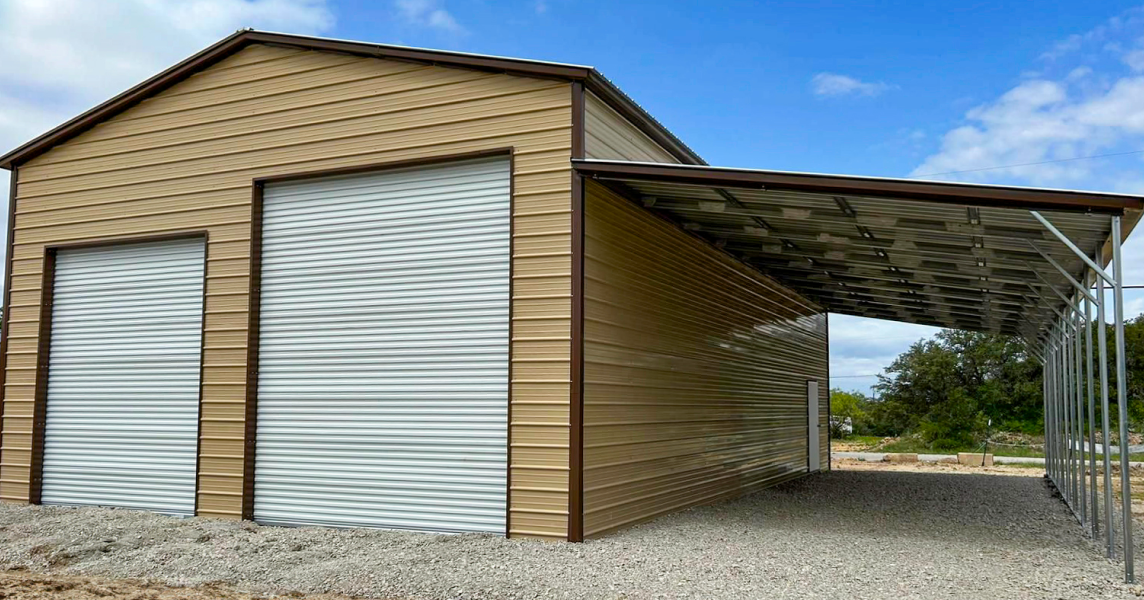
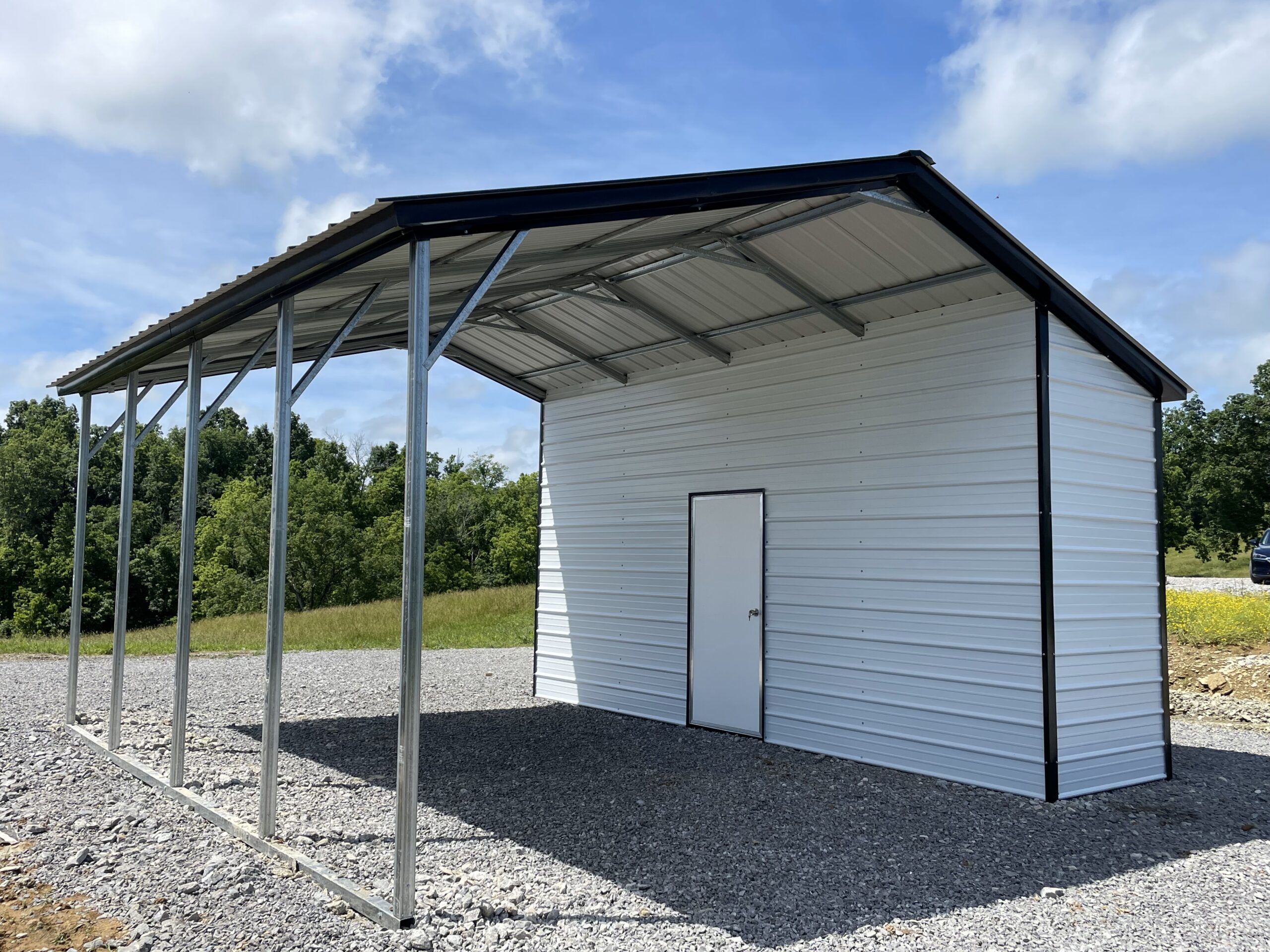
Door selection matters too. A walk-in door is convenient for hand tools and supplies, while a wider roll-up or double door makes it easier to bring in mowers, ATVs, carts, and larger equipment. Design the entrance around the item that will be hardest to move.
What Size Shed Is Best for a Riding Mower?
Most riding mowers need more than a small garden shed. In addition to the mower’s physical footprint, you need room to drive or roll it through the entry, park it, and access other stored items.
A 10 x 12 shed may work for a compact riding mower, but a 12 x 16 shed offers more useful room for shelves, fuel storage, tools, and maneuvering. If you have a zero-turn mower, tractor, multiple machines, or larger property-maintenance equipment, a 12 x 20, 16 x 20, or larger custom building may be the better fit.
Think about your future needs as well. If you expect to add landscaping tools, a trailer, a snow blower, or a garden cart, selecting a larger building now can be more efficient than replacing a shed later.
How Big Should a Workshop Shed Be?
A workshop shed should be sized around the work you plan to do inside it. A small hobby station may fit in a 12 x 16 space, while woodworking, mechanical projects, welding, furniture building, and equipment repair generally call for more floor space.
A workshop often benefits from a 12 x 20 or 16 x 24 layout because it can accommodate a workbench, shelving, tools, materials, and clear movement around the project. Larger workshops may need room for machinery, rolling toolboxes, a dedicated assembly table, or more than one person working at a time.
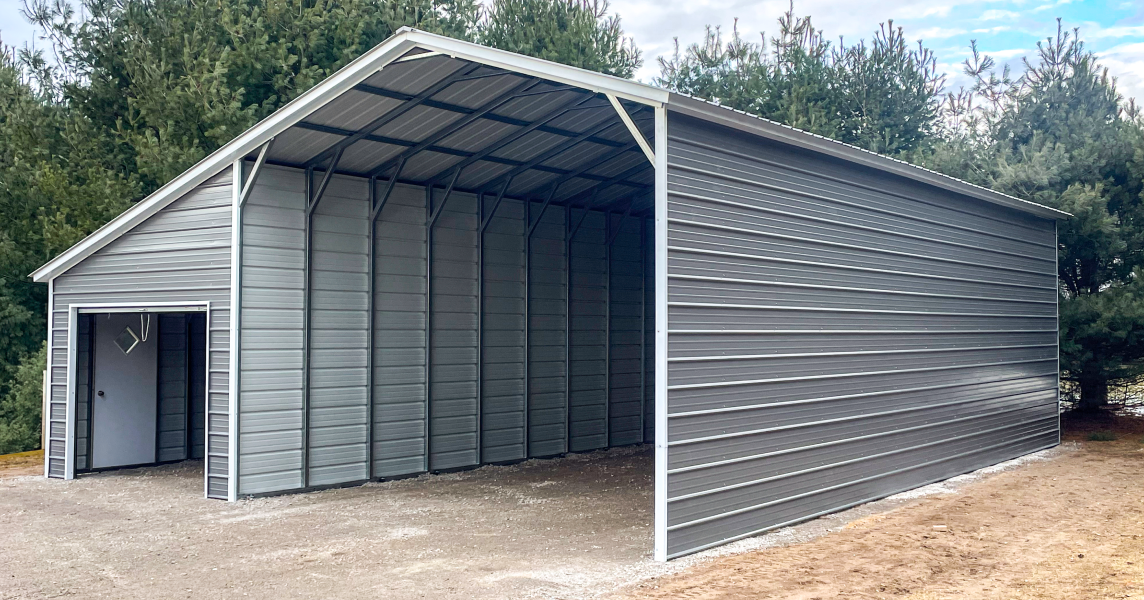
When customizing a metal shed, consider adding windows for natural light, a walk-in door for daily access, a roll-up door for larger equipment, and enough height for storage racks or overhead lighting. If the building will be used year-round, ventilation and insulation can also make it more comfortable.
For additional planning ideas, read our guide comparing a garden shed vs. workshop shed.
Should You Size Up Your Shed?
In most cases, yes. A larger shed costs more than a smaller one, but too little space can make the building frustrating to use almost immediately. Adding a few feet of width or length can create more practical storage capacity and reduce clutter.
Sizing up is especially worthwhile if you:
- Have a growing collection of tools or equipment
- Want to add a workbench or hobby area
- Own a riding mower, ATV, golf cart, or compact tractor
- Need space for seasonal furniture or decorations
- Want organized shelving instead of floor piles
- May use the building as a workshop later
- Plan to store items for more than one household member
You do not need to build the largest structure possible. The goal is to choose a shed that fits your site, budget, local requirements, and intended use without limiting you too quickly.
Does Your Climate Affect Shed Size?
Yes. Local weather can influence the shed size, roof style, placement, and upgrades you need. Customers across the United States may need to account for snow, high winds, heavy rain, intense heat, humidity, or coastal weather conditions.
In snowy regions, choose a building engineered for the applicable snow-load requirements and consider a vertical roof that helps precipitation move off the structure. In high-wind areas, proper anchoring and wind certification may be important. In hot or humid climates, ventilation, insulation, and a well-prepared foundation can help protect stored items from excessive heat and moisture.
Your local building department can explain permit requirements, setbacks, height limits, wind ratings, snow-load standards, and foundation expectations for your property. If you live in an HOA community, confirm design and placement rules before ordering.
What Foundation Size Does a Shed Need?
Your foundation should match the shed footprint and provide a level, stable installation surface. A shed placed on uneven ground can create problems with doors, drainage, anchoring, and long-term performance.
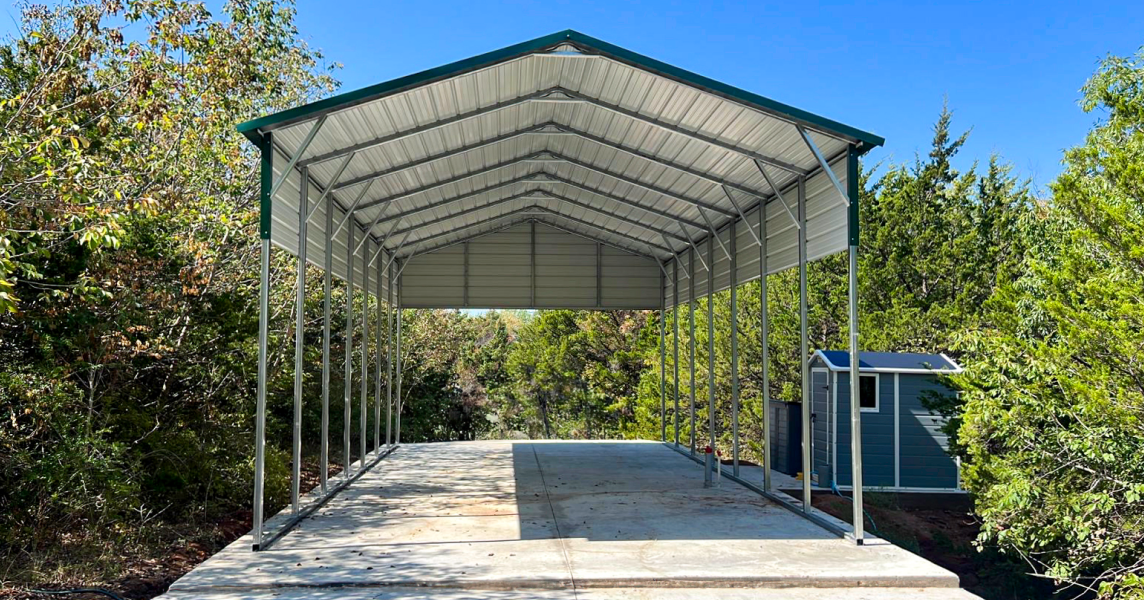
Depending on the building size, intended use, local code, and soil conditions, you may choose a compacted gravel base, concrete slab, or another approved foundation. A concrete pad is often a strong choice for workshop sheds, heavy equipment storage, or buildings with a vehicle-style door because it provides a durable, level floor.
Leave enough room around the building for drainage and maintenance. Avoid placing the shed in a low area where water regularly collects, and make sure the location is accessible for delivery and installation.
FAQs
What is the most common backyard shed size?
An 8 x 10 or 10 x 12 shed is a common choice for standard yard tools, garden supplies, a push mower, and seasonal storage. Larger sizes are better for riding mowers, workshop space, or heavy equipment.
Is a 10 x 12 shed big enough?
A 10 x 12 shed can be a useful size for many homeowners. It typically provides room for a mower, tools, shelves, and garden supplies, but it may feel tight if you need a workbench or have larger equipment.
What size shed do I need for a riding mower?
A 12 x 16 shed is often a practical starting point for a riding mower with room for tools and storage. Larger mowers and additional equipment may require a 12 x 20 or bigger building.
Should I get a shed with a roll-up door?
A roll-up door is helpful if you will store a riding mower, ATV, golf cart, larger equipment, or bulky supplies. A walk-in door is still useful for easy daily access.
Do I need a permit for a shed?
Permit requirements vary by city, county, and state. Check local regulations for size limits, setbacks, height restrictions, foundation requirements, and wind or snow-load standards before ordering.
Build a storage solution that works for the way you live. Explore custom metal sheds with our Build & Price Tool or contact American Carports, Inc. for help selecting the right shed size.