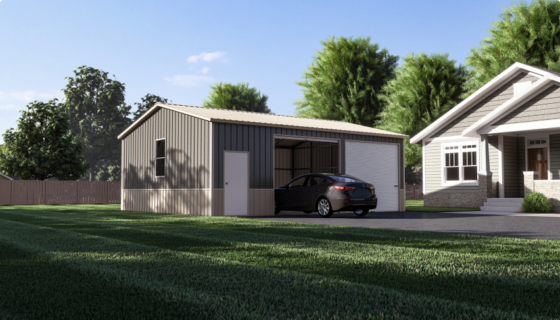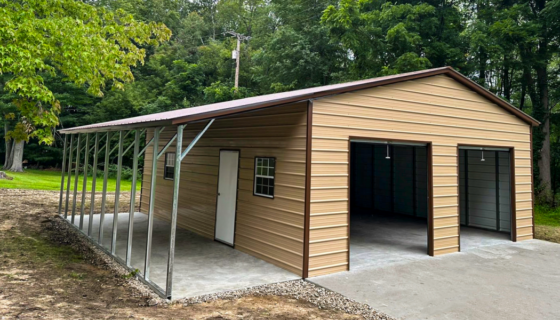

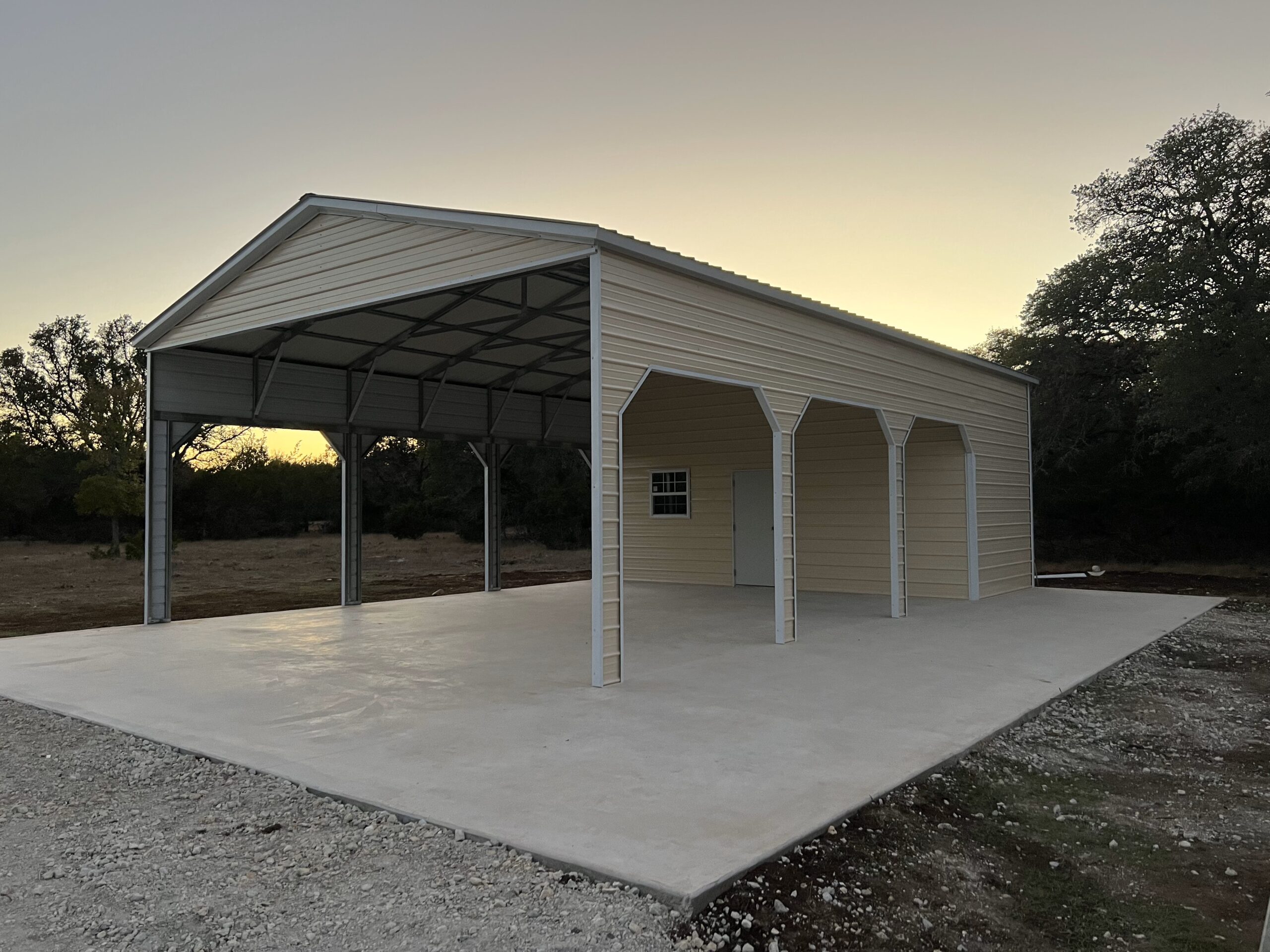
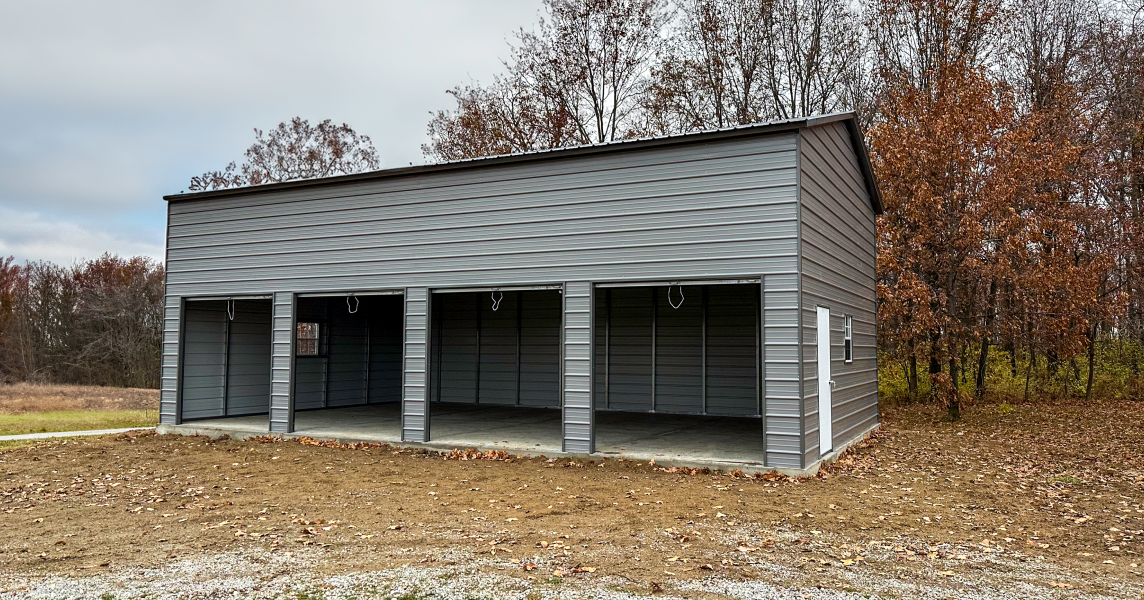
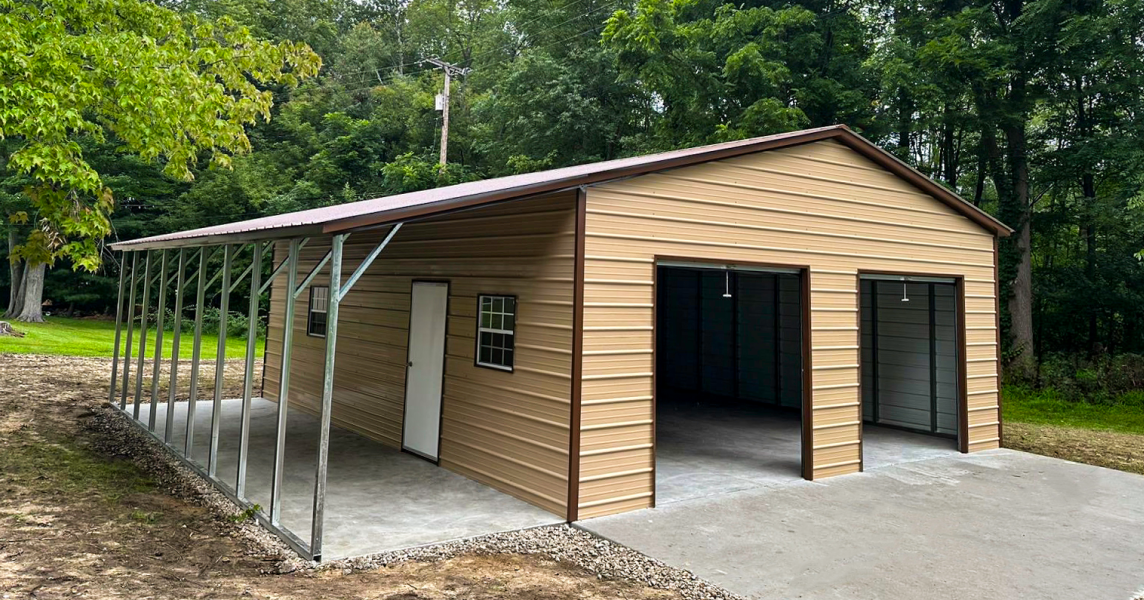
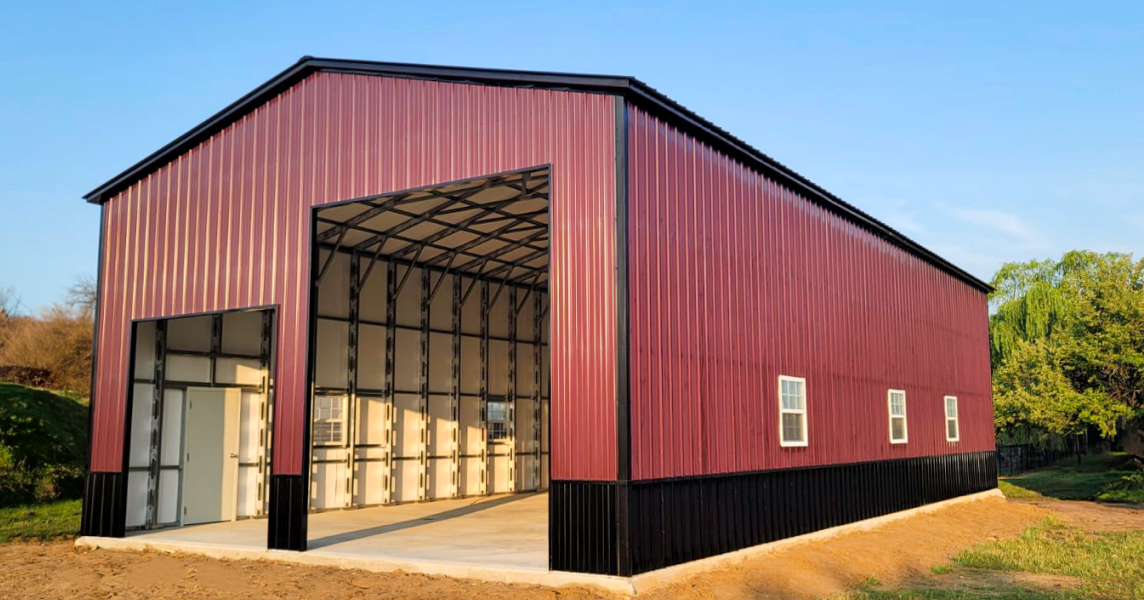
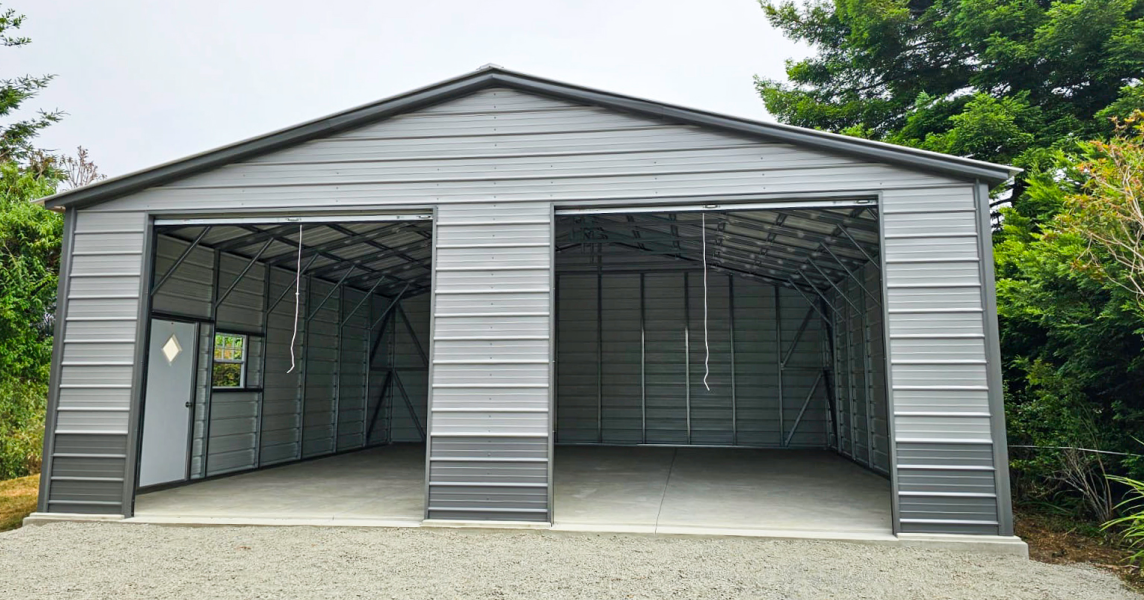
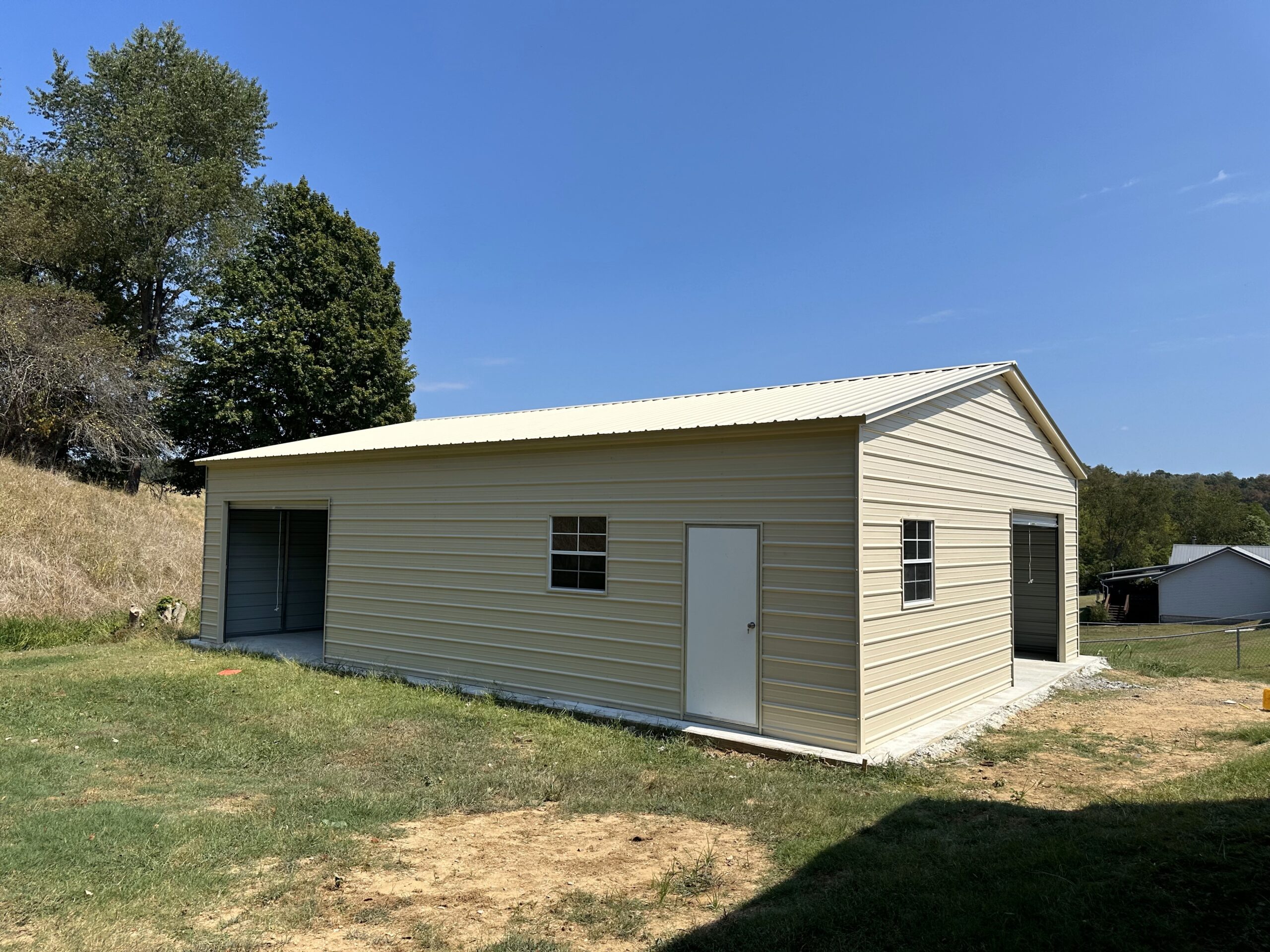
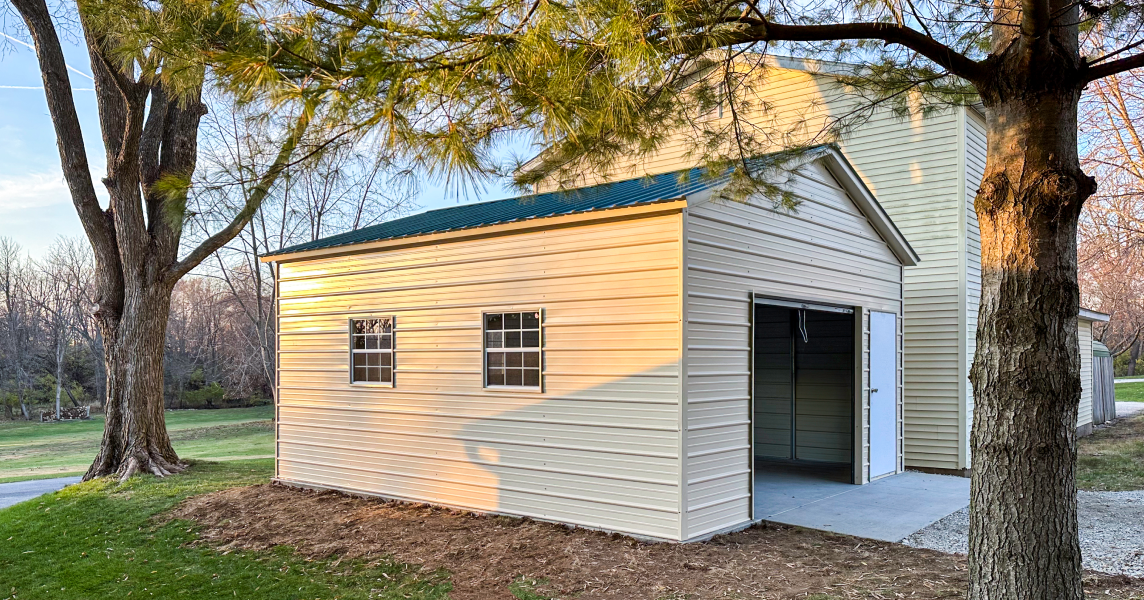
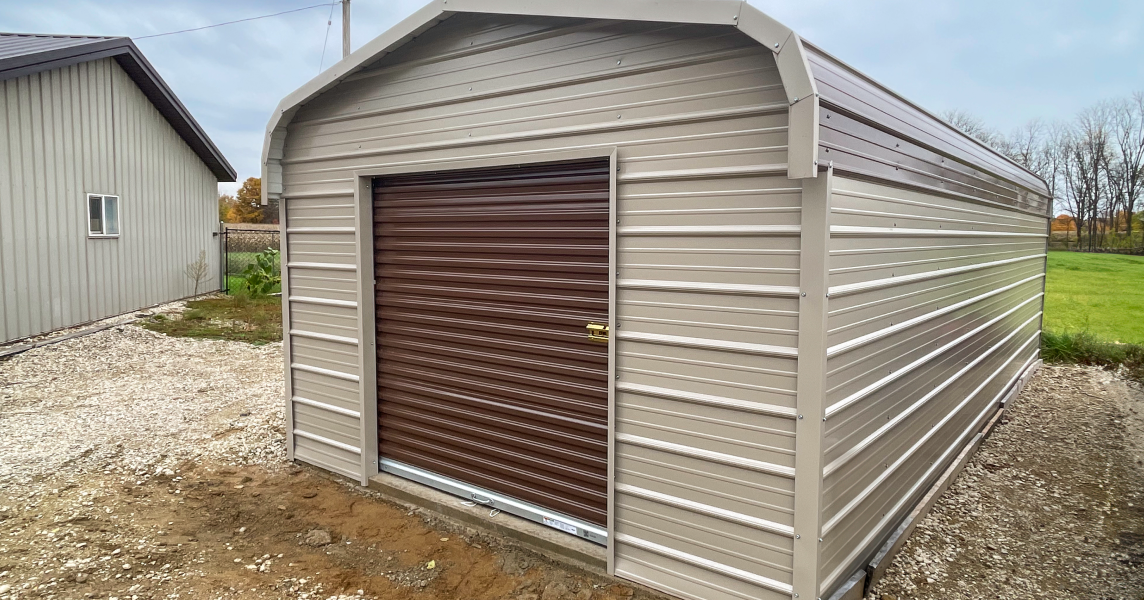
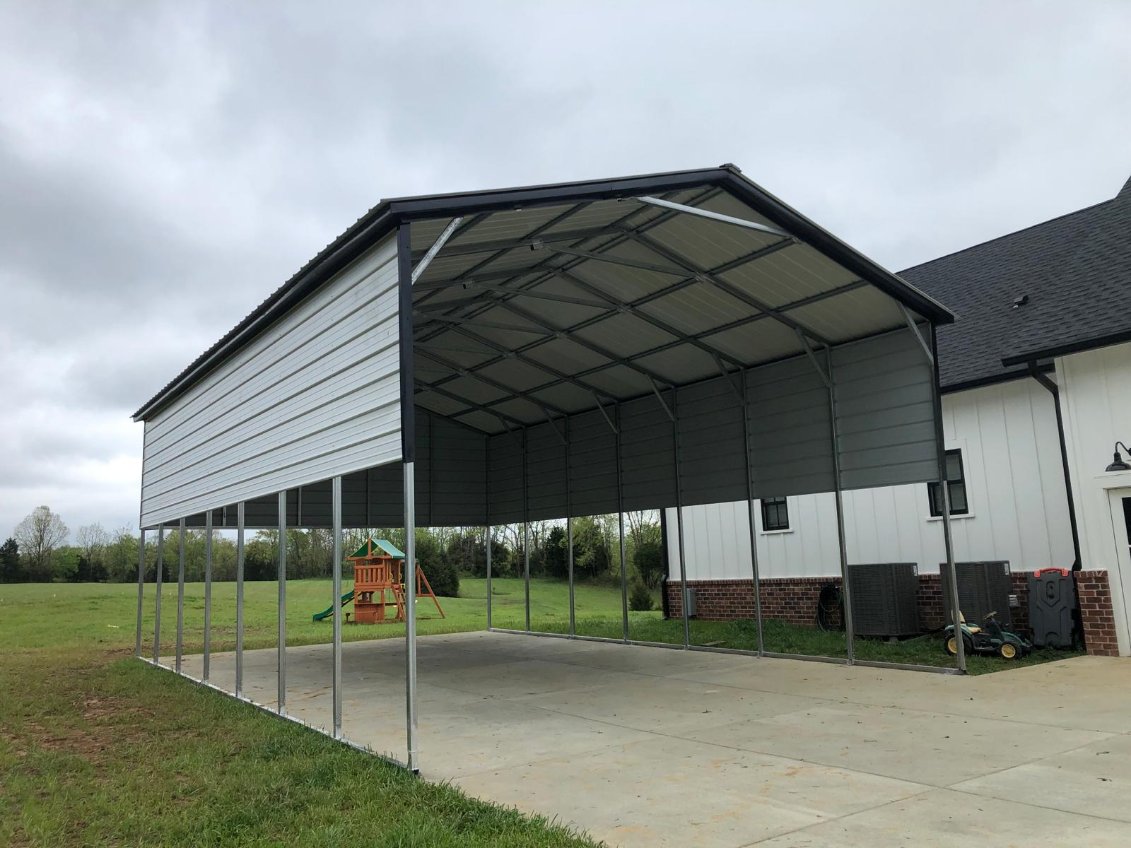
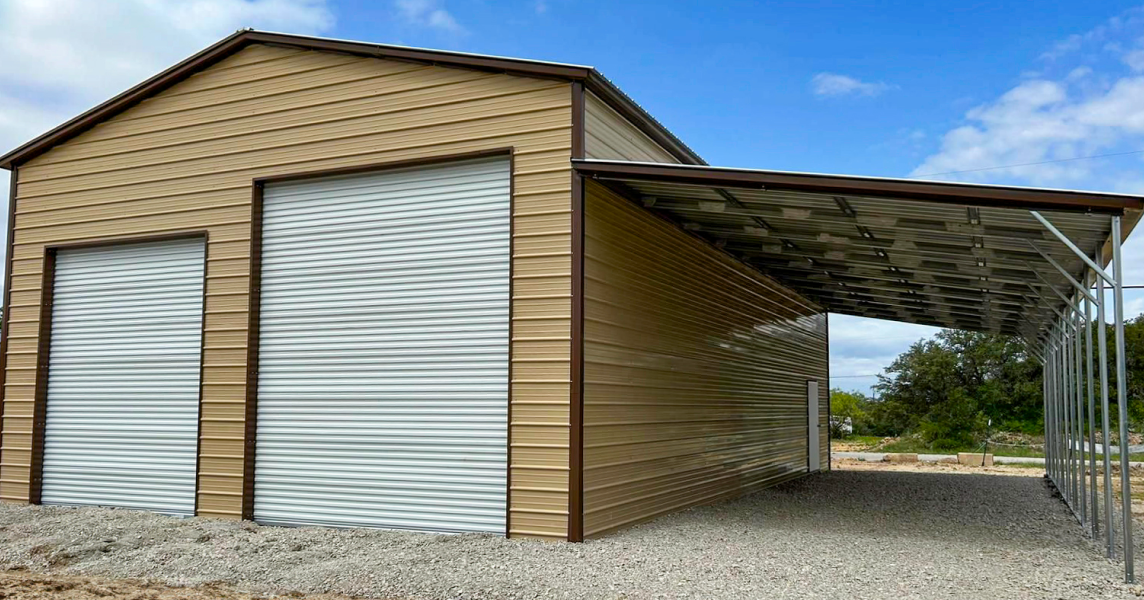
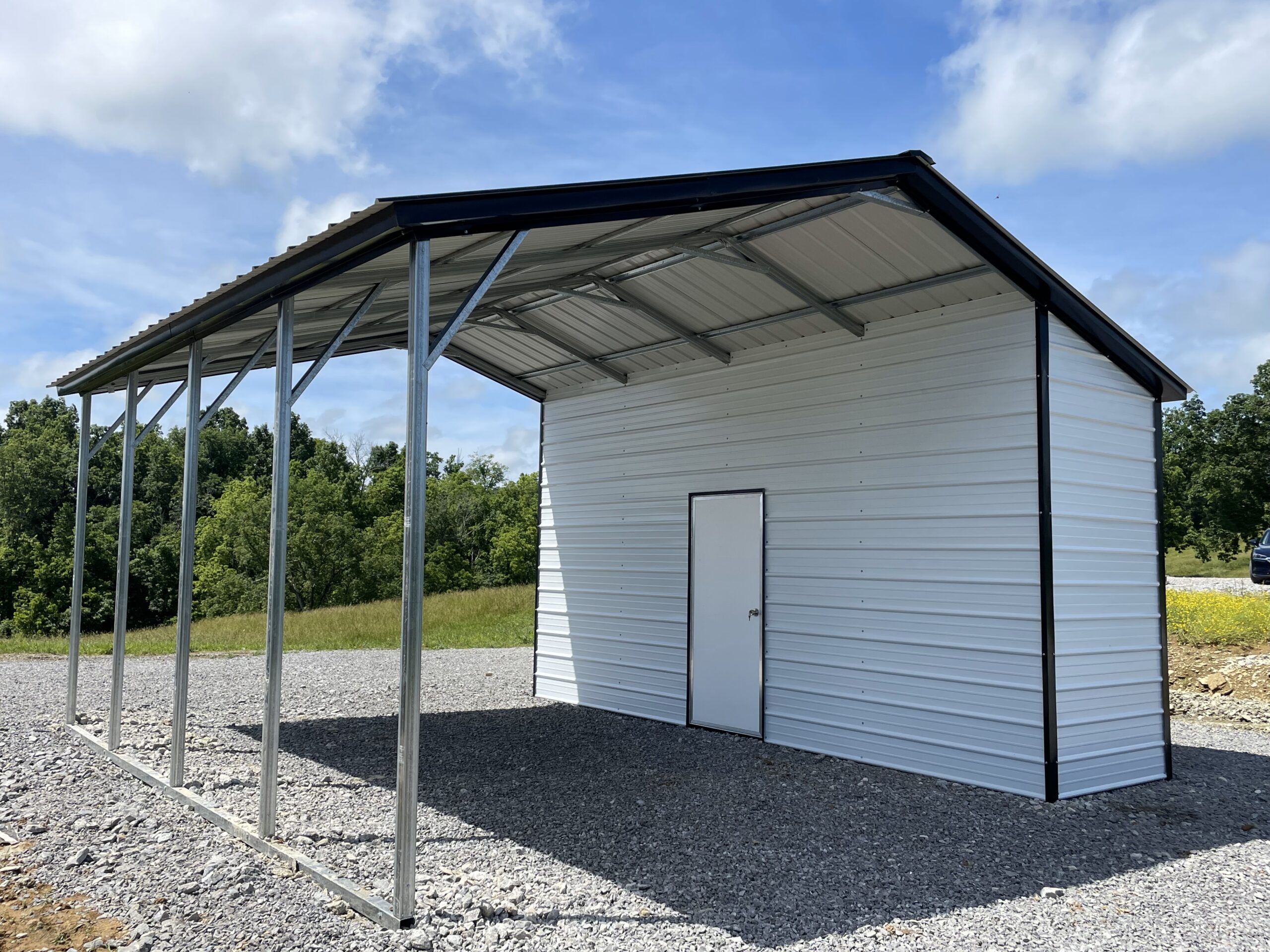
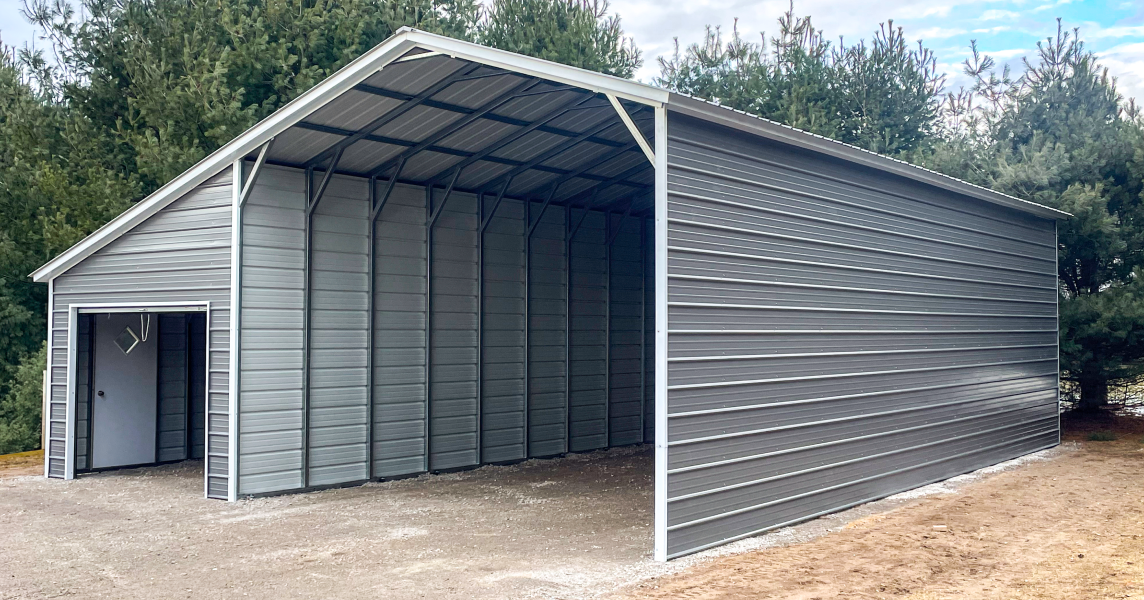
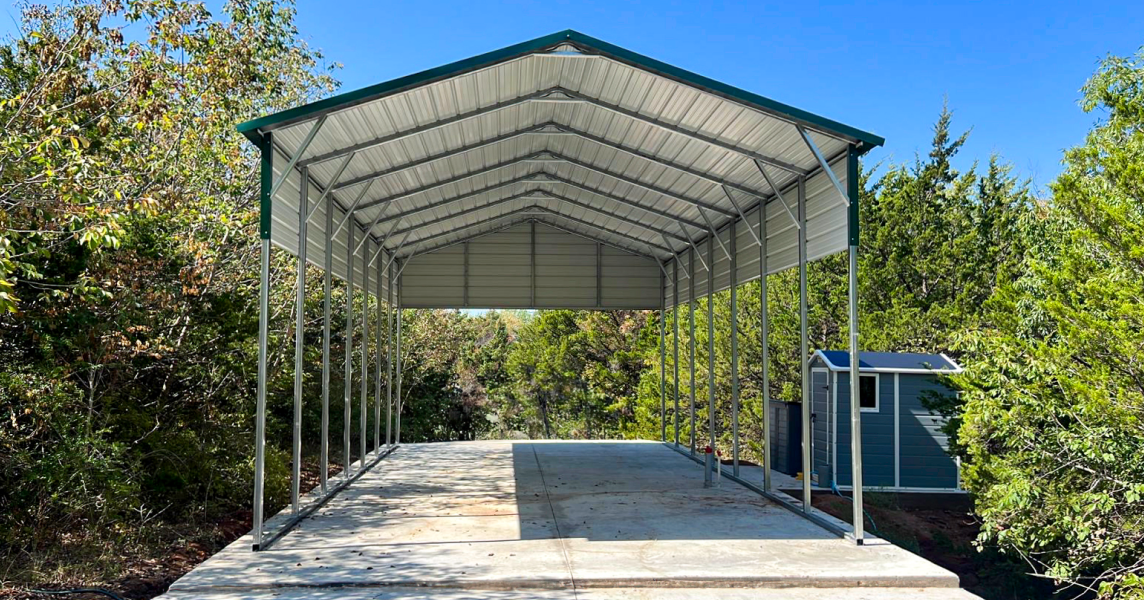
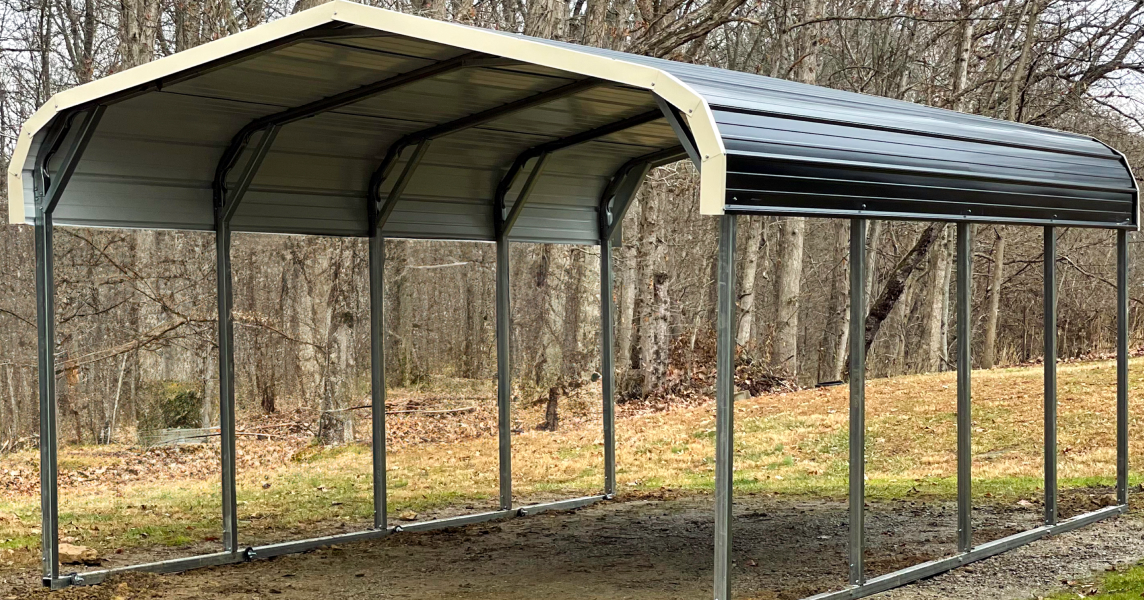
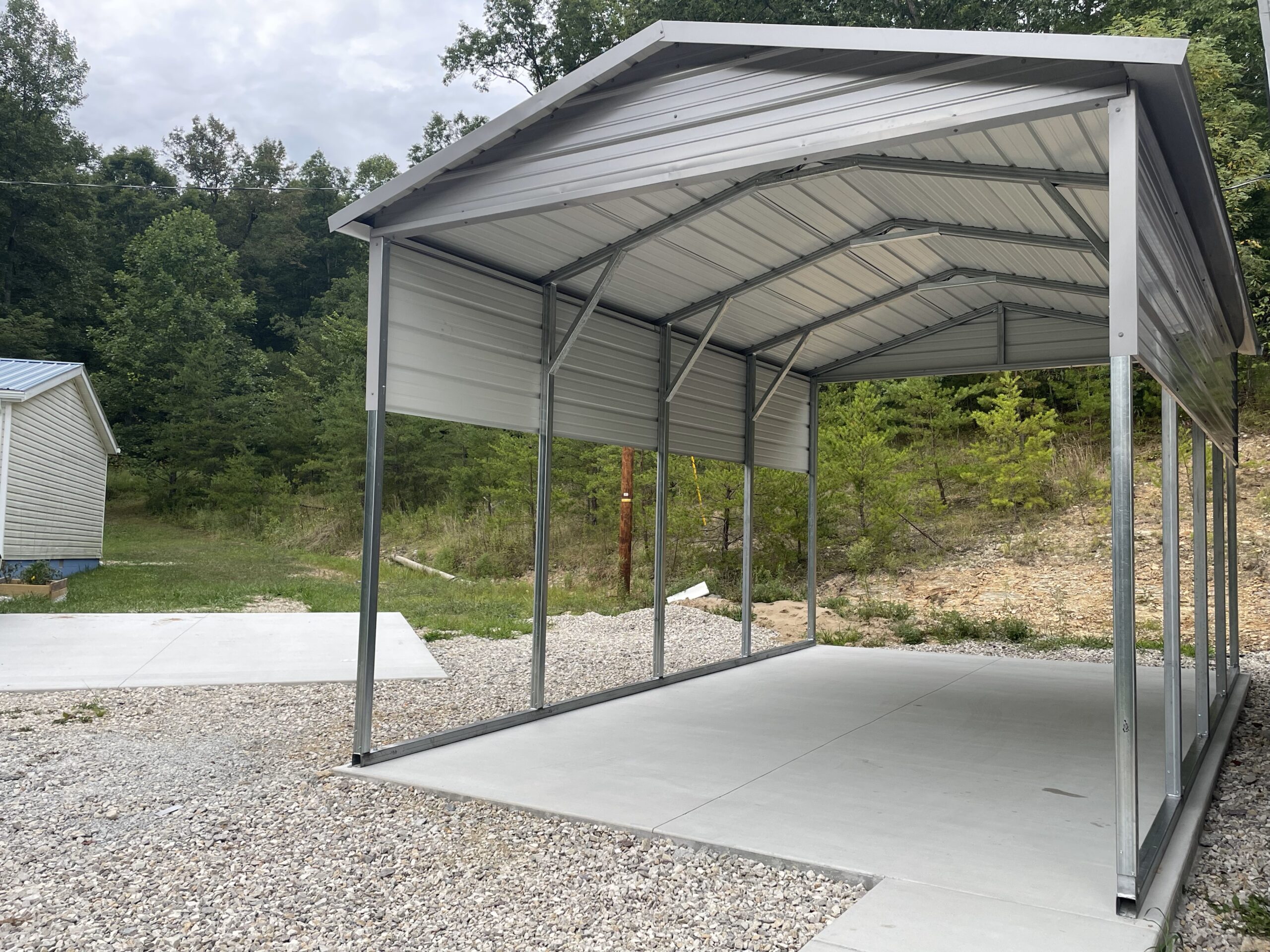
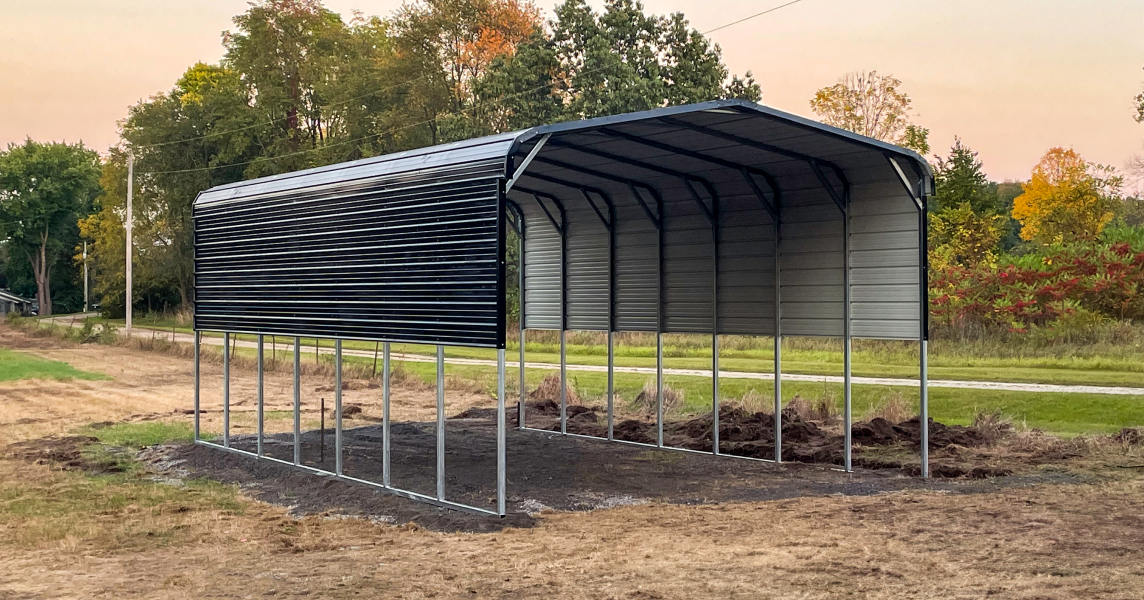
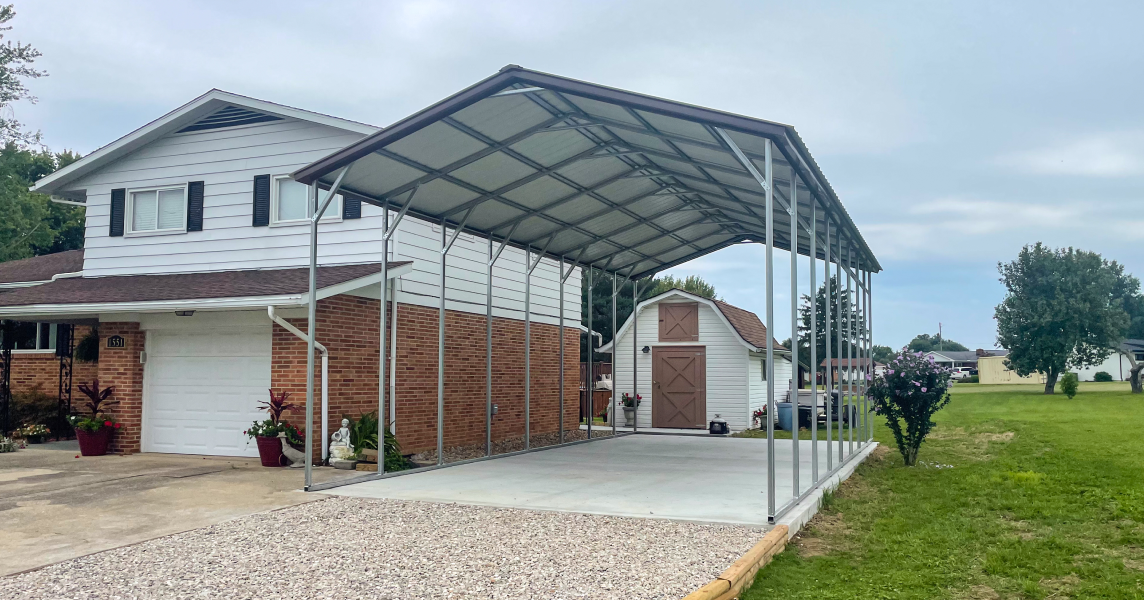
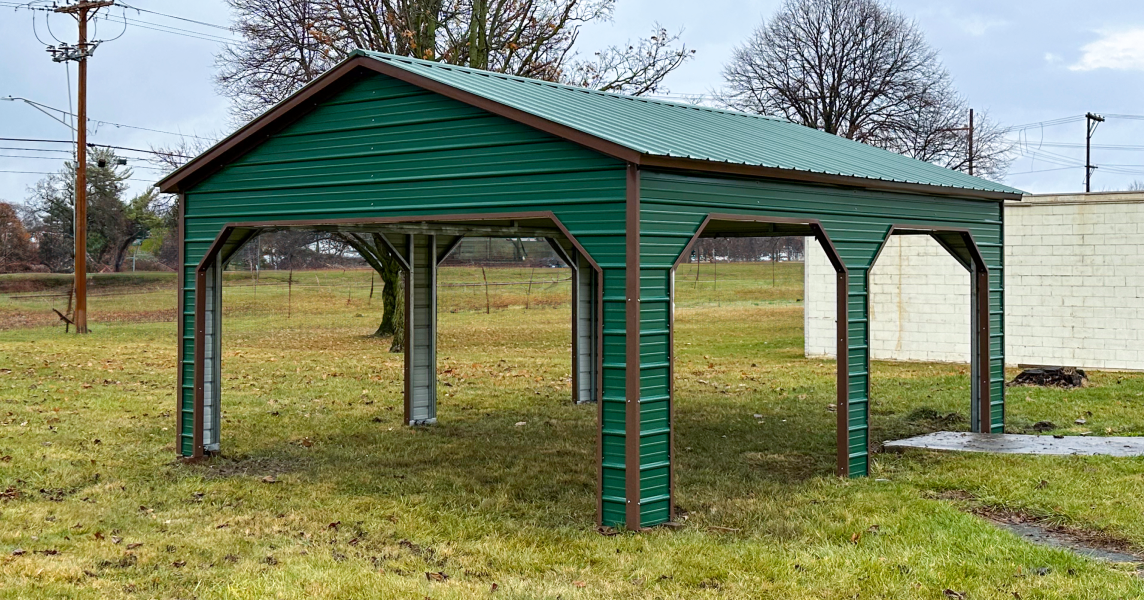
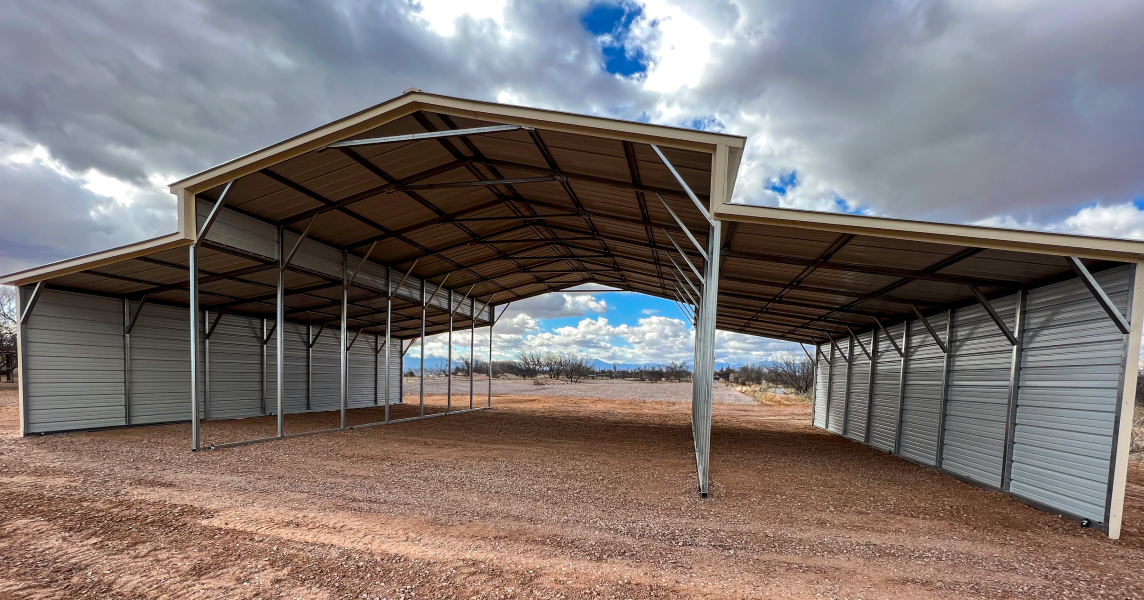
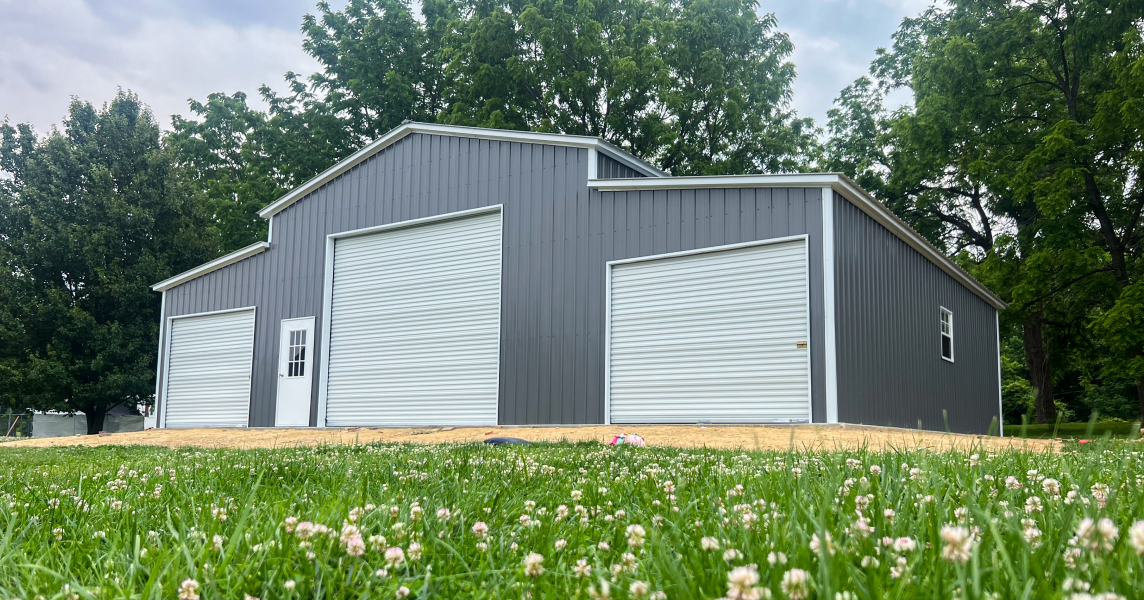
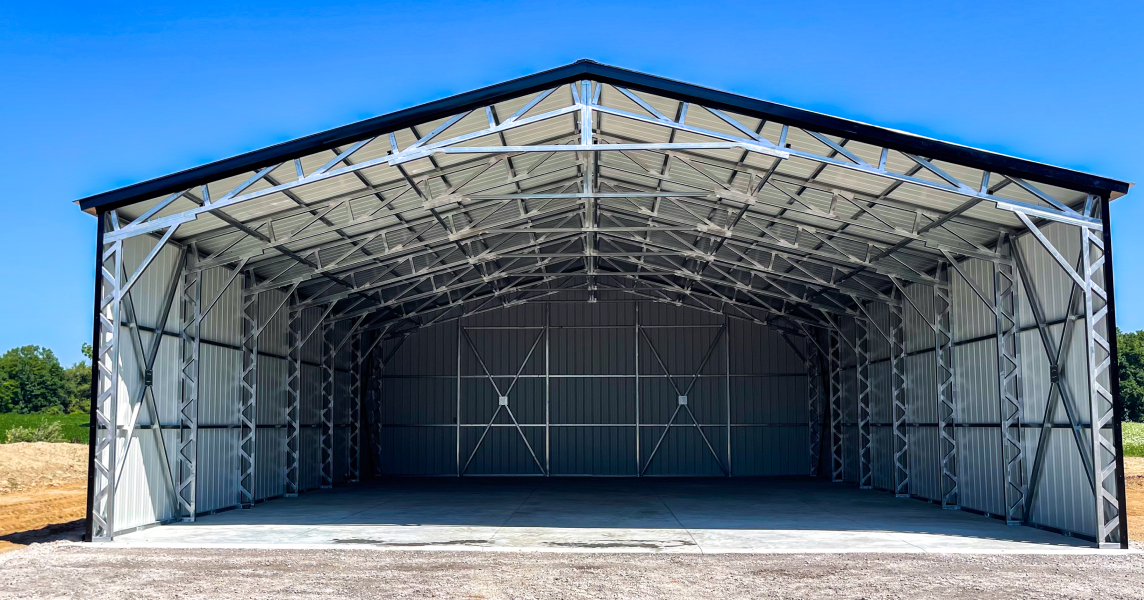
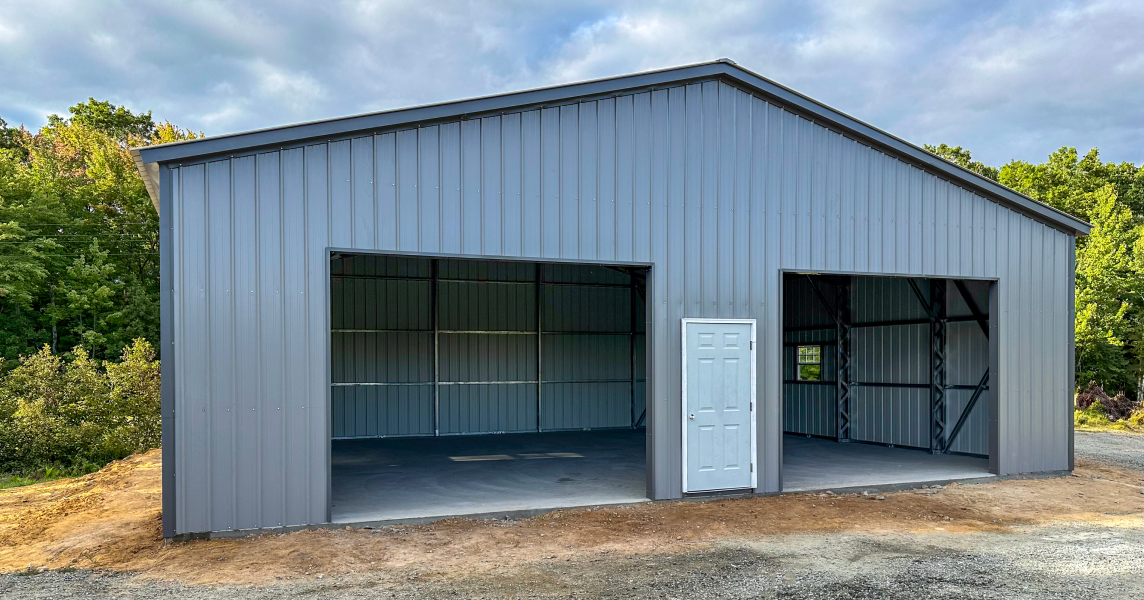
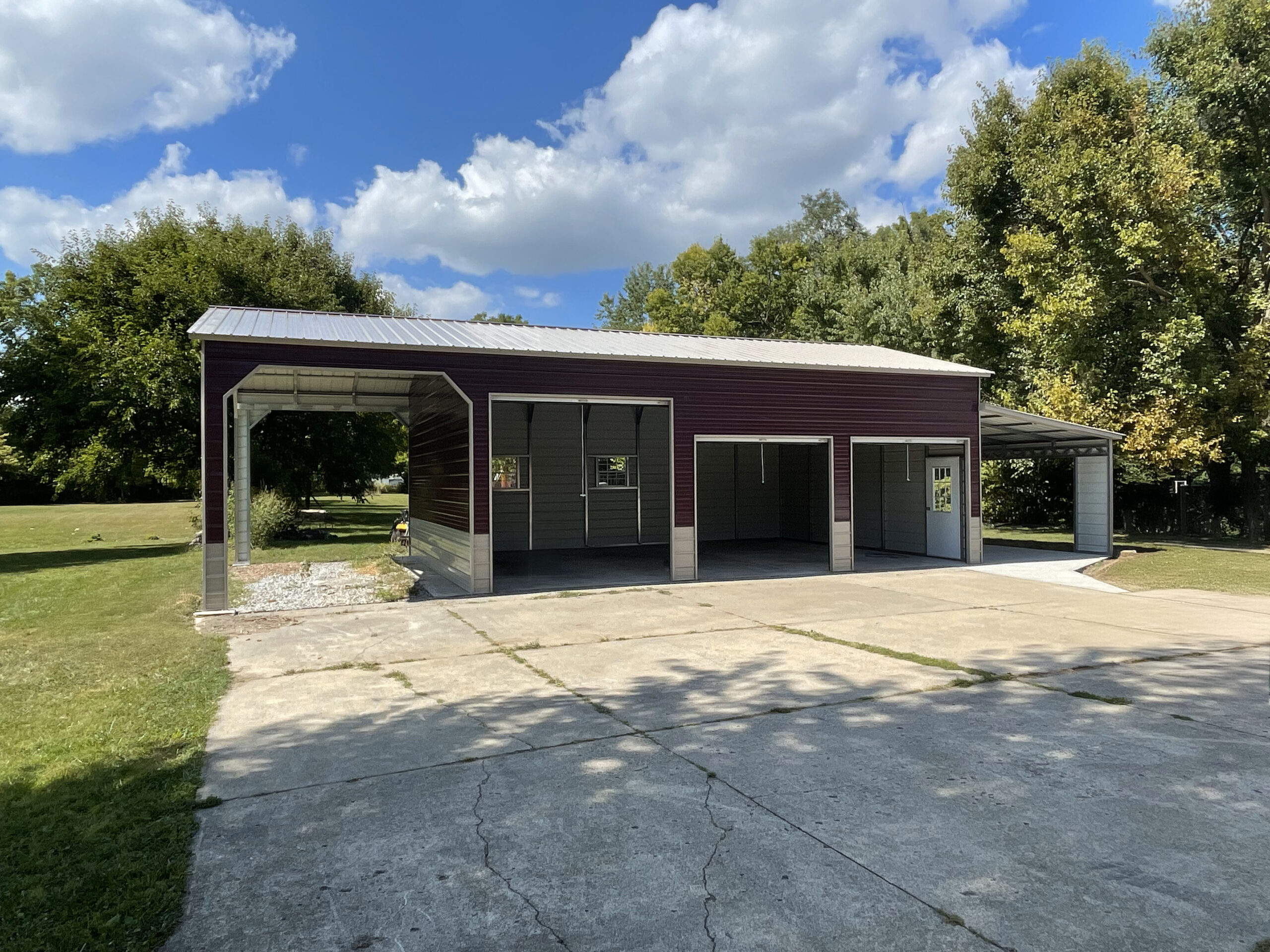
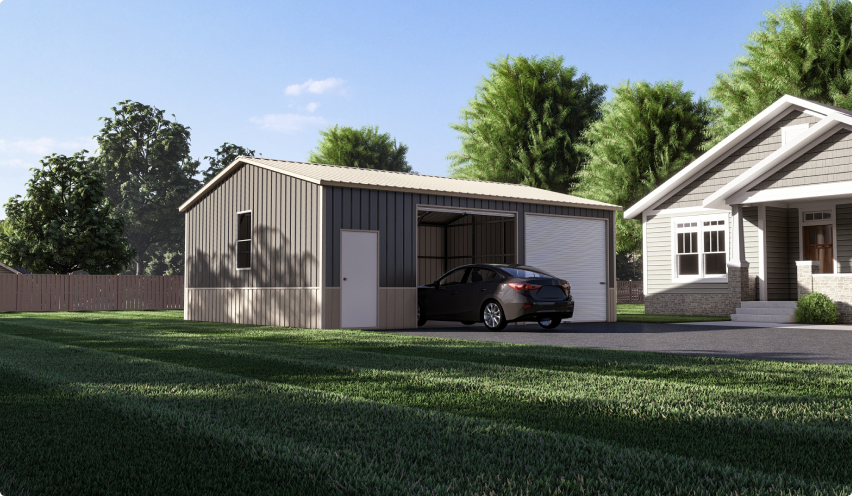
A metal shed typically costs anywhere from around $1,000 for a small basic storage unit to $10,000 or more for a large, fully customized building with taller walls, extra doors, windows, and a heavier steel gauge. The final price depends most on size, steel gauge, roof style, certifications for wind and snow, and any add-ons like insulation, doors, or a concrete foundation.
At American Carports, Inc., you can use our Build & Price tool now to see what’s possible with our structures, and you’re always welcome to contact us if you need help. It would be our pleasure to serve you!
Why Isn’t There One Fixed Price for a Metal Shed?
A metal shed is a custom-built structure, not a fixed-price retail item. Two sheds with the same footprint can end up at very different price points depending on wall height, steel gauge, roof style, the number of doors and windows, and whether the site needs grading or a concrete pad. Location matters too — building codes and required wind or snow-load certifications vary by state, county, and city, so a shed built for a mild backyard in one region may need a different configuration (and a different price) than one built for a snowy mountain property or a hurricane-prone coastal area.
What Factors Actually Drive Metal Shed Pricing?
When you’re budgeting for a metal shed, these are the variables that move the price most:
- Size. Width, length, and leg height are the biggest cost drivers. A compact 10×12 shed costs far less than a 20×30 workshop-sized building.
- Steel gauge. Heavier gauge steel (12-gauge vs. 14-gauge) costs more but holds up better under wind, snow, and everyday impact.
- Roof style. A vertical A-frame roof typically costs more than a basic roof but sheds rain, snow, and debris more effectively — a worthwhile upgrade in wetter or snowier climates.
- Wind and snow-load certification. Structures engineered for higher wind speeds or heavier snow loads require additional bracing, closer truss spacing, or heavier steel, all of which add to the price.
- Doors and windows. Walk-in doors, roll-up doors, and windows each add cost but significantly increase the shed’s usefulness for storage, workshop, or hobby space.
- Insulation. Spray foam or rigid foam insulation adds upfront cost but pays off if you plan to use the shed year-round.
- Foundation and site prep. A concrete slab, grading, and drainage work are often priced separately from the building itself and can be a significant part of your total project budget.
How Much Does a Small Metal Shed Cost?
A small metal shed in the 8×8 to 10×12 range, with a basic roof and no extras, is generally the most affordable option and works well for garden tools, lawn equipment, or general backyard storage. This size is a popular starting point for homeowners who want extra storage without committing to a large structure or a big budget.
How Much Does a Larger Metal Shed or Workshop Cost?
Once you move into 12×20, 16×20, or larger footprints — especially with taller walls, a walk-in door, windows, or insulation for workshop use — the price climbs accordingly. A larger shed built out as a workshop or hobby space costs more upfront but gives you meaningfully more usable square footage per project. If you’re trying to decide between a shed and a larger structure, our guide on converting a carport into a workshop walks through some of the same size and feature trade-offs that apply to sheds as well.
Does Where You Live Affect Metal Shed Cost?
Yes. Local wind and snow-load requirements can add real cost to a shed project regardless of size. A shed in a coastal or hurricane-prone region may need a specific wind-speed certification and reinforced anchoring, while a shed in a snowy northern or mountain climate may require closer truss spacing and heavier steel to meet local snow-load codes. HOA communities can also add requirements around color, height, or placement that affect design choices. Before you finalize a size and configuration, it’s worth checking with your local building department about permit requirements and any certifications your address requires.
Does a Metal Shed Need a Foundation, and Does That Add to the Cost?
It depends on the shed’s size and intended use. Many smaller sheds can be installed on a compacted gravel base, while larger sheds — especially those used as workshops or with heavier equipment inside — often benefit from a concrete slab for a level, durable surface. Concrete adds a separate line item to your budget based on square footage, thickness, and local labor rates, so it’s worth factoring into your total project cost rather than just the price of the building itself.
Is a Metal Shed Cheaper Than a Wood Shed?
Often, yes, especially over the long run. While upfront pricing between metal and wood sheds can be comparable depending on size and features, steel requires far less maintenance over its lifespan. It resists rot, pests, and moisture damage that wood sheds are prone to, which means fewer repair costs and a longer usable life without repainting, resealing, or structural repairs.
What’s the Best Way to Get an Accurate Metal Shed Price?
The only reliable way to price a metal shed is to configure it for your actual size, location, and features rather than relying on a generic online average. Have these details ready before requesting a quote:
- Desired width, length, and height
- Your installation ZIP code
- Whether you need wind or snow-load certification
- Number of doors and windows
- Whether you want insulation
- Your installation surface, and whether concrete is planned
- Any local permit or HOA requirements
Ready to Price Your Metal Shed?
The fastest way to get a real number is to configure your own. Use our Build & Price tool to explore sizes, gauges, and roof styles for your metal shed, or contact us and we’ll help you build a quote that reflects your exact location and needs.
Frequently Asked Questions
What is the cheapest size for a metal shed?
A small 8×8 or 10×12 shed with a basic roof and no add-ons is typically the most affordable configuration, ideal for general storage needs.
Does a metal shed increase property value?
A permitted, well-built metal shed can add value, particularly if it’s used as functional storage or workshop space. Unpermitted structures may not add value and can create issues during a home sale.
Do I need a permit for a metal shed?
Many jurisdictions require a permit for sheds above a certain square footage, typically somewhere between 100 and 200 square feet, though this varies by city and county. Always confirm with your local building department before ordering.
Is it cheaper to buy a metal shed or build one from a kit?
Custom-ordered sheds from a manufacturer often work out more cost-effective than DIY kits once you factor in the cost of tools, fasteners, and the time investment required for a proper build.
How much does delivery and installation add to a metal shed’s cost?
Delivery and installation costs vary based on distance from the manufacturer, site accessibility, and whether site prep like grading or gravel is needed. Ask for an itemized quote that separates the building cost from delivery and installation.