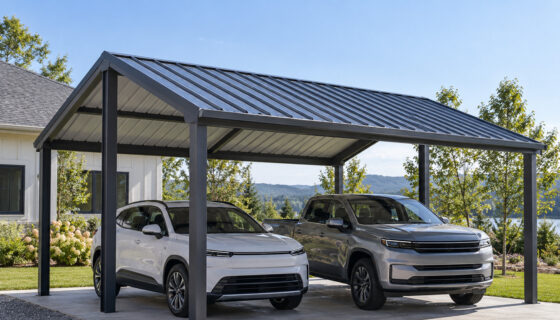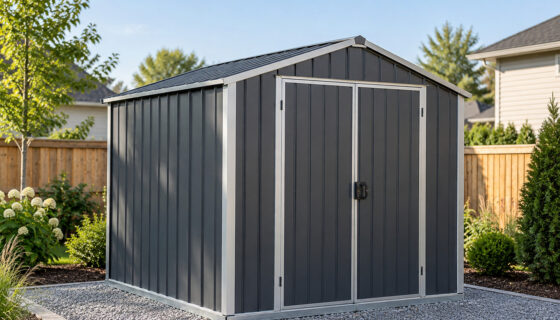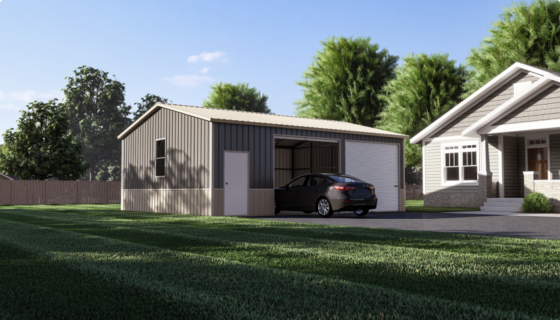

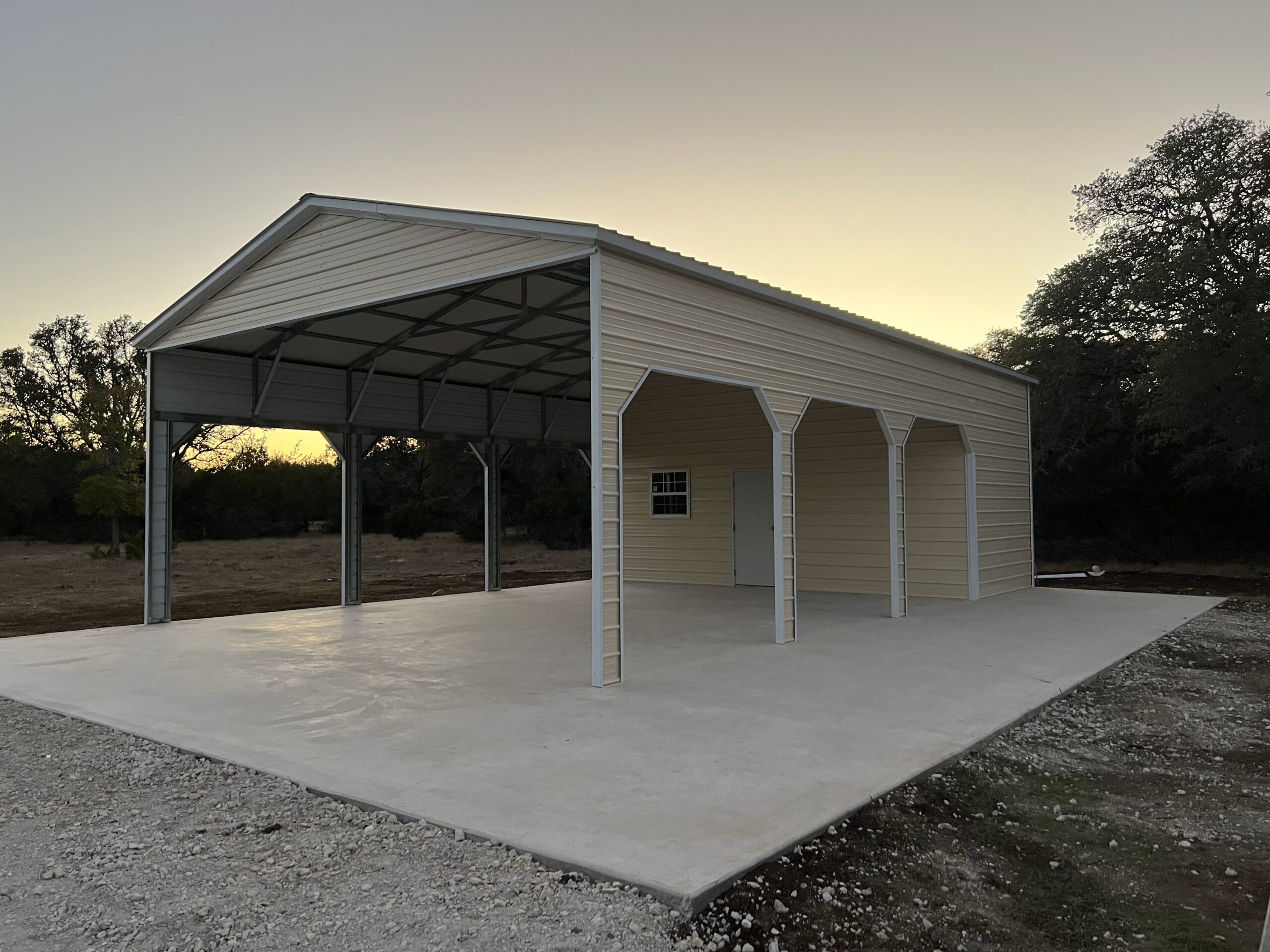
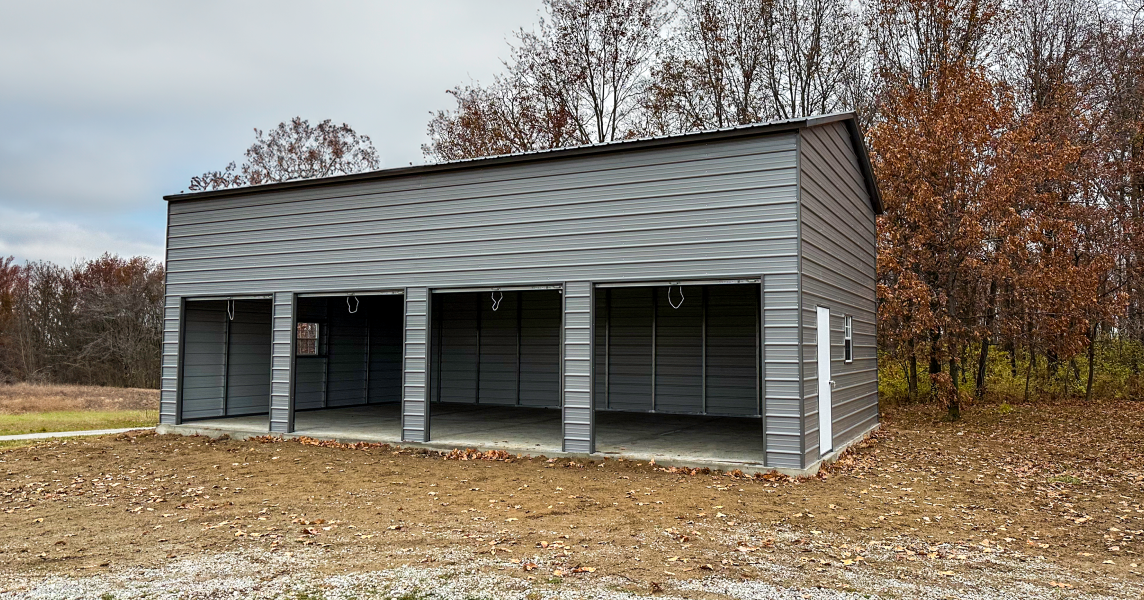
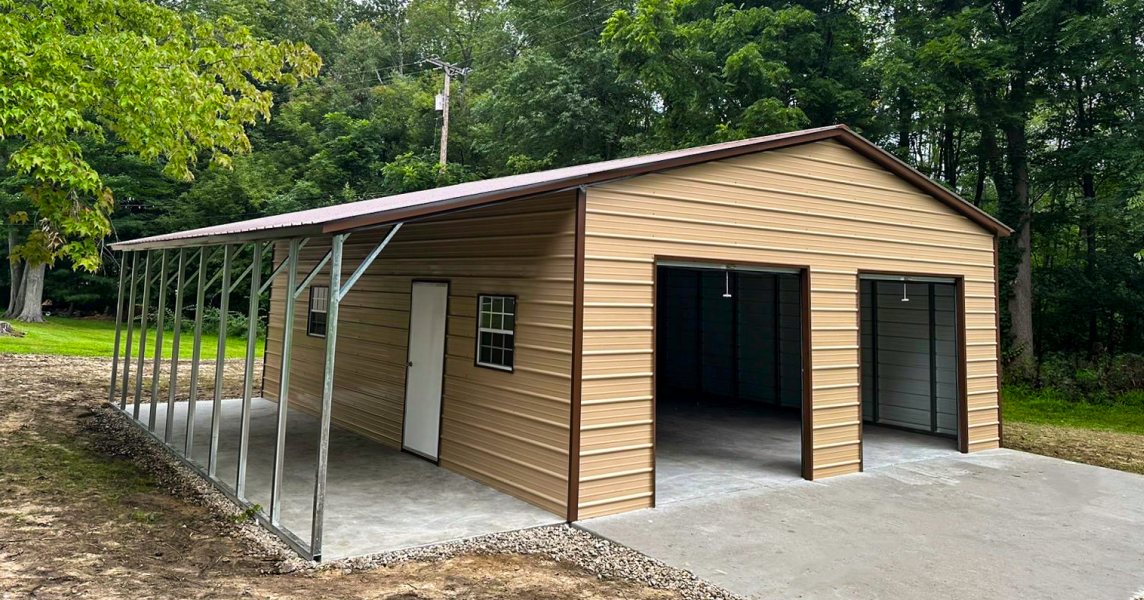
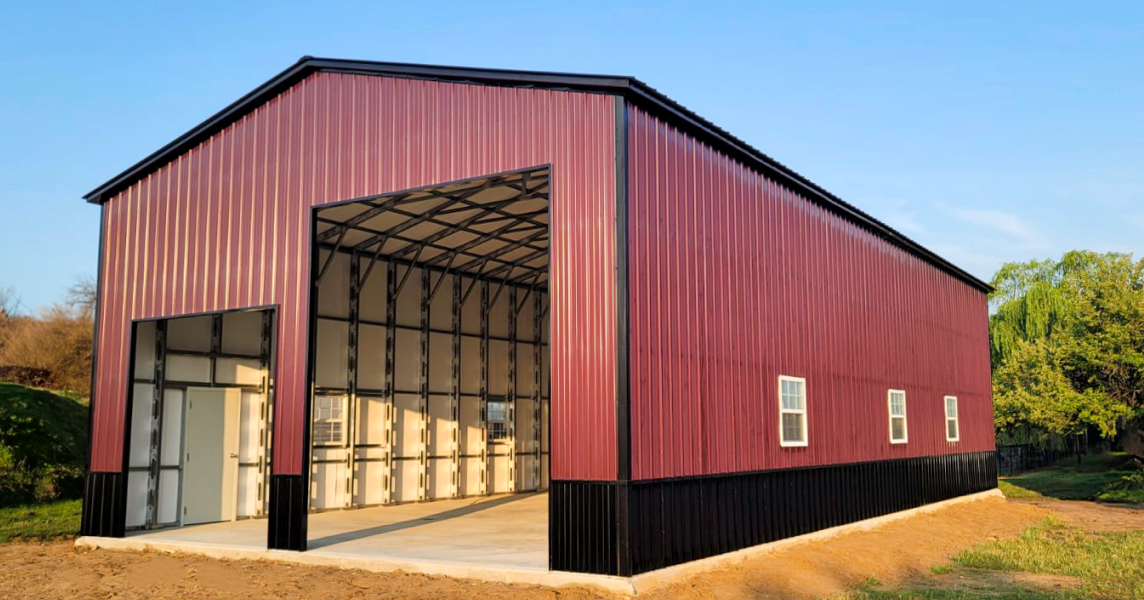
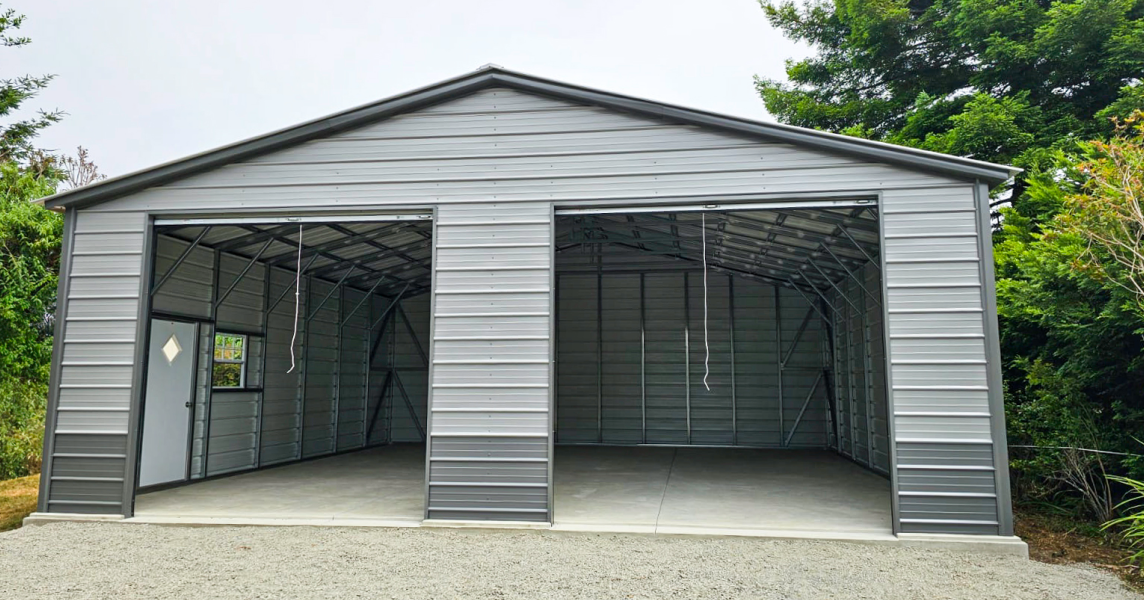
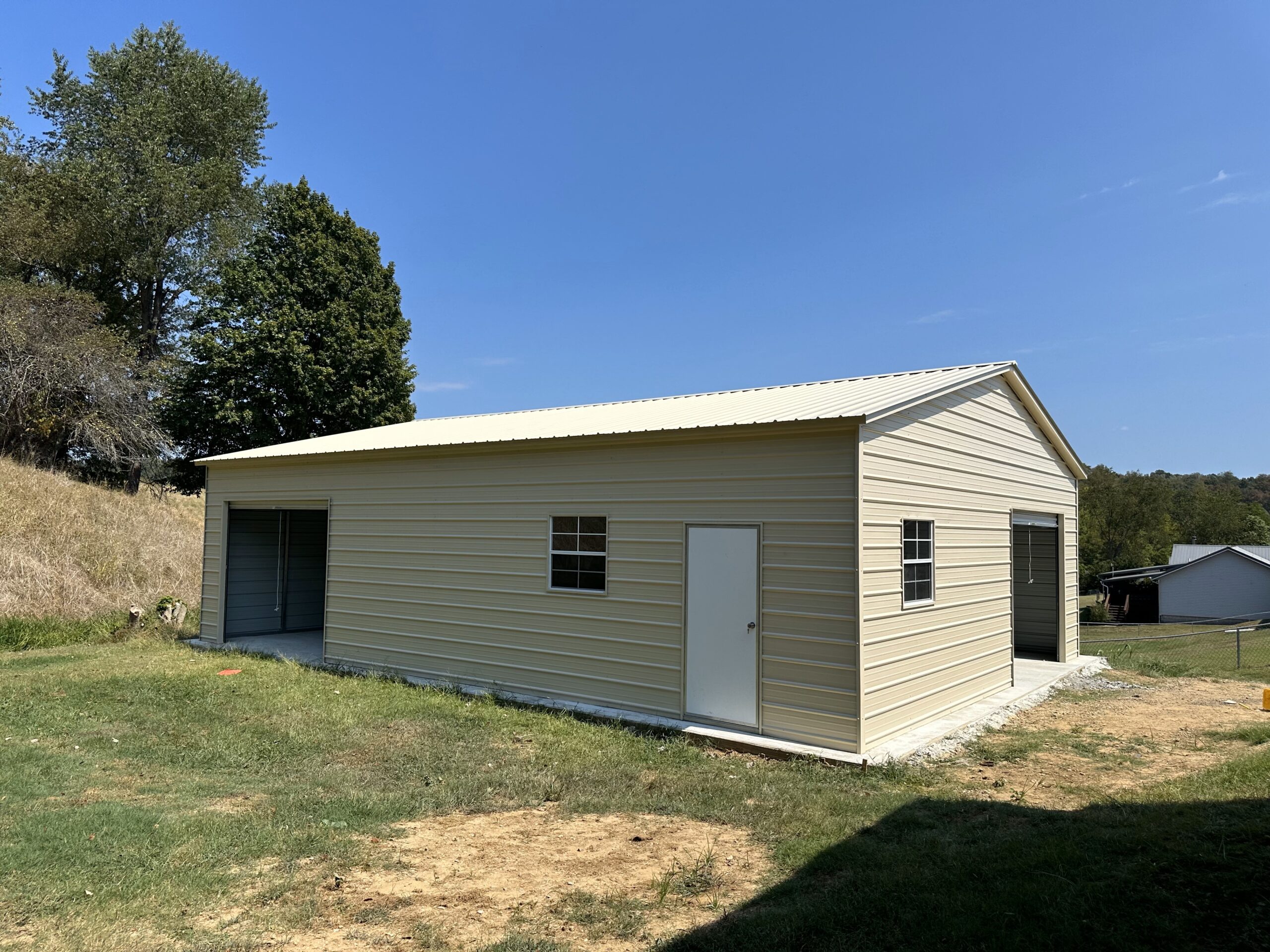
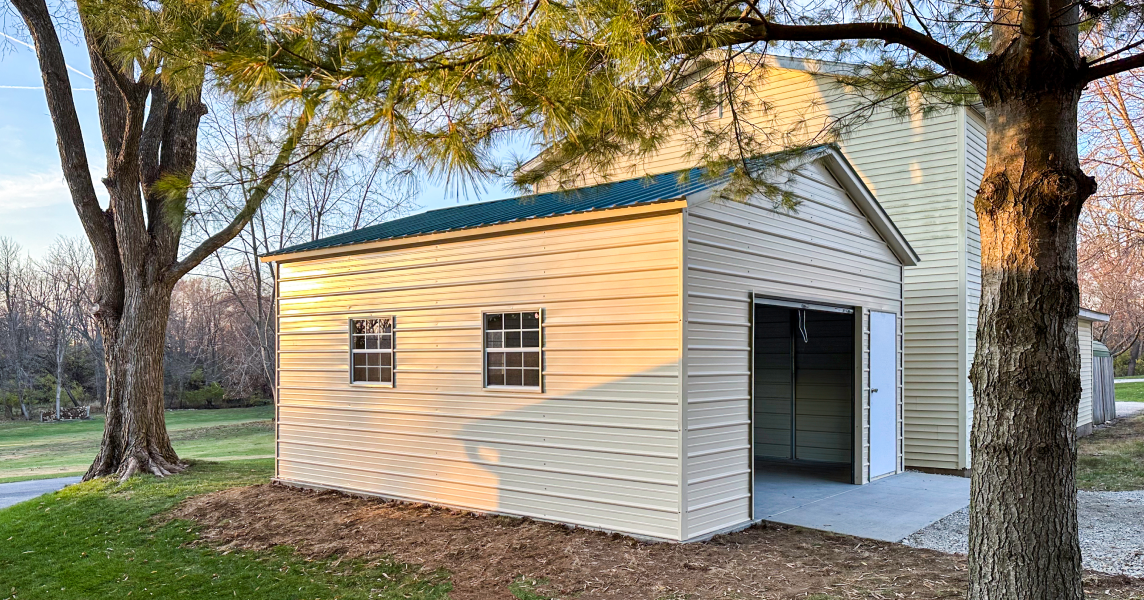
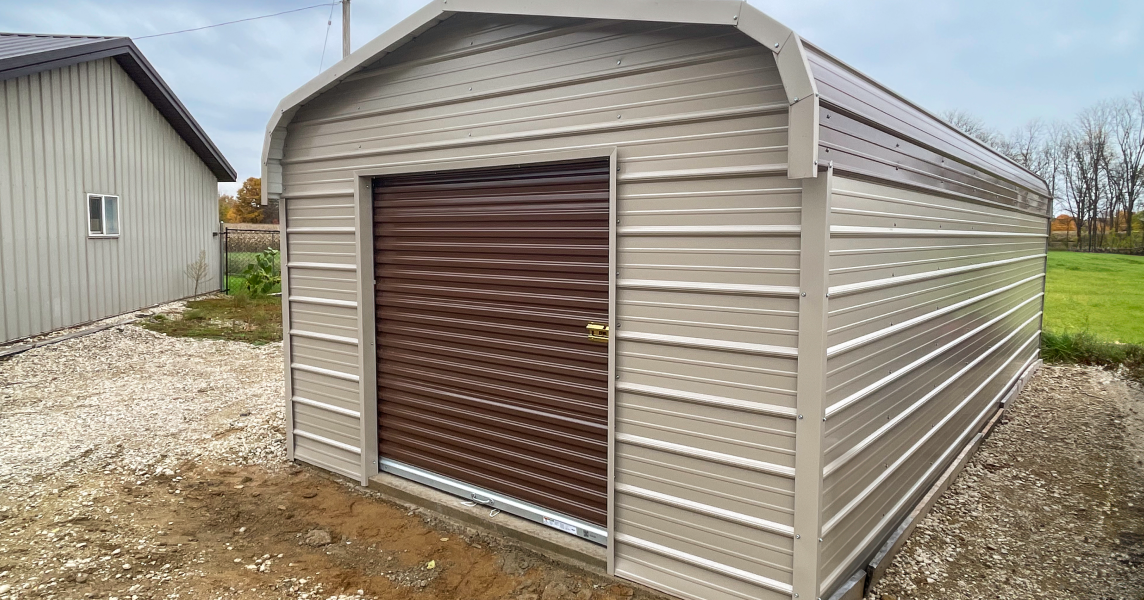
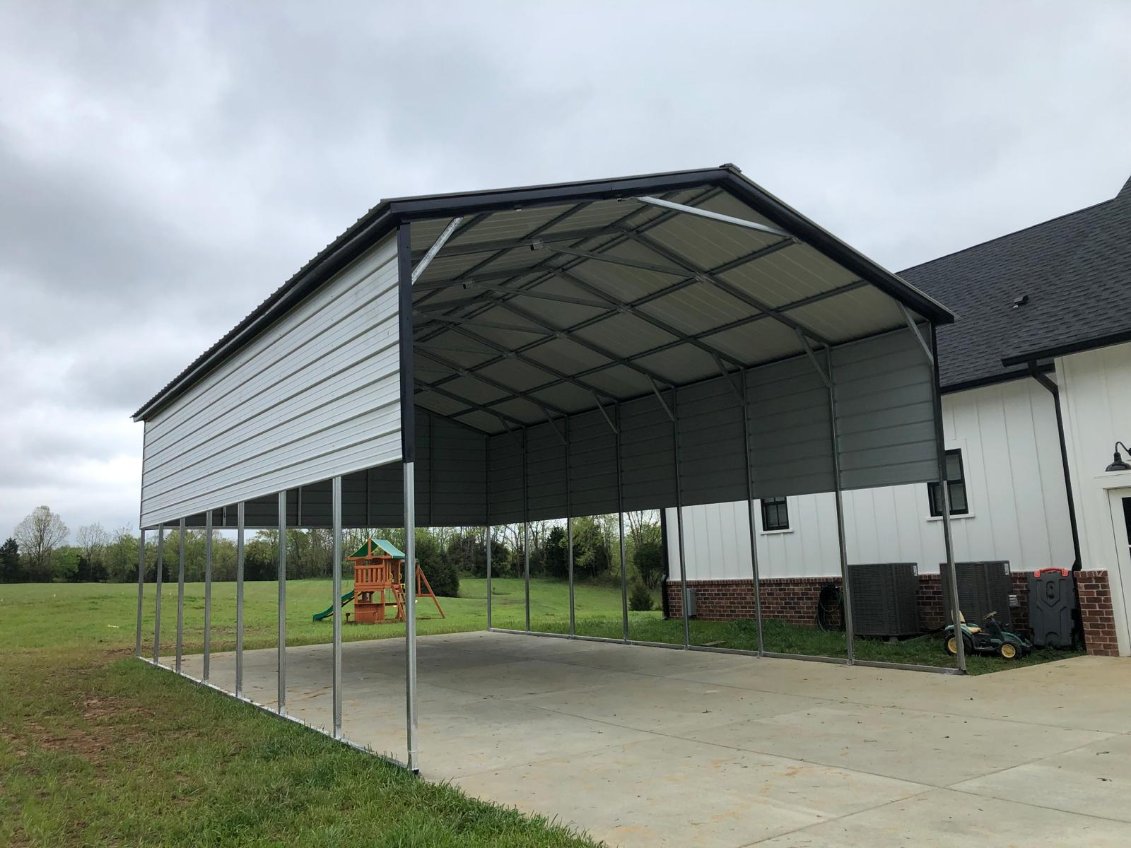
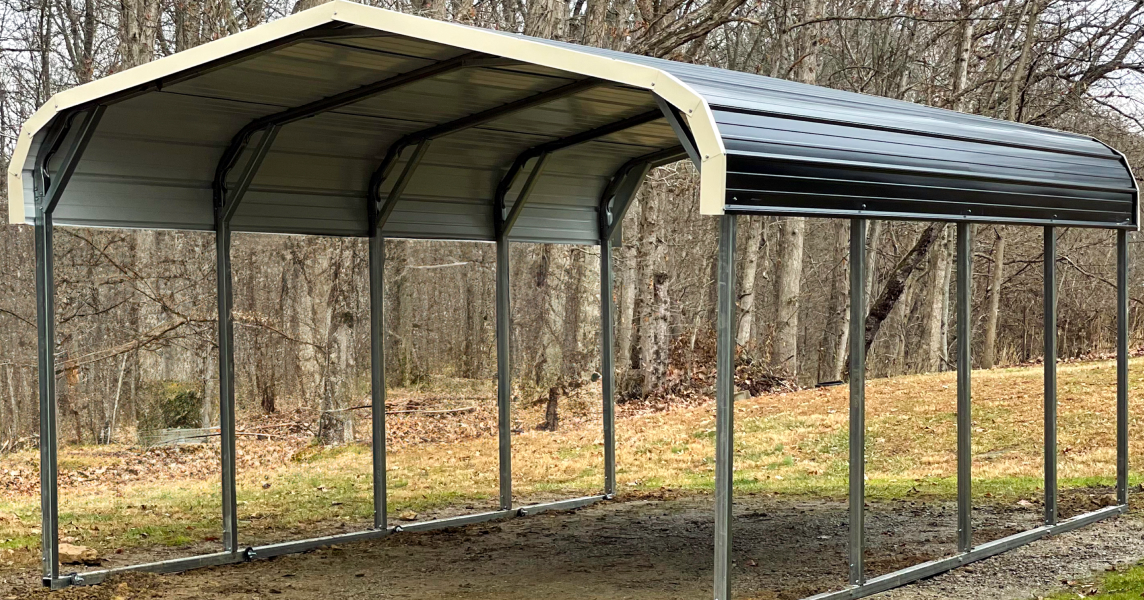
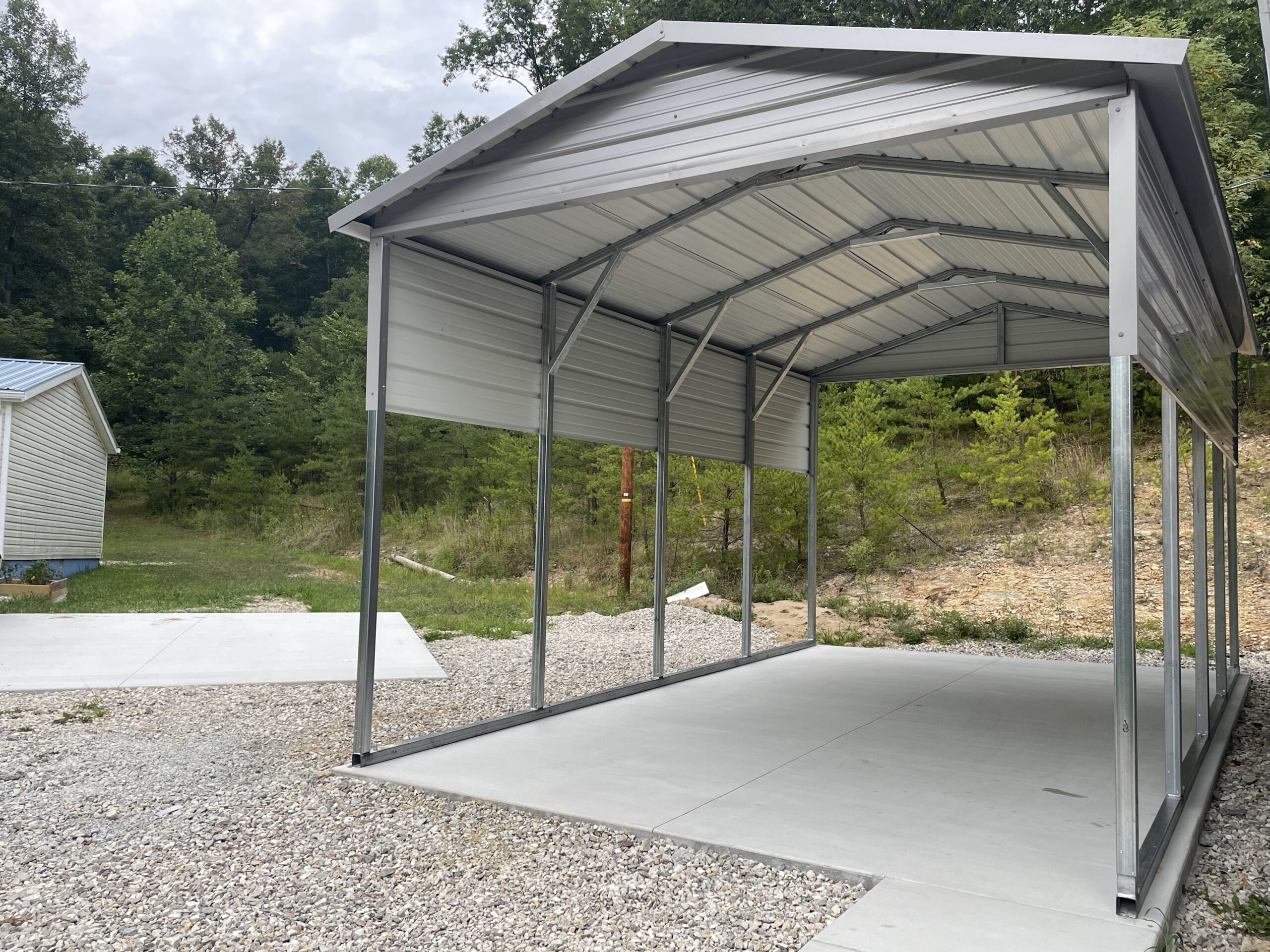
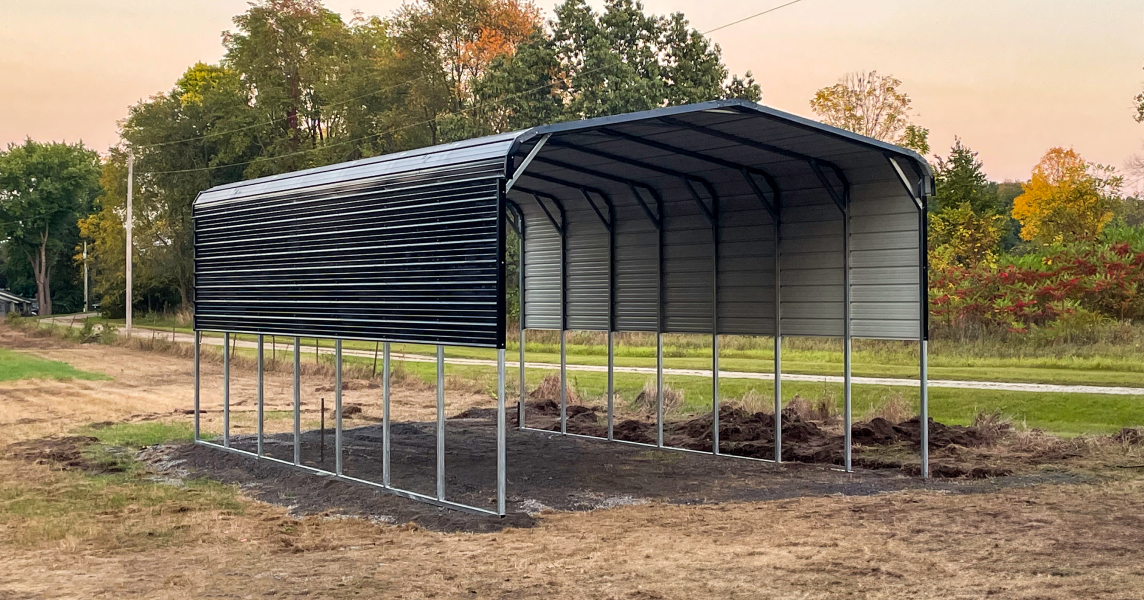
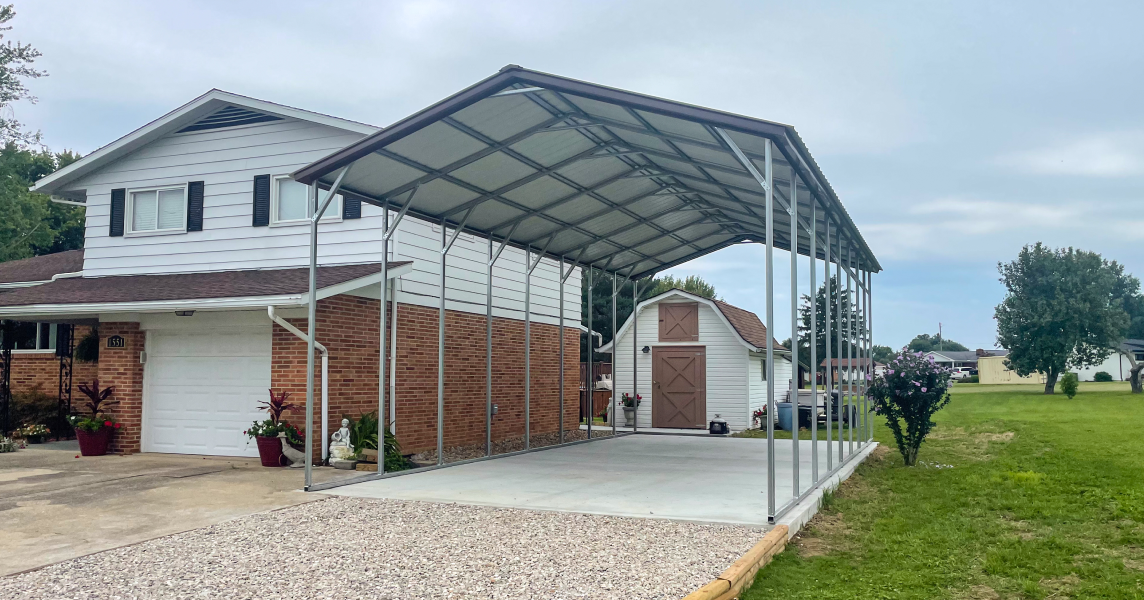
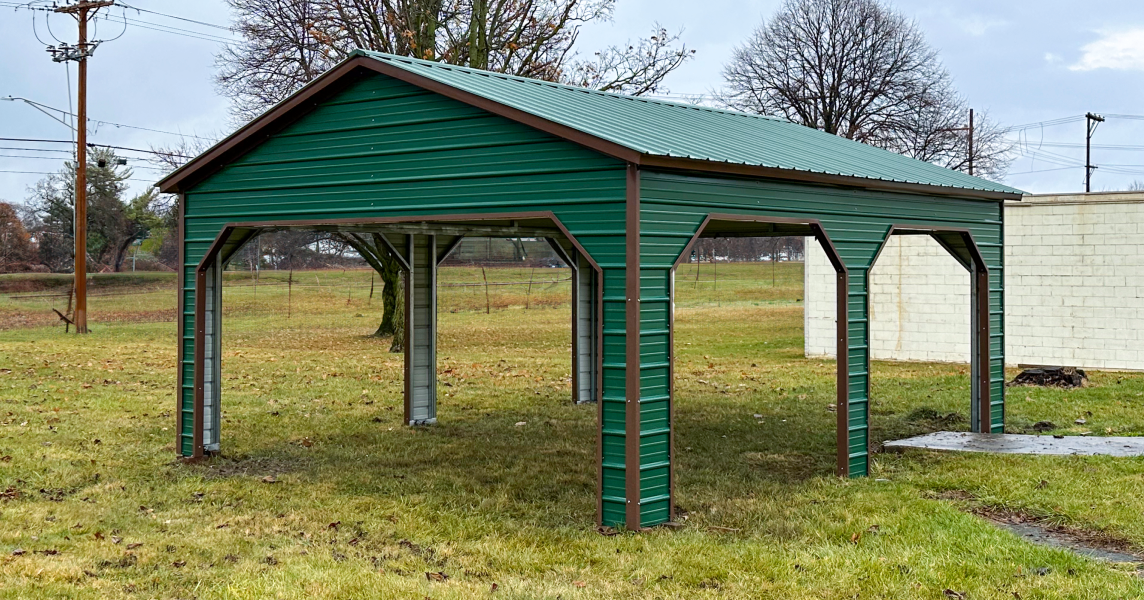
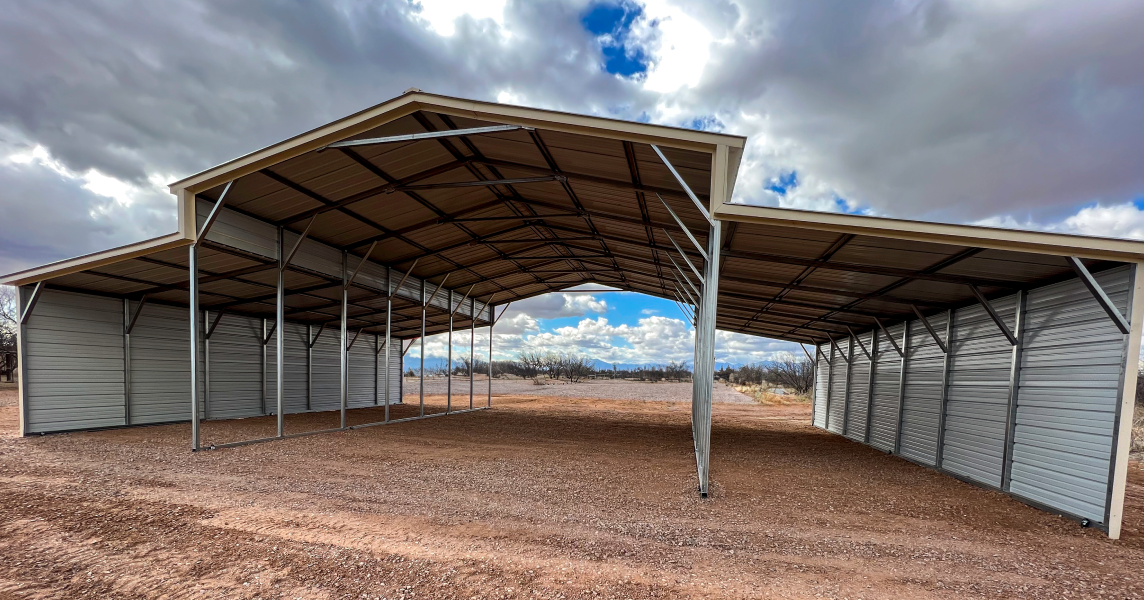
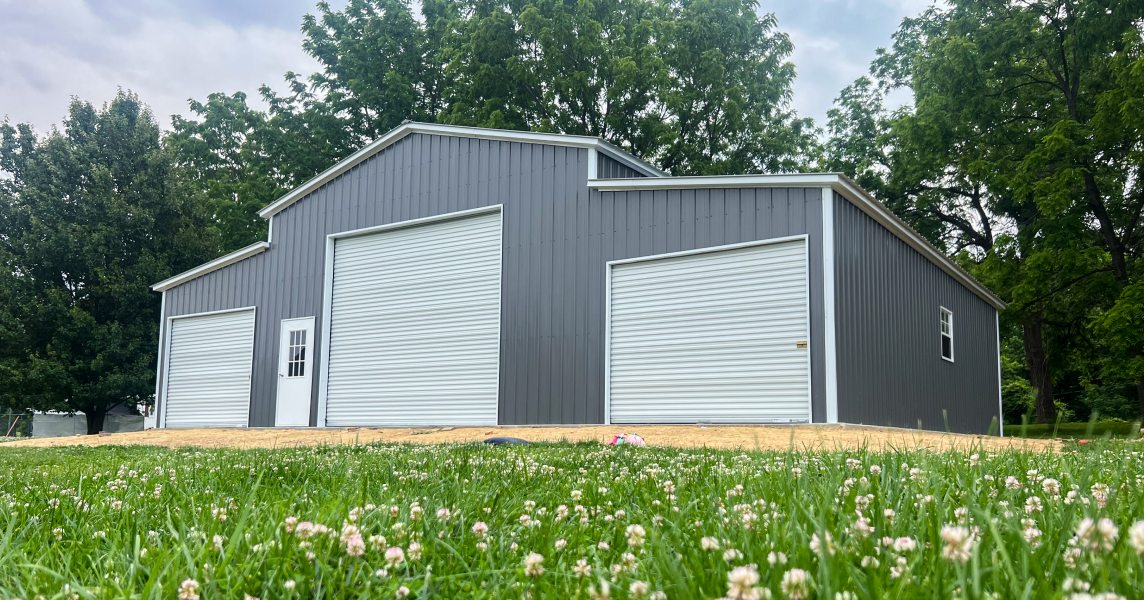
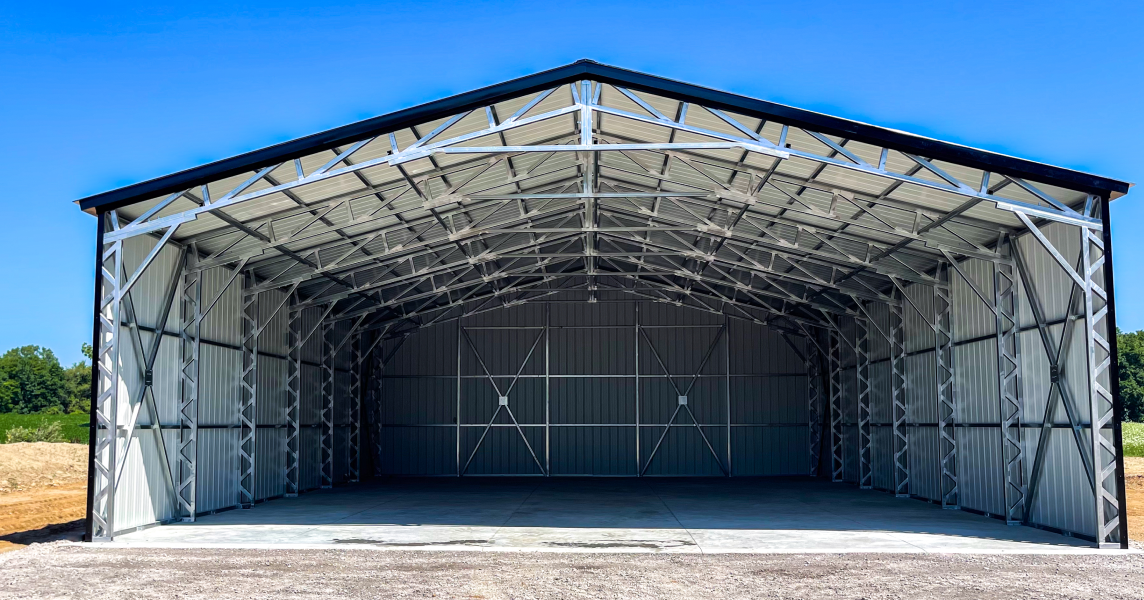
The cost of a metal carport depends on its width, length, height, roof style, framing and panel choices, enclosure, certification, delivery location, anchors, site preparation, and optional features. A compact open carport costs less than a tall, wide, vertical-roof structure with side panels and storage, but a trustworthy price requires a current configuration for your ZIP code and property—not a generic national average.
What Changes the Price of a Metal Carport?
Two carports with the same footprint may have different prices because their roof systems, frame gauges, panel gauges, heights, braces, anchors, and design loads differ. The vehicle and site should determine the configuration. A passenger car, fifth-wheel RV, boat, work truck, and multiple-vehicle parking area do not need the same clearances.
American Carports lists a range of metal carports and an interactive Build & Price tool for current configurations. Use those resources for live pricing rather than relying on an old dollar figure.
The Main Carport Cost Drivers
| Decision | Lower-cost direction | Higher-cost direction |
| Footprint | Shorter, narrower single-vehicle cover | Longer or wider multi-vehicle/RV cover |
| Height | Standard vehicle clearance | Tall RV, equipment, or specialty clearance |
| Roof | Simpler approved configuration | Vertical roof and added structural components |
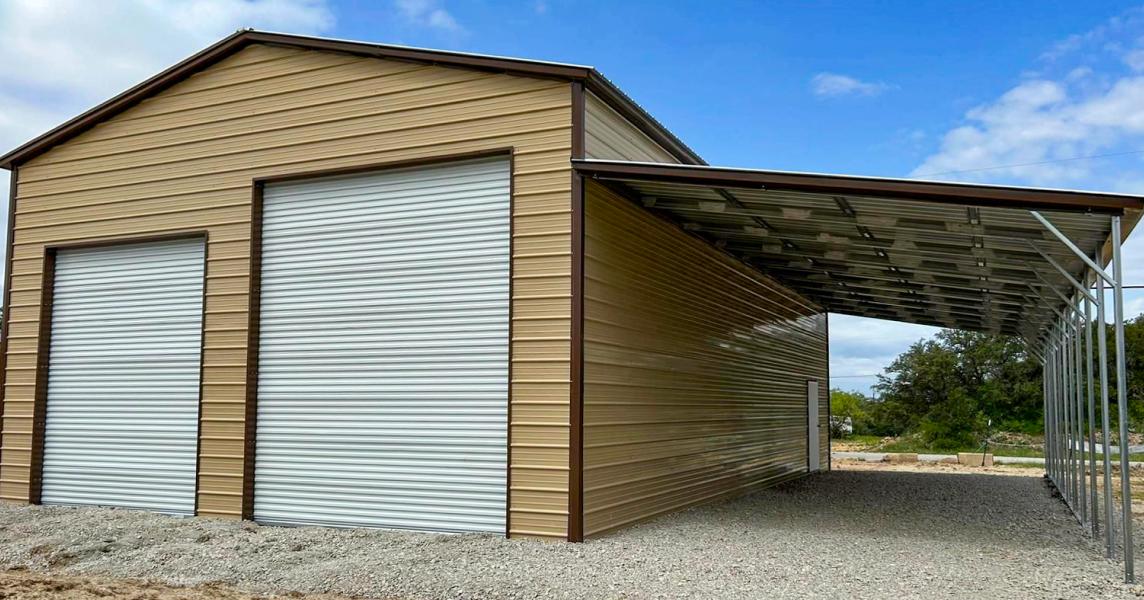
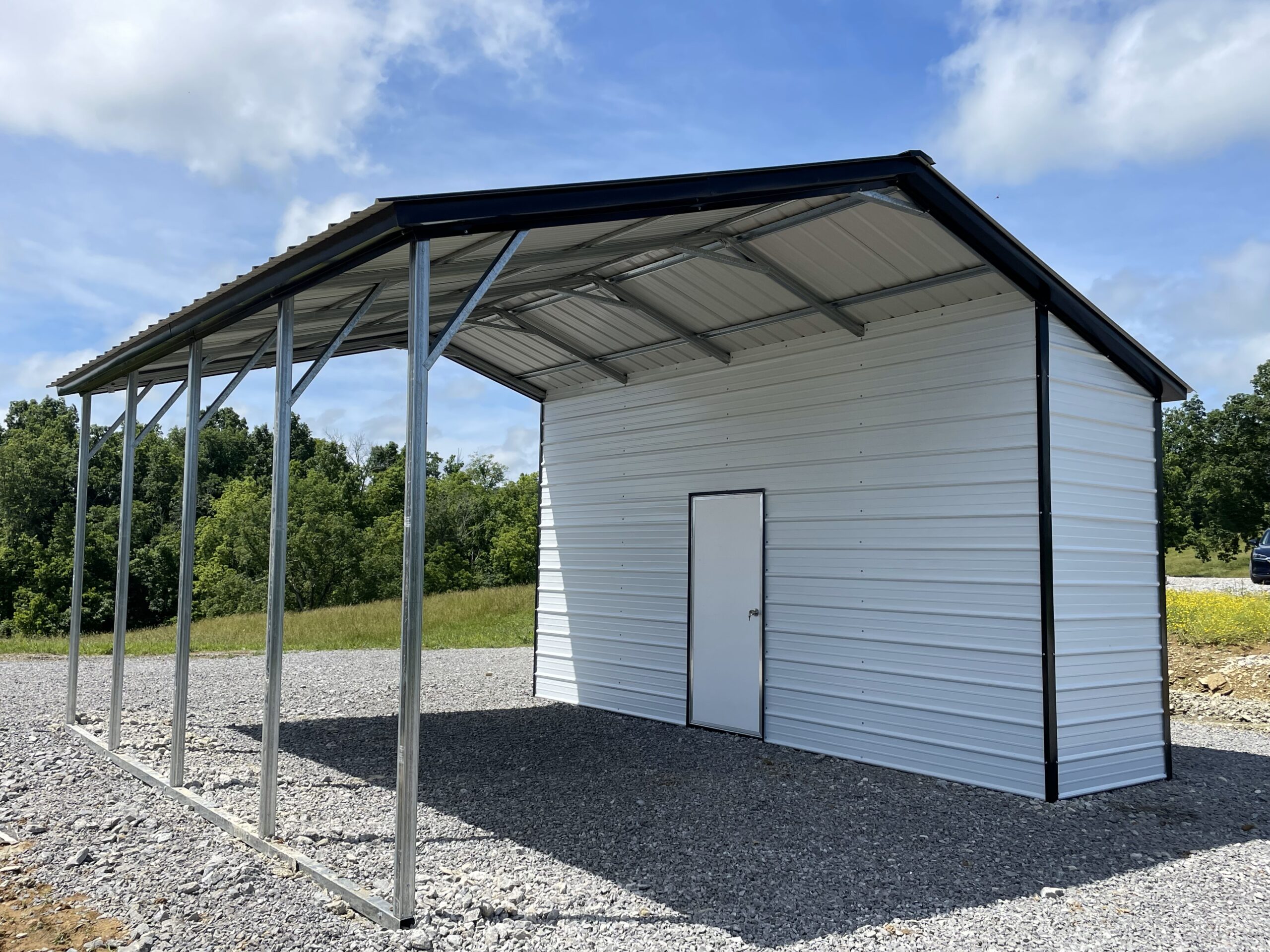
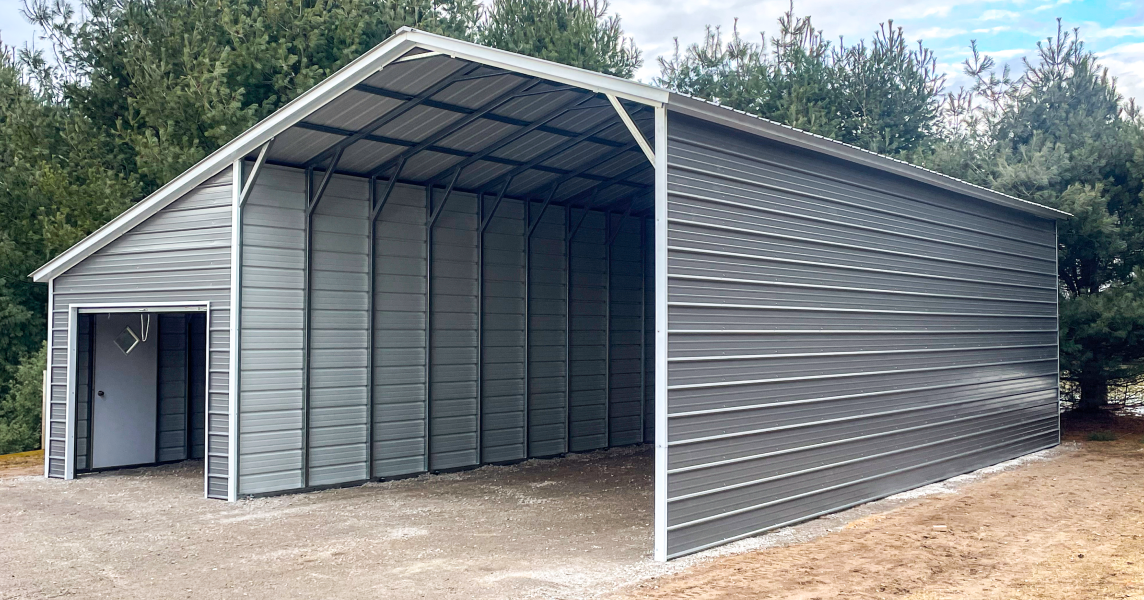
| Enclosure | Open sides and ends | Side panels, gable ends, storage, or full enclosure |
| Steel options | Standard offered frame and panels | Heavier frame or thicker panel upgrades |
| Site requirements | Prepared accessible site | Complex grading, concrete, special access, or higher loads |
How Roof Style Affects Value
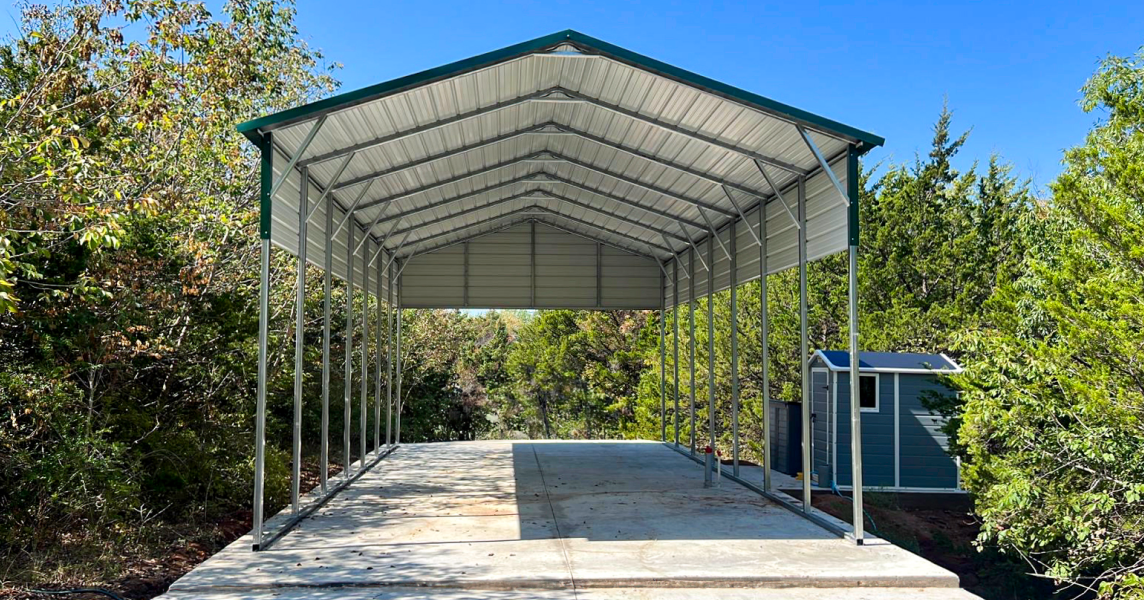
A regular or boxed-eave roof may suit smaller, budget-focused applications where offered and approved. A vertical roof uses panels running from ridge to eave, which helps rain and debris move off the sides and is often favored for longer structures or demanding conditions. It may cost more because the system includes additional components and installation work.
Do not choose a roof style from price alone. Consider building length, local weather, maintenance, appearance, and the configurations certified for the property.
How Much Width, Length, and Height Do You Need?
Measure every vehicle at its widest, longest, and tallest point, including mirrors, roof racks, antennas, ladders, air conditioners, hitches, and accessories. Add practical room for opening doors, walking, loading, and parking imperfectly. If the structure will cover multiple vehicles, account for space between them and any support locations.
- Single-vehicle parking with comfortable door access
- Two or more vehicles with clearance between parking positions
- Tall RV or boat storage with rooftop accessories
- Extra length for hitches, ladders, bumpers, or attached storage
- Work area beside a vehicle or equipment bay
- Future vehicle changes that may require more clearance
Does Partial Enclosure Pay Off?
Side and end panels can improve shade and reduce wind-driven weather, but they add material and may change structural loads. Place enclosure where it solves a real exposure problem. A panel that blocks a vehicle door, hides the backing path, or traps moisture is not a useful upgrade. If security and full environmental separation are priorities, compare a carport with an enclosed garage rather than adding pieces without a complete plan.
What Other Costs Should Be in the Budget?
A quoted carport may not include permits, site clearing, grading, drainage, demolition, surveys, concrete, utility work, electrical service, gutters, taxes, or special access work. Installation and delivery may be included only under stated site conditions and service areas. Ask what the owner must complete before the crew arrives and what happens if the site is not ready.
Foundation and anchors deserve special attention. The appropriate base may be concrete, asphalt, compacted aggregate, or another approved surface, but the anchor system must match. An existing driveway should be assessed rather than assumed suitable.
A Step-by-Step Way to Estimate Your Project
- Measure the vehicles and list how the covered area will be used.
- Choose a tentative width, length, height, and roof style.
- Decide whether side or end panels solve a real need.
- Check setbacks, permits, easements, and local design criteria.
- Configure the carport for the installation ZIP code.
- Confirm what delivery, installation, anchors, and warranties include.
- Price the foundation, drainage, permits, and utilities separately.
- Compare the complete project cost and written scope.
How to Compare Quotes Fairly
One quote may look lower because it covers a different roof style, lighter steel option, fewer panels, different certification, or limited installation scope. Compare line by line: exact dimensions, gauges, roof, panels, braces, anchors, load criteria, openings, color, delivery, installation, warranties, taxes, and owner responsibilities.
Also verify the clear dimensions that matter to your vehicle. Nominal width or leg height does not always equal unobstructed usable clearance at every point.
When Financing Changes the Monthly Cost—but Not the Project Cost
Financing can make a carport easier to budget, but compare the total of payments, term, fees, and early-payoff conditions rather than focusing only on a monthly amount. Site work, permits, or concrete may be paid to separate contractors and may not be included in the financed building order. Keep the full project budget visible before choosing a payment plan.
Focus on Cost per Year of Useful Service
The least expensive carport is not a bargain if it is too small, poorly positioned, or unsuitable for local requirements. A right-sized structure that is easy to use and maintain may deliver better value over time. Spend on options that solve specific needs: more height for an RV, a vertical roof for drainage, a stronger configuration required by the site, or a side panel that blocks persistent afternoon sun.
Get a Current, Site-Specific Carport Price
For more background on the variables behind pricing, review this metal carport cost guide, but treat current product and configuration pricing as authoritative. Prices and availability can change.
Browse metal carports and use the Build & Price tool to create a current configuration. Then contact American Carports to confirm the quote, certification, installation requirements, and next steps for your property.
Frequently Asked Questions
Is a metal carport cheaper than a garage?
An open carport is usually less complex than a fully enclosed garage, but exact costs depend on size, roof, steel, doors, certification, foundation, site work, and location. Compare configurations that serve the same use.
Does carport pricing include installation?
It may, subject to service area, site readiness, and contract terms. Confirm delivery, installation, anchors, taxes, and any trip or site charges in the written quote.
Can I save money by buying a smaller carport?
Only if it still provides safe, usable clearance. A structure that is difficult to enter or blocks doors may need replacement or modification. Measure carefully and consider likely future vehicles before reducing dimensions.