
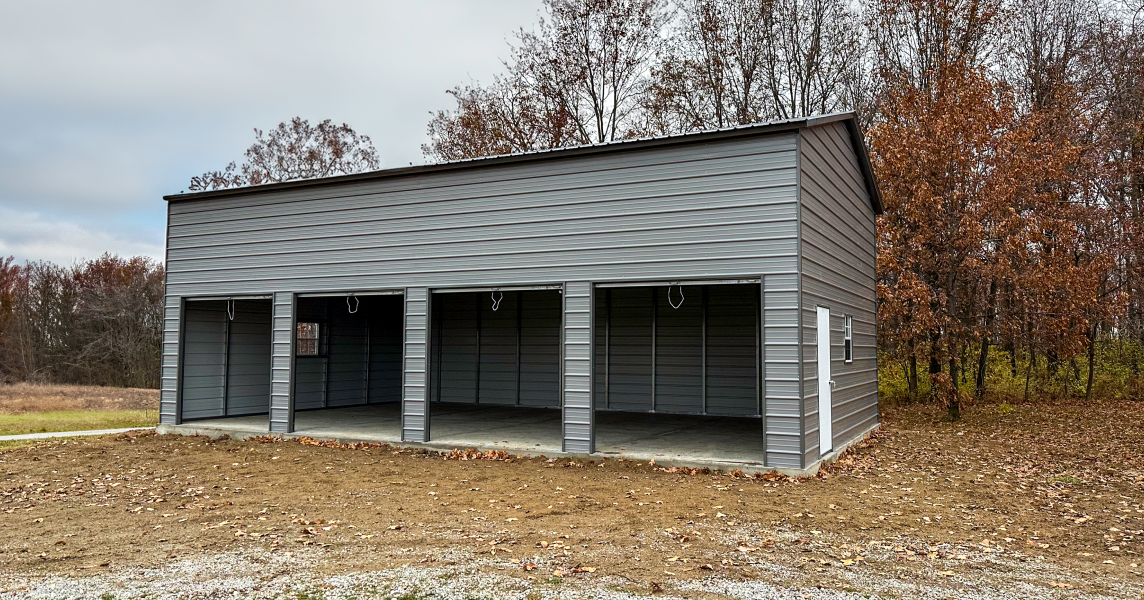
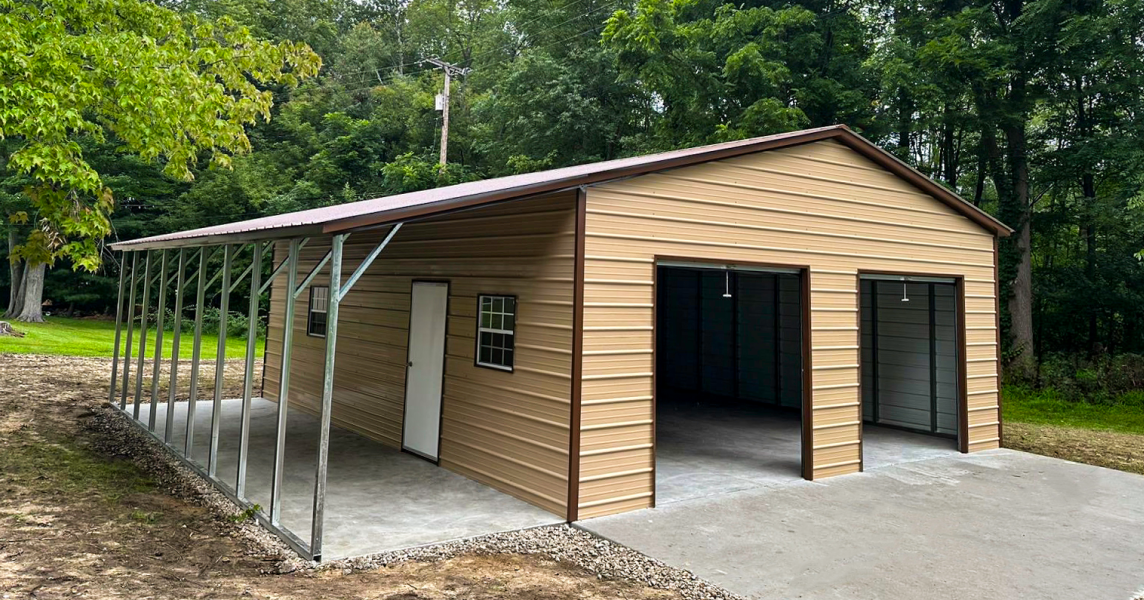
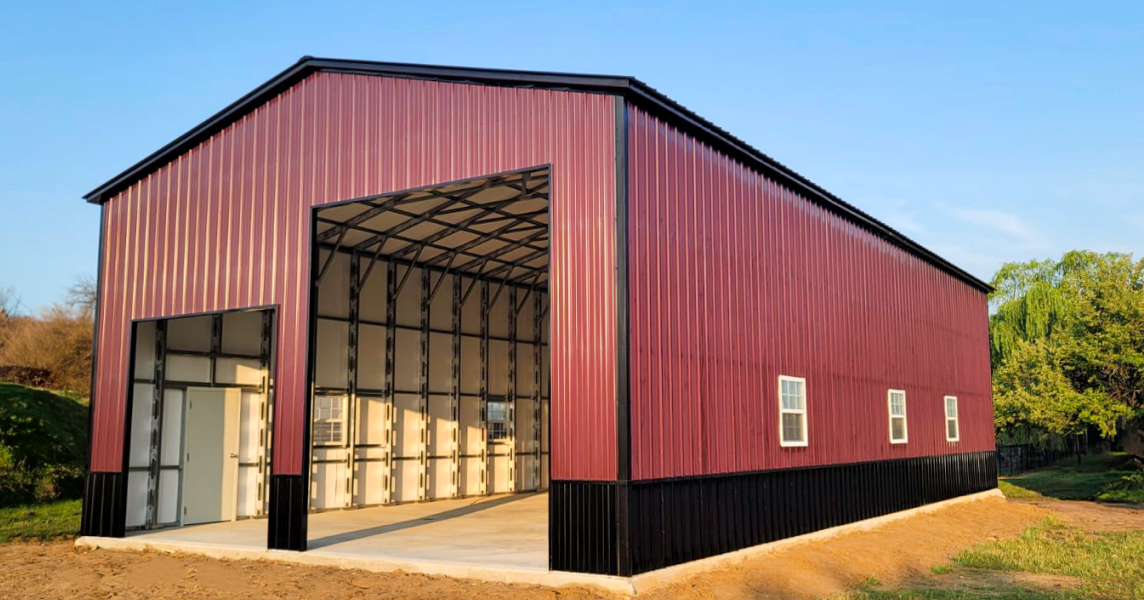
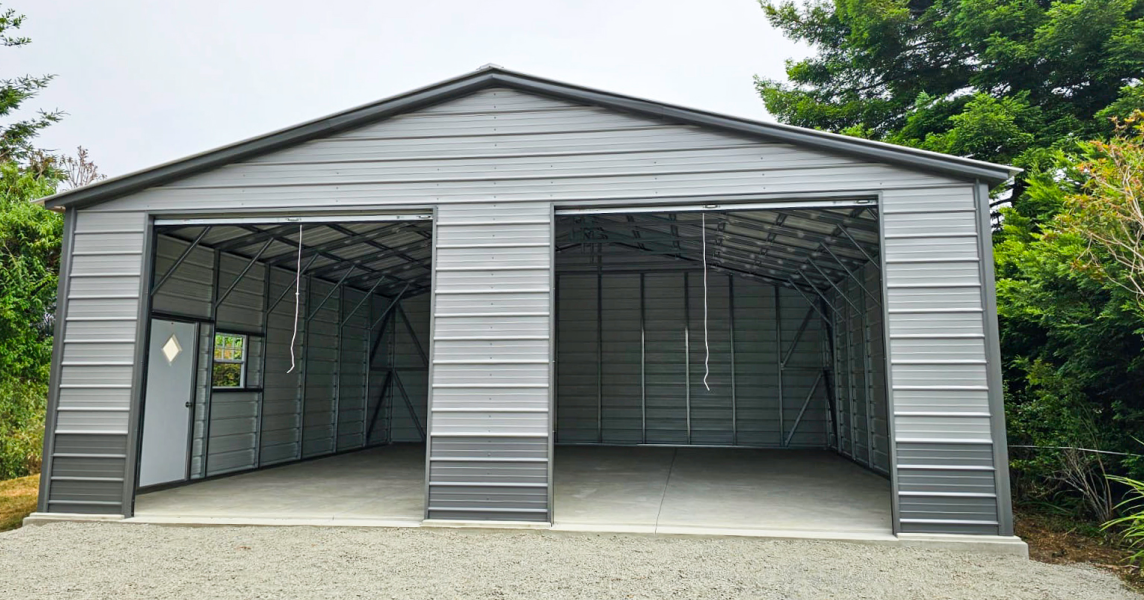
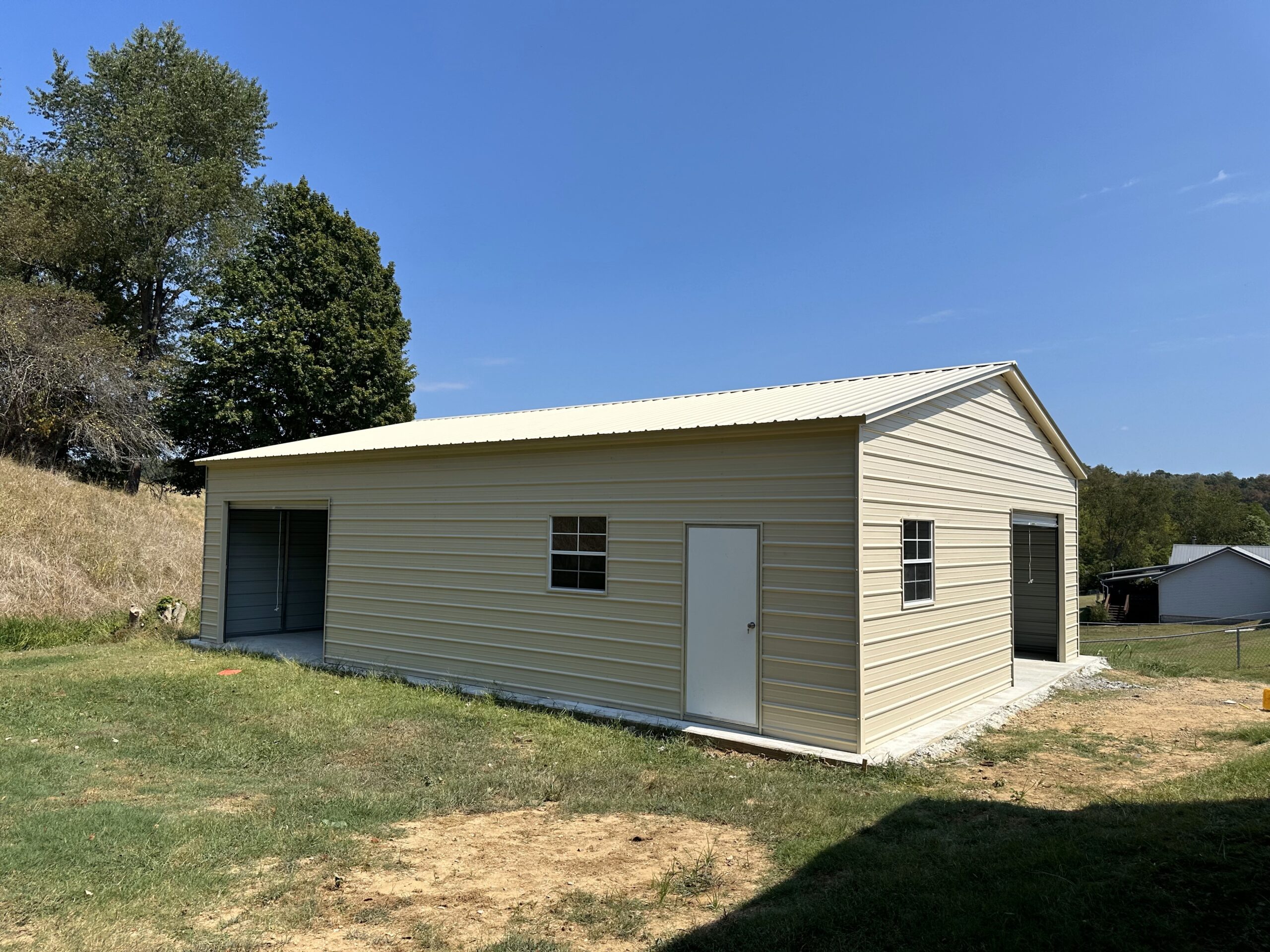
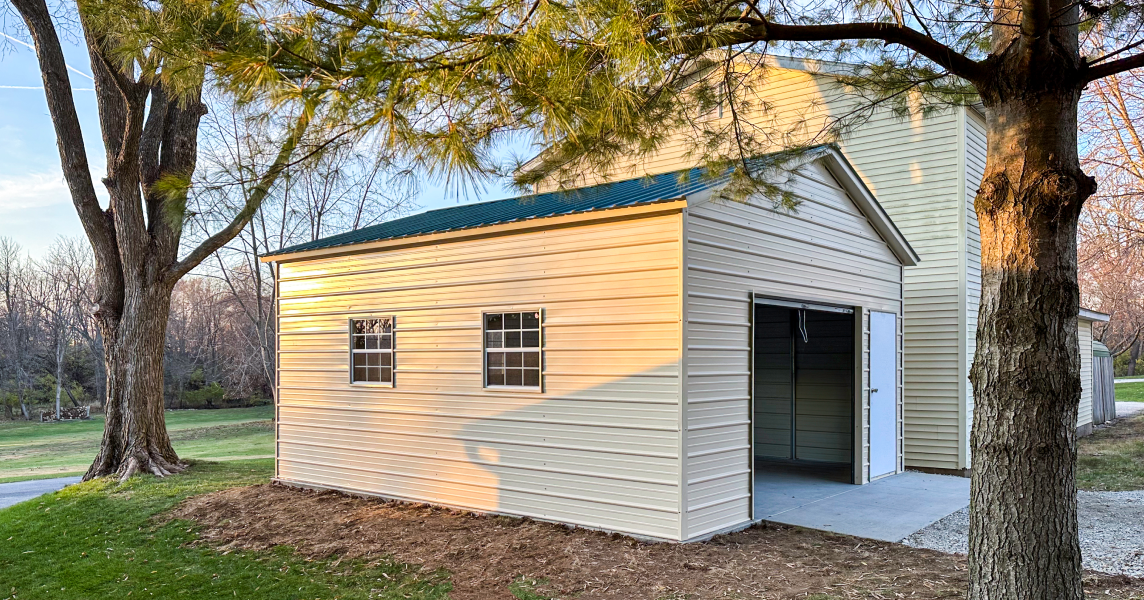
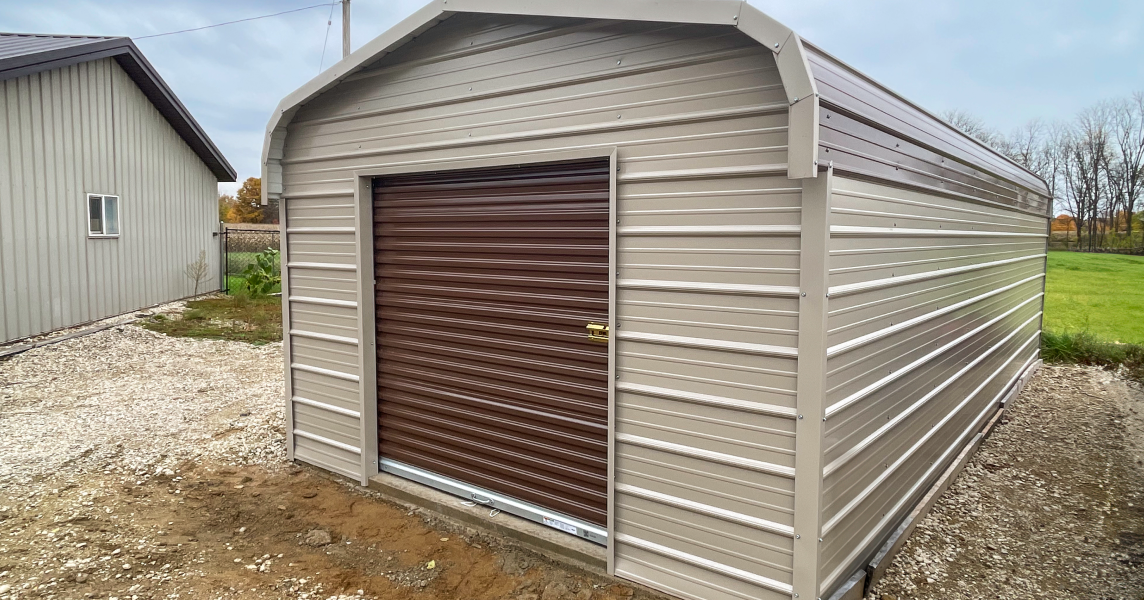
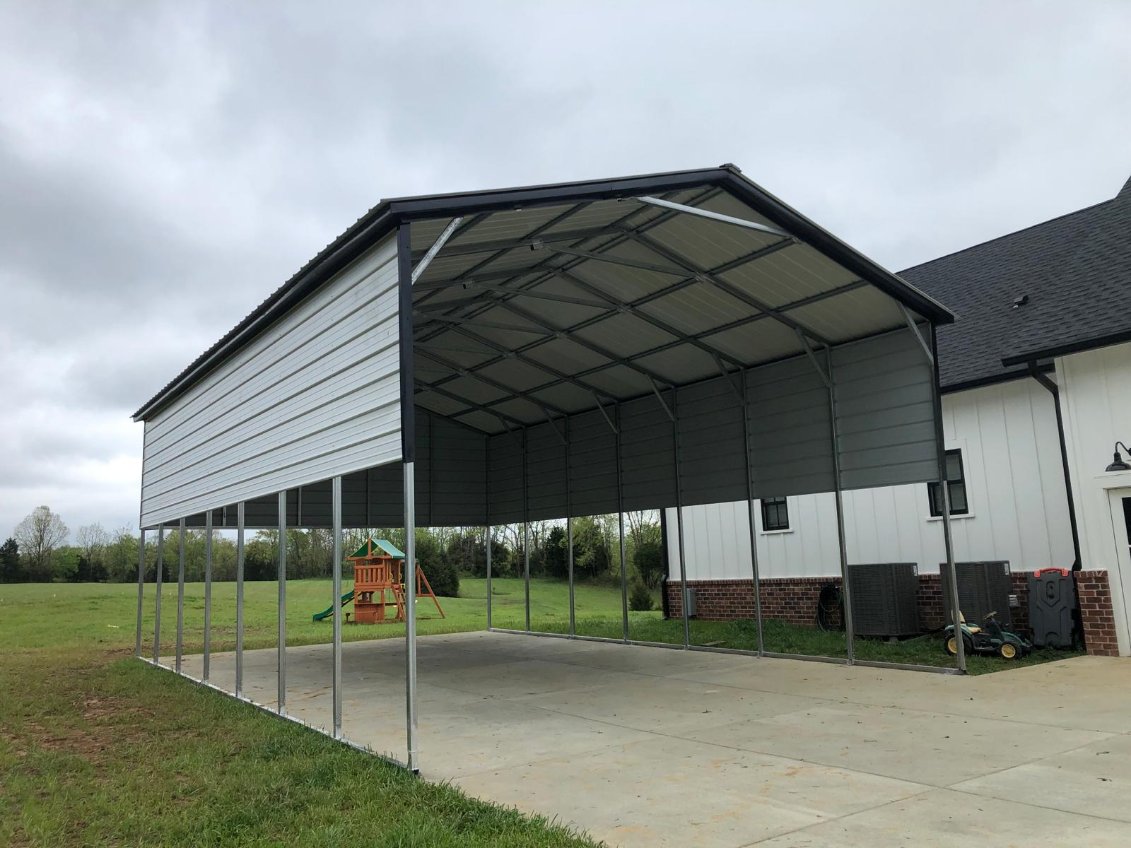
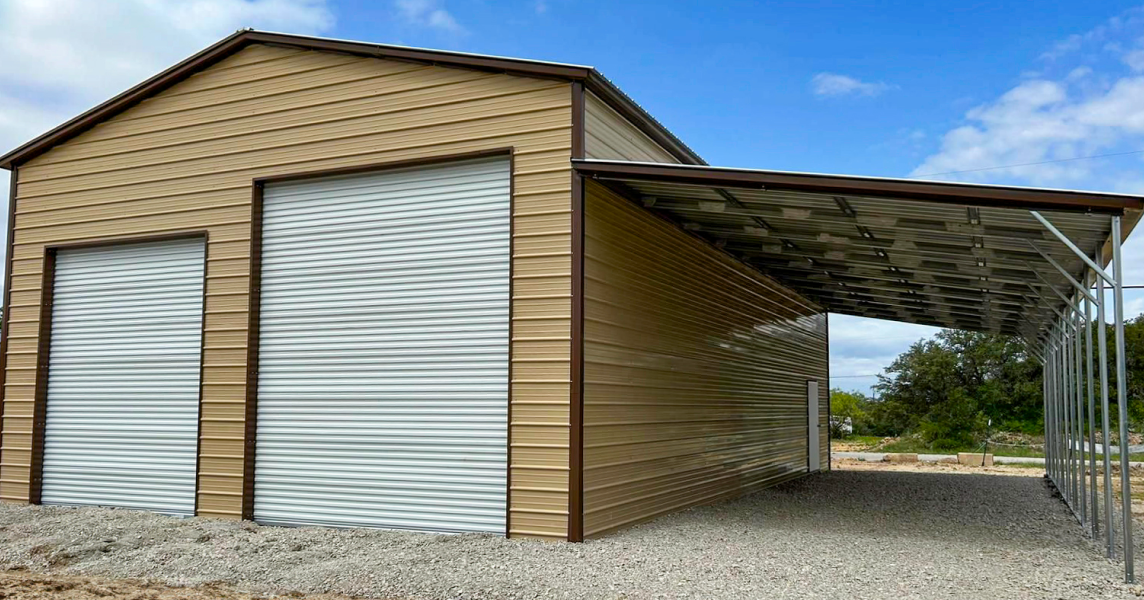
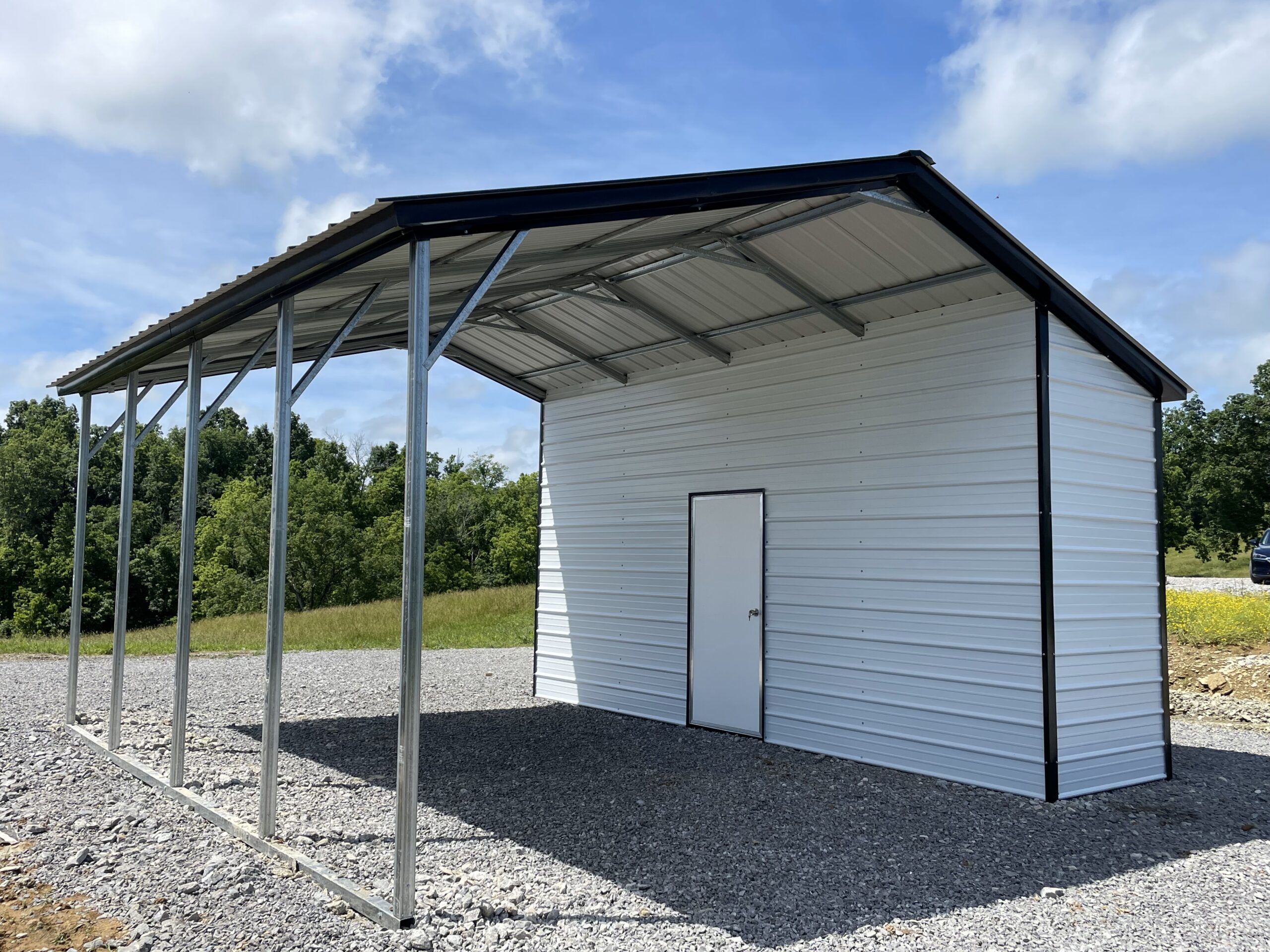
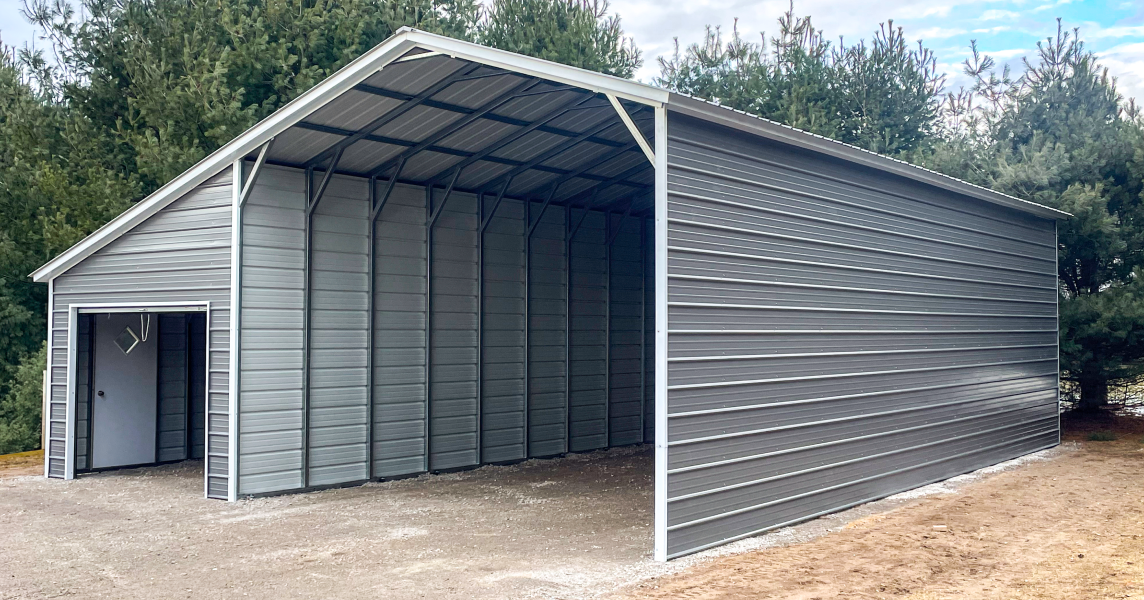
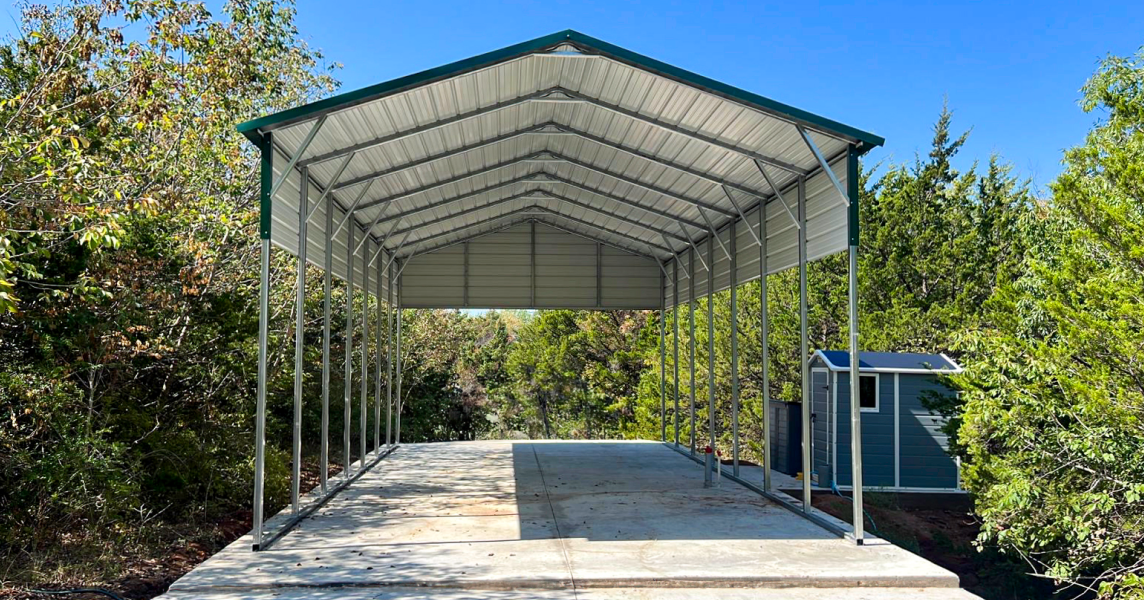
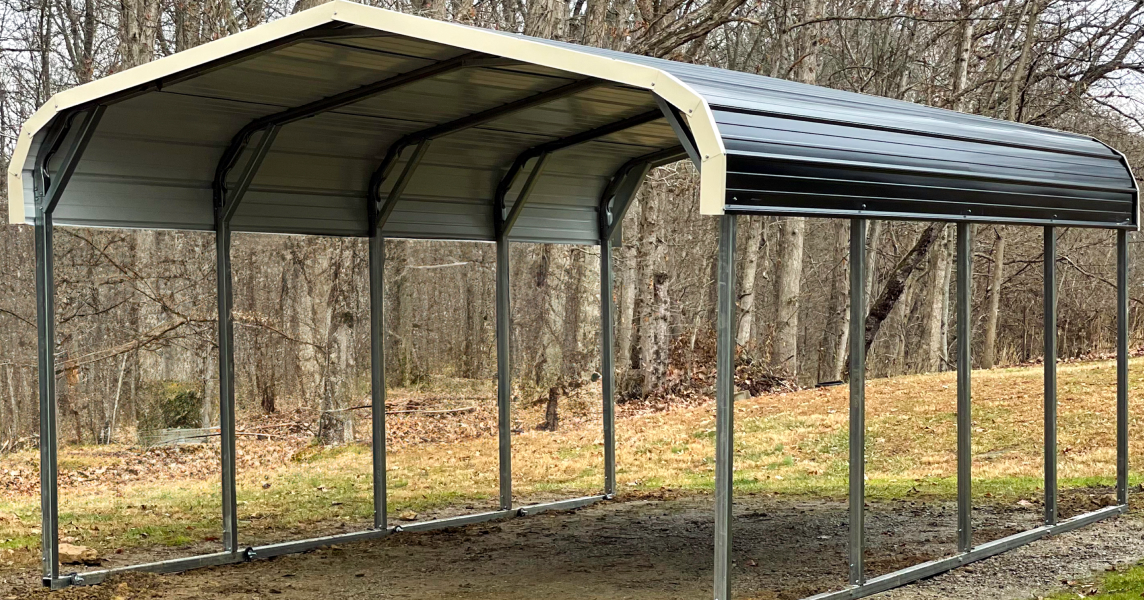
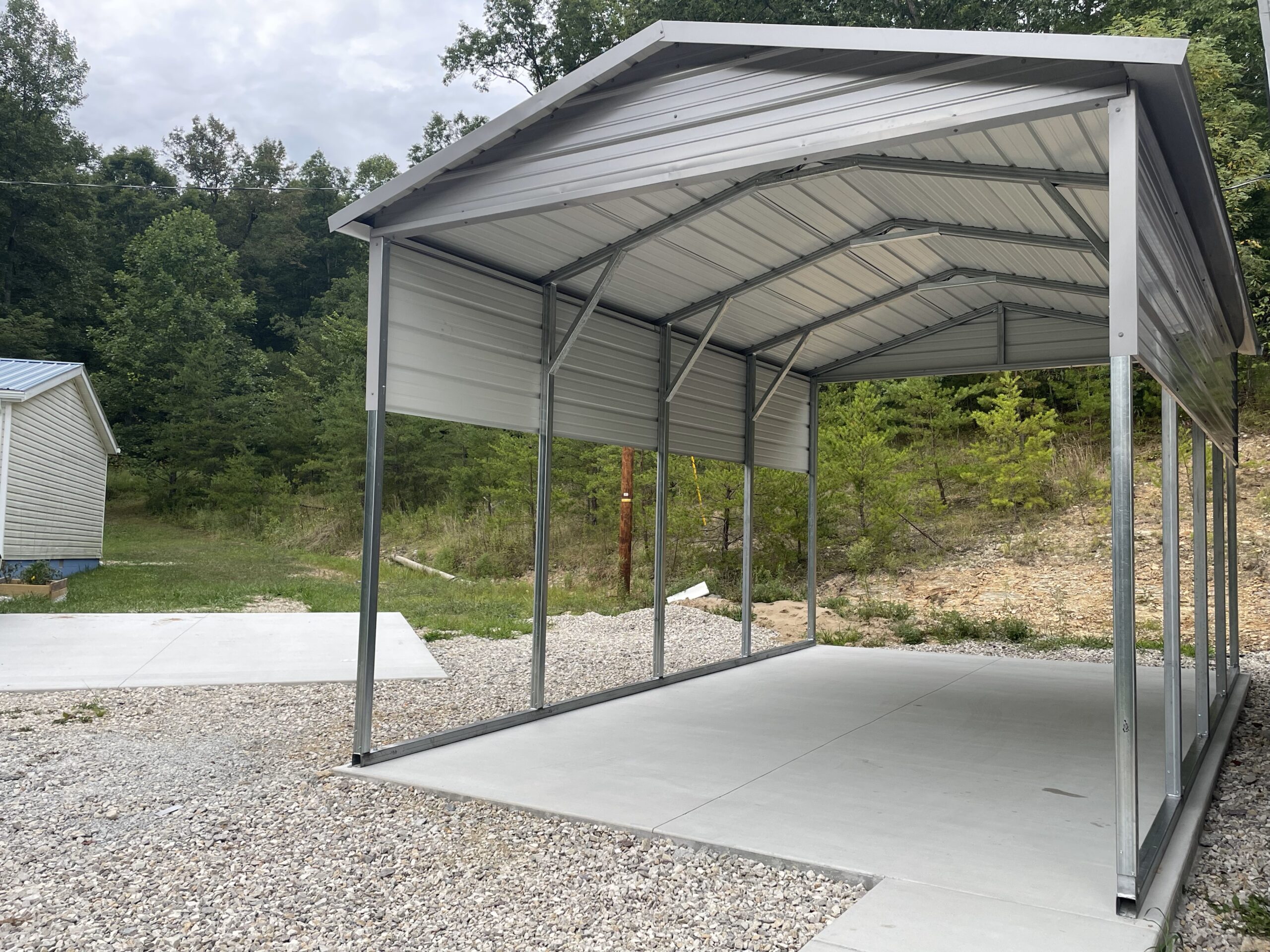
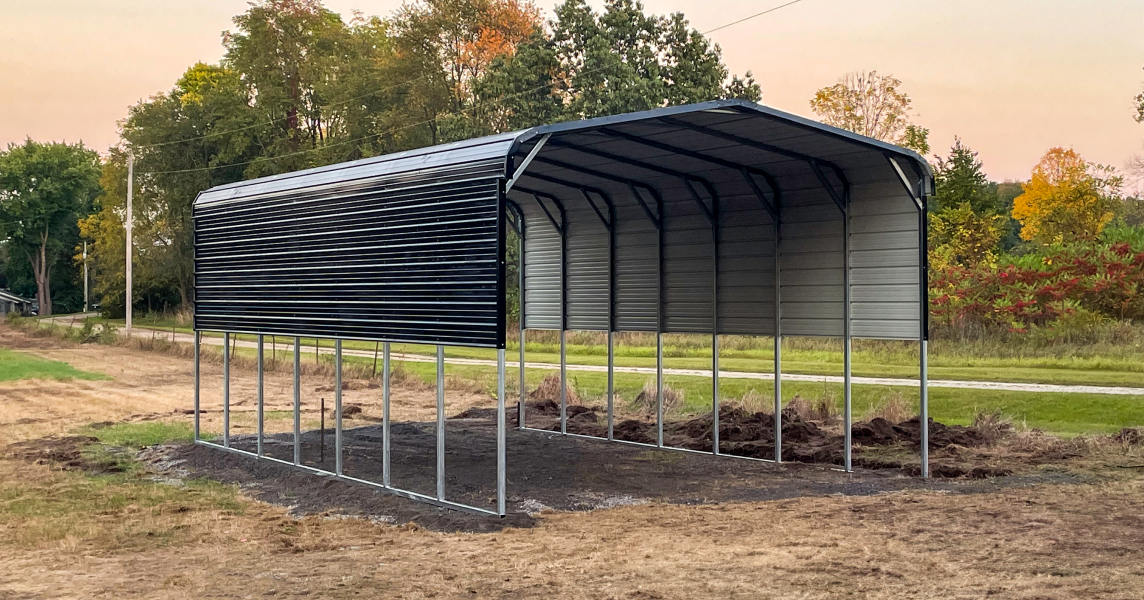
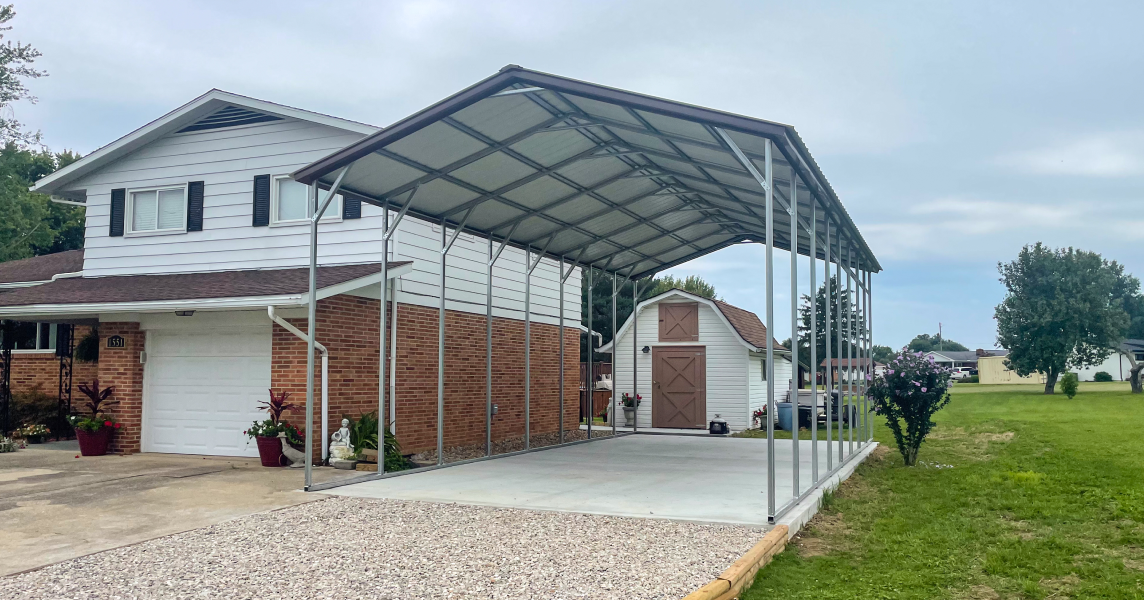
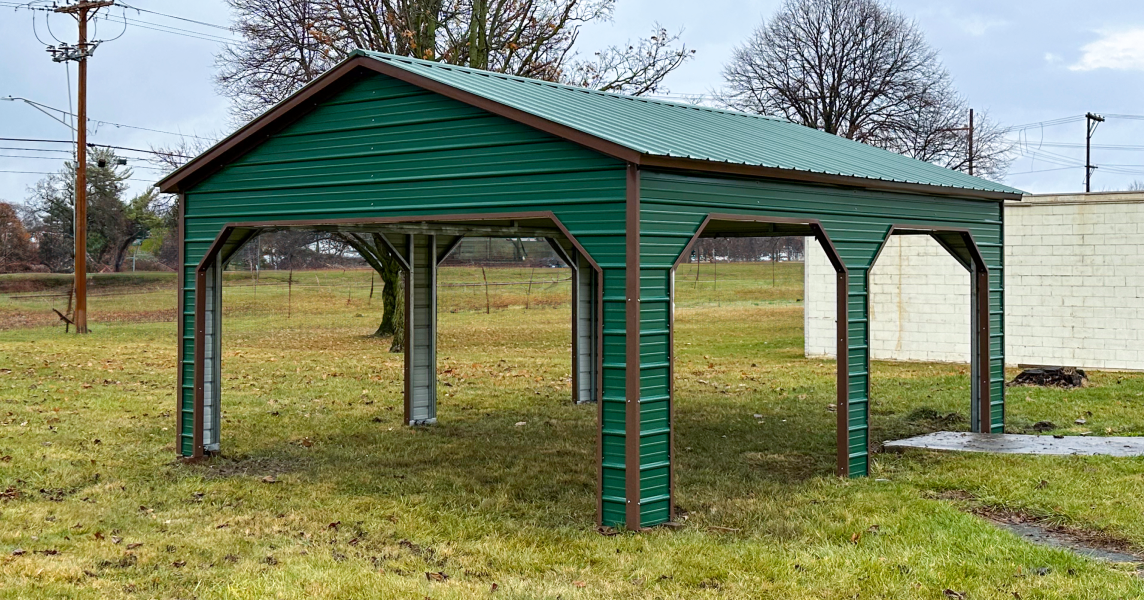
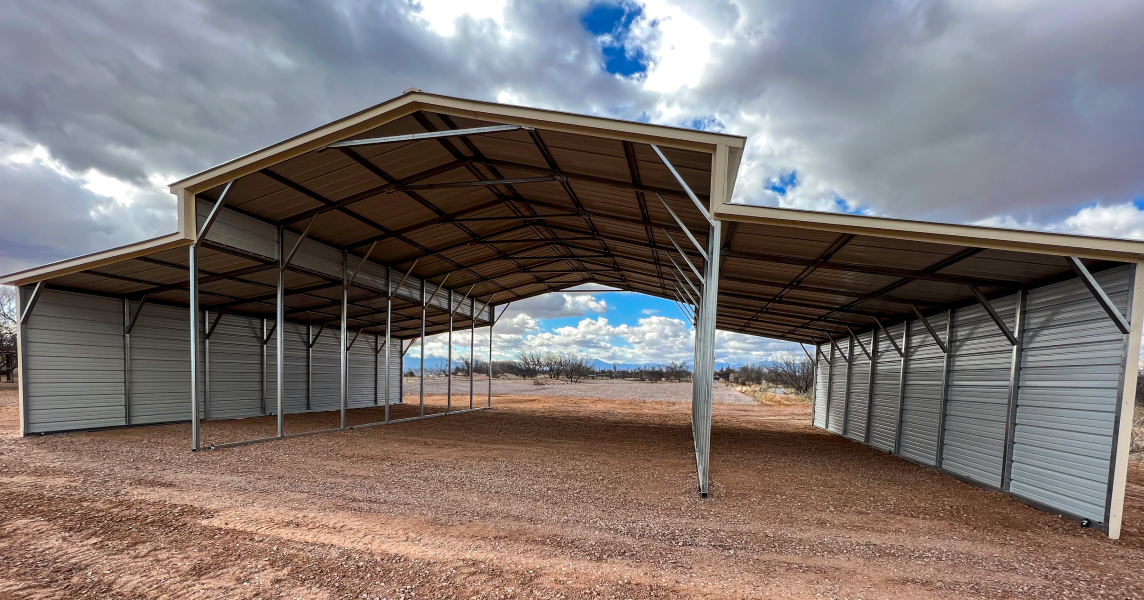
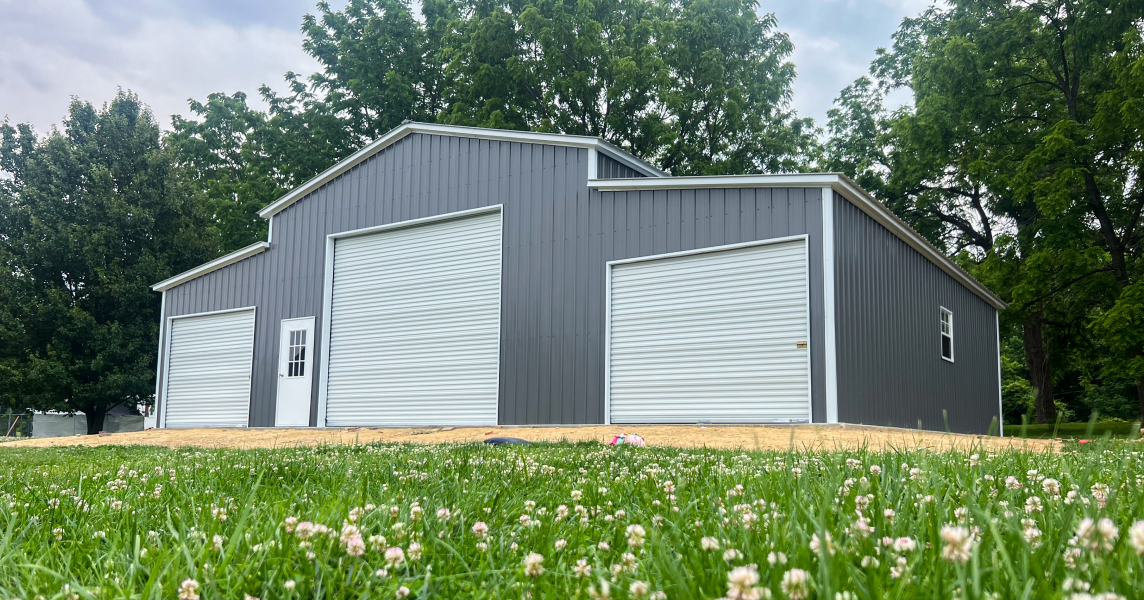
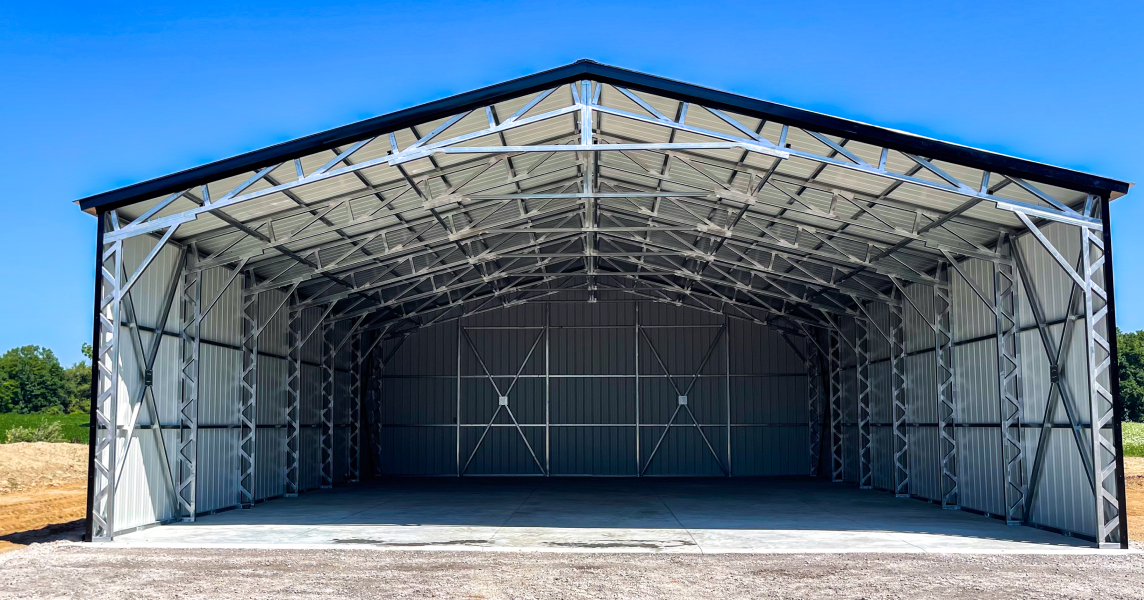
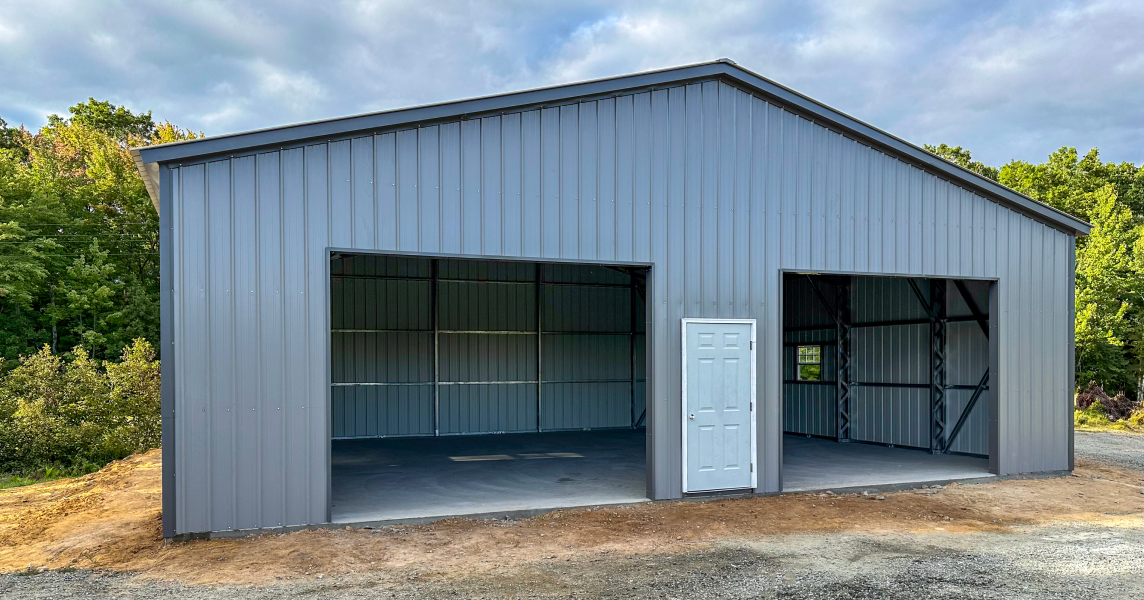
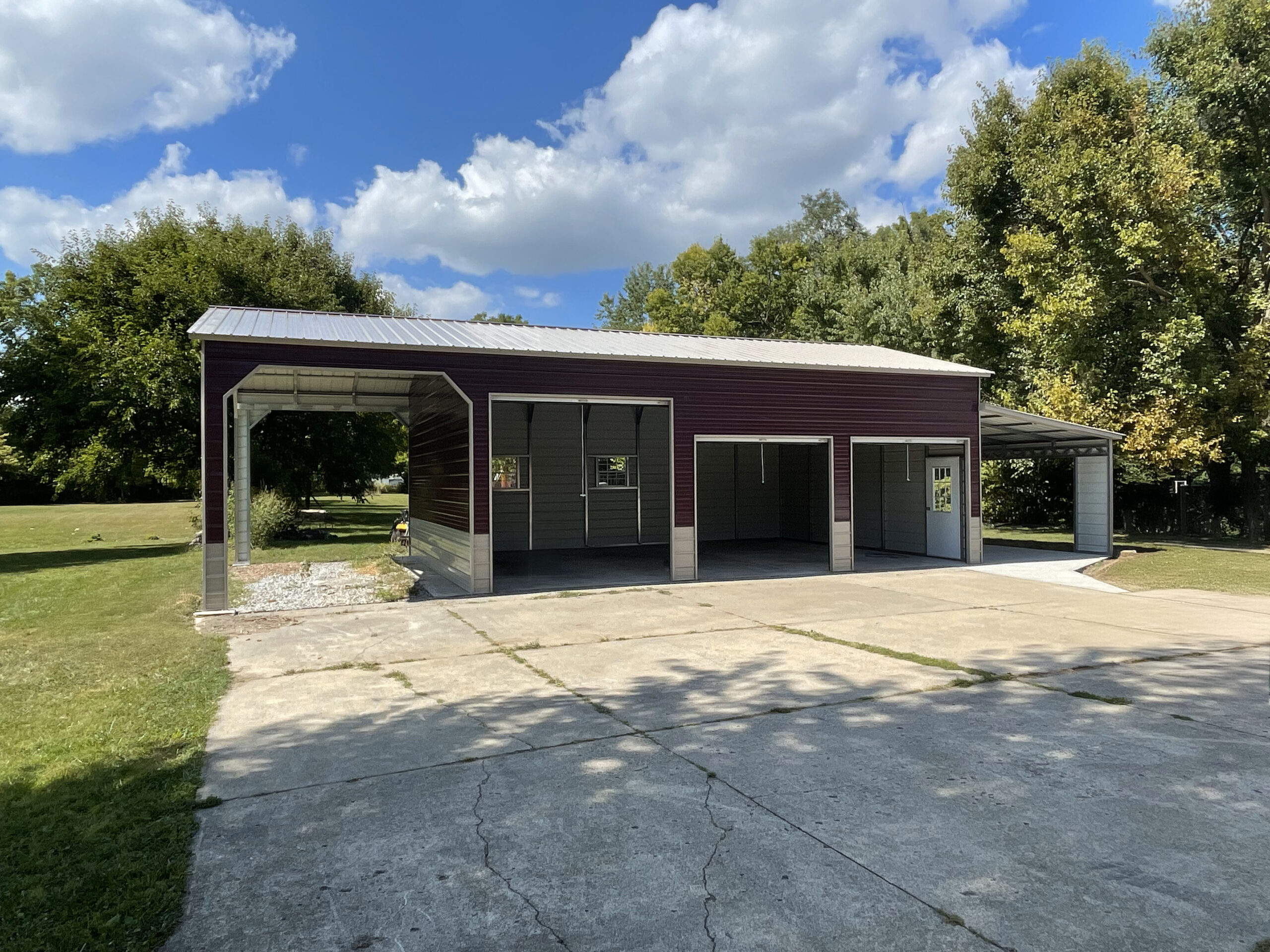
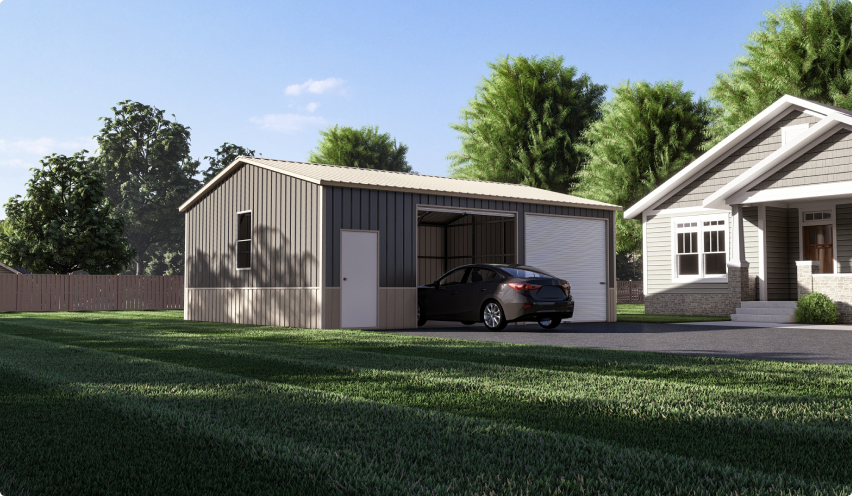
To anchor a shed to the ground, choose an anchor system that matches the shed’s design, foundation, soil conditions, and local wind requirements, then secure the building according to the manufacturer’s installation specifications. The right anchoring method may use concrete anchors, ground anchors, or another engineered solution, but it should always be selected for your specific site—not guessed or improvised.
At American Carports, Inc., you can use our Build & Price Tool to customize a shed around your property and local requirements. If you have questions about your site, certification needs, or shed design, contact our team before you order.
Why Does a Shed Need to Be Anchored?
Anchoring helps secure a shed against wind, shifting, uplift, and movement over time. It is particularly important for metal sheds because a structure with a large roof surface can catch strong winds, even when the building is empty.
A shed should not rely only on its weight to stay in place. Severe weather can create lifting and sideways forces that affect the roof, frame, doors, and foundation. Proper anchors help connect the structure to the prepared site so the entire system works together.
Anchoring may also be required by local building departments, HOAs, insurance providers, or permit documents. Requirements can differ significantly across the United States based on wind zones, snow loads, soil type, foundation choice, and shed size.
What Are the Best Ways to Anchor a Shed?
The best way to anchor a shed depends on what it is being installed on. A shed placed on concrete uses a different anchor approach than one installed over compacted soil, gravel, or another approved base.
The most common anchoring approaches include:
| Installation Surface | Common Anchor Approach |
| Concrete slab | Concrete wedge anchors or other approved concrete fasteners |
| Asphalt | Asphalt-specific anchors designed for the site and structure |
| Soil or earth | Auger-style ground anchors or engineered ground-anchor systems |
| Gravel base | Anchors may extend through the base into suitable ground or connect to an approved foundation system |
| Engineered foundation | Anchors specified by the building design and local code |
The correct hardware, quantity, spacing, and installation method depend on the structure and site. A building that requires certification may need a specific anchor plan, so do not substitute materials or change anchor locations without approval.
Can You Anchor a Shed to Concrete?
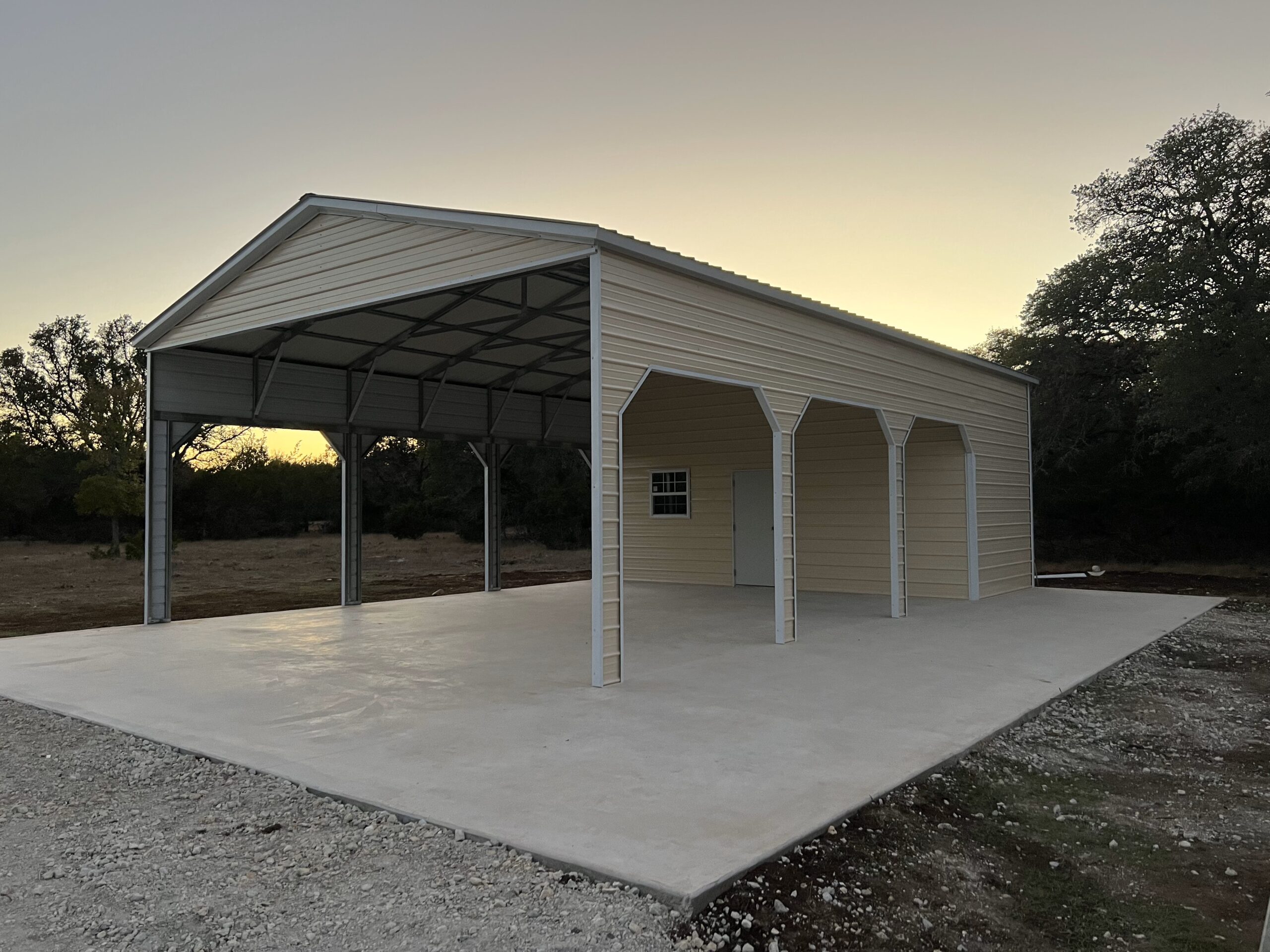
Yes. A concrete slab is one of the most durable and reliable shed foundations because it provides a level surface and can support an appropriate anchoring system. Concrete anchors are installed through the shed’s base rail or designated anchor points and into the slab.
Before installing anchors, make sure the concrete is properly cured, thick enough for the project, and prepared to meet your building’s requirements. Drilling into a slab that is too thin, cracked, damaged, or poorly positioned may not provide the anchoring performance your shed needs.
Concrete is often a strong choice for larger sheds, workshops, equipment storage, or any structure that will hold heavy tools, vehicles, or machinery. It also creates a clean, stable floor that is easier to maintain than dirt or grass.
What Should You Check Before Anchoring to Concrete?
Before installation, confirm:
- The slab dimensions match the shed footprint
- The slab is level and in good condition
- Concrete has cured appropriately
- Anchor locations will not interfere with utilities or embedded features
- The anchor system matches the building design
- Local permit and engineering requirements are met
- The shed placement meets setbacks and property rules
For larger or certified structures, coordinate the concrete work with your shed design before the pad is poured. This helps prevent issues with dimensions, anchor placement, access, and drainage.
Can You Anchor a Shed to the Ground Without Concrete?
Yes, some sheds can be anchored directly to the ground using auger-style anchors or another approved ground-anchor system. These anchors are driven or twisted into the soil and connected to the shed frame with straps, cables, or brackets.
Ground anchoring is not a one-size-fits-all solution. Soil composition, moisture levels, frost depth, drainage, wind exposure, and the size of the building can all affect what is appropriate. Loose, sandy, wet, rocky, or disturbed soil may require a different approach than dense, stable ground.
A compacted gravel base can provide better drainage and a cleaner floor surface, but gravel alone is not automatically an anchor system. The building still needs to be secured according to its design and local requirements.
How Do You Choose the Right Shed Anchors?
Begin with the structure itself. The shed manufacturer should know the building’s size, roof design, frame style, wall configuration, installation surface, and whether it needs wind or snow certification.
Then evaluate your location. A shed in a mild, sheltered area may have different needs than one installed in a coastal region, open prairie, high-wind corridor, mountain community, or area prone to severe thunderstorms.
Important factors include:
- Local wind-speed requirements
- Whether engineered certification is required
- Snow-load requirements
- Soil type and drainage
- The size and height of the shed
- Roof style and wall panels
- Foundation material and thickness
- Whether the shed is enclosed or partially open
- Property exposure to prevailing winds
- Local code, permit, and HOA requirements
The anchor system must be designed for the complete building, not only the ground beneath it.
Do You Need to Anchor a Small Shed?
Even a small shed may need anchoring. While a compact building may weigh less than a large workshop, it can still shift or lift during high winds if it is not properly secured.
Small sheds are sometimes treated as temporary structures, but that does not mean they are exempt from local rules or weather-related risks. Check your city or county requirements and follow the manufacturer’s installation guidance.
Anchoring is especially important if the shed is located:
- In an area with strong winds or frequent storms
- On an exposed hilltop or open lot
- Near the coast
- In loose, sandy, or wet soil
- In a region with hurricane or tornado risk
- On a property with little natural wind protection
- Where an HOA or local authority requires a specific installation method
How Do You Prepare the Ground Before Anchoring?
A good shed installation starts with site preparation. The area should be level, accessible, and positioned so water drains away from the building. Avoid low spots where water pools after rain, and make sure the site is clear of roots, debris, utility conflicts, and obstacles.
Depending on your project, site preparation may involve grading, compacting soil, adding gravel, pouring concrete, or creating an approved foundation system. The surface should support the shed evenly and allow doors to function correctly.
Proper drainage matters because standing water can contribute to soil movement, erosion, moisture problems, and difficult access around the building. Plan roof runoff and grading so water moves away from the foundation rather than collecting along the shed walls.
Should You Anchor a Shed Yourself?
You may be able to handle a simple small-shed anchoring project if you have the right tools, verified instructions, and a site that does not require certified engineering. However, professional installation is often the better choice for larger sheds, metal buildings, workshop structures, or locations with specific wind and snow requirements.
Do not attempt to improvise with random straps, stakes, or hardware-store fasteners. Improper installation may damage the shed, create a safety risk, or fail to meet permit and certification requirements.
Professional installation can help ensure the anchor system is selected and installed correctly for the building and surface. It can also reduce the risk of mistakes involving anchor spacing, placement, depth, alignment, or concrete drilling.
How Do Wind and Weather Affect Shed Anchoring?
Wind is the biggest reason to take shed anchoring seriously. Strong gusts can create uplift beneath roof edges, pressure against wall panels, and sideways forces across the frame. The more exposed the shed is, the more carefully the structure and anchor system should be designed.
Snow, rain, and freezing conditions can also matter. Heavy snow adds weight to the roof, while saturated or frozen soil can affect ground conditions. In areas with seasonal freeze-thaw cycles, foundation and anchor considerations may differ from those in warm climates.
For a weather-ready building, customize the shed around your local conditions. This may include appropriate anchoring, roof style, steel gauge, truss spacing, engineering certification, wall panels, and foundation preparation.
For related high-wind planning tips, read our guide on how to protect a carport from wind.
FAQs
What is the best way to anchor a shed?
The best method depends on the foundation and local requirements. Concrete anchors are common for sheds installed on concrete, while ground-anchor systems may be used for appropriate soil installations.
Can I anchor a shed on gravel?
A gravel base can support drainage and provide a stable surface, but the shed still needs an approved anchor system. Anchors may need to extend through the gravel into suitable ground or connect to an engineered foundation.
Do all sheds need anchors?
Many sheds should be anchored, especially in windy areas or where local codes require it. Follow the manufacturer’s installation requirements and confirm local permit rules.
How deep should shed anchors go?
Anchor depth depends on the anchor type, soil conditions, building design, and engineering requirements. Use the specifications for your structure rather than relying on a universal depth.
Can I install a shed on bare dirt?
A shed can sometimes be installed on a prepared ground surface, but bare dirt often creates drainage, leveling, and stability concerns. A compacted gravel base or concrete slab is usually a better long-term option.
Protect your investment with a custom metal shed designed for your property. Explore options with our Build & Price Tool or contact American Carports, Inc. to discuss your shed, site conditions, and anchoring needs.